

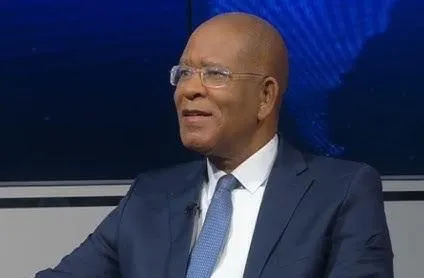
The National Convention organising committee spokesperson Rev Zwoitwaho Nevhutalu says the R700m budget for the national dialogue is provisional, with most funds aimed at 13 600 community discussions on SA’s future, funded by both government and donors.
Image: Screengrab from video / SABC News
Thousands of community dialogues across the country are expected to form part of the National Dialogue process, and 60% of the costs for the project will be funded by the government.
This was said yesterday by National Convention organising committee spokesperson Reverend Zwoitwaho Nevhutalu, who clarified that the widely discussed R700 million budget for the national dialogue was not a government allocation but a draft figure prepared by the preparatory task team.
The National Convention is scheduled to take place on August 15 and 16 in Pretoria.
The clarification comes after the estimated R700 million price tag ignited a wave of criticism from trade unions, political parties, academics, and sectors of civil society, especially in a context of austerity measures, service delivery failures, and deepening inequality.
Speaking at a media briefing at UNISA yesterday on the state of readiness to host the first convention, Nevhutalu said, “You see, the budget that people were talking about, the R700m and so on, was a budget prepared by the preparatory task team. It’s not a government budget.”
He added that the conceptual funding framework envisages 60% of costs being covered by the government through the fiscus, while the remaining 40% would come from donors in cash and in kind.
He noted that contributions would be sought from businesses, the private sector, and civil society, with organisations such as churches and municipalities providing infrastructure and venues. “Civil society has already done a lot,” he said. Nevhutalu further stressed that the initiative is a “people’s project” and not solely a government undertaking.
He said, therefore, that most of the proposed funding would go towards community dialogues, which are planned to take place in every ward across the country. “It is expected that we’re going to have three dialogues per ward for the duration. I think it comes to like 13,600 dialogues,” he said.
These sessions will focus on grassroots discussions about the future vision of South Africa. He emphasised that the budget remains provisional, with Treasury still in discussions over the government’s contribution.
Entities will also be approached and mobilised by the steering committee and eminent persons groups to secure additional support, he said.
“This is a people’s project. It’s not something that is really a government project,” Nevhutalu said. National Convention organising committee chairperson Boichoko Ditlhake said that 775 individuals have been invited from over 30 sectors and more than 200 organisations.
“As of yesterday, 557 people from 28 sectors had confirmed attendance,” he said.
The National Dialogue, however, has been rocked by the withdrawal of several prominent organisations, including the Steve Biko Foundation, Thabo Mbeki Foundation, Chief Albert Luthuli Foundation, Desmond and Leah Tutu Legacy Foundation, WDB Foundation, Oliver and Adelaide Tambo Foundation, and the Strategic Dialogue Group.
In a joint statement issued on Friday, the group said the decision was made with “deep regret” but was necessary to protect the process's credibility and integrity.
They accused the organisers of shifting the initiative away from its citizen-led origins toward government control.
“What began as a citizen-led initiative has unfortunately in practice shifted towards government control,” the statement read.
Meanwhile, President Cyril Ramaphosa said the upcoming National Dialogue must serve as a platform for “women to raise their voices”.
“With the first National Convention taking place during Women’s Month, I call on all sectors of society to come together to ensure the full participation of all women in the National Dialogue,” he said in his weekly newsletter yesterday.
“This would be the most fitting and powerful tribute to the legacy of the pioneers of 1956.”
Political analyst Kim Heller said the National Dialogue is yet another exercise in social distancing between the government and the people of South Africa.
“Our democracy has been made miniature by this ivory tower hands-off government approach to its citizenry. The whole exercise is irrelevant, and the first convention, with all its hiccups, will continue in its grandiose extravagance and easy speech, while the cries of the ordinary people of South Africa remain unheard,” she said.
Another political analyst, Ntsikelelo Breakfast, said the withdrawal of the foundations cast aspersions on the credibility of the dialogue, adding that the parties should have put the event on hold and explored other avenues of working together.