

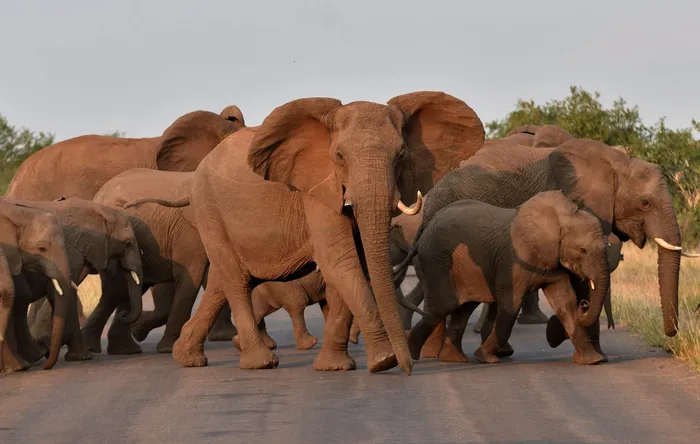
On World Elephant Day, South Africa highlights the importance of elephant conservation under the theme 'Matriarchs and Memories'.
Image: Independent Newspapers Archives
Today marks World Elephant Day, a day dedicated to raising awareness of the urgent need to protect and manage the world’s elephants.
The Department of Forestry, Fisheries and the Environment (DFFE) said this year’s commemoration, under the theme ‘Matriarchs’ and Memories’, coincides with the Elephant Indaba, which is taking place in KwaZulu-Natal, which is home to the second-largest elephant population in the country.
The DFFE said South Africa is home to about 44,000 African savanna elephants, and the population continues to grow.
“Most elephants in the country live in government-protected areas like Kruger National Park, Mapungubwe National Park, and Tembe Elephant Park. These parks are part of larger Transfrontier Conservation Areas (TFCAs), where elephants often move freely across national borders and are shared with neighbouring countries.
“In addition to these large parks, there are 89 smaller, fenced reserves that also support elephant populations. About 6,000 elephants are owned privately or by communities, and in recent years, more and more communities have started to manage elephants themselves.”
Deputy Minister Narend Singh admitted that the growing elephant population offers hope for the species but also presents challenges for neighbouring communities.
“As elephant numbers and ranges expand, encounters between people and elephants have increased, particularly in rural communities living near protected areas.
“Human-elephant conflict can result in crop losses, damage to infrastructure, and in some cases, injury or loss of human life. For many affected families, these incidents can threaten food security and livelihoods. Managing these interactions is essential to ensuring that conservation gains do not come at the expense of community well-being.
“It requires innovative solutions that promote co-existence, such as improved land-use planning, early-warning systems, community-based monitoring, and benefit-sharing initiatives that recognise the costs of living alongside elephants,” Singh said.
The department said Singh is hosting a conversation at Bonamanzi in KZN with policy developers, the wildlife industry, civil society groups, NGOs, scientists, researchers, traditional leaders, traditional health practitioners, and communities neighbouring protected areas, to come up with solutions and forge partnerships that will ensure that elephants remain an enduring part of the landscape that also benefits people.