

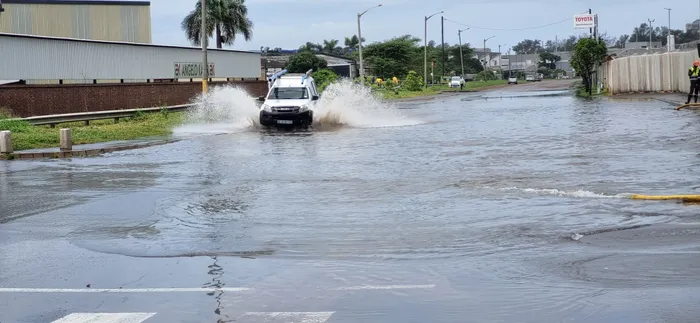
A waterlogged road in Durban following heavy rain. As Durban prepares for the rainy season, the eThekwini Municipality is ramping up maintenance of stormwater systems, but illegal dumping and infrastructure abuse threaten to exacerbate flooding risks across South Africa.
Image: Sibonelo Ngcobo / Independent Newspapers
As Durban braces for the rainy season, eThekwini Municipality says “hot spot areas have been identified for higher level maintenance to the stormwater systems”, while engineers warn that abuse of drainage infrastructure is worsening the risk of flooding across South Africa.
The Institute for Municipal Engineering of Southern Africa (IMESA) cautioned that while climate change and ageing infrastructure are often blamed, illegal dumping into stormwater drains and the removal of manhole covers are becoming a serious threat.
“When these foreign objects block the pipes, rainwater has nowhere to go. As a result of this abuse, streets can turn into rivers. Homes get flooded. Infrastructure collapses. And the damage can cost billions to repair,” IMESA said.
Recent floods in the Western Cape highlighted the damage that heavy storms can inflict on roads, schools, and essential services. With most of the country’s summer rainfall regions now expecting severe downpours, IMESA stressed that blocked stormwater systems are a national concern.
“Blocked stormwater pipes often go unnoticed until a storm hits. Most municipalities don’t have the budget or manpower to check and clean the piped systems proactively, although all efforts are made to clean system inlets, such as catchpits and grids. As a result, problems are only discovered when the flooding starts. That means clean-up is reactive and expensive, and the damage is already done by the time help arrives,” IMESA said.
The institute added that the issue extended beyond engineering capacity. “This is not just a technical or engineering issue. It’s a community one. When residents abuse stormwater drains as dump sites, the entire community suffers the consequences.”
eThekwini spokesperson Gugu Sisilana confirmed that the municipality is dealing with the challenge. On the dumping of waste into stormwater systems, she said: “Higher level maintenance is provided to the affected areas by the Roads and Storm Water Department.”
IMESA has also raised concerns that rapid urbanisation and climate change are compounding the strain. “Add to this the growing impact of climate change, with storms becoming more intense and erratic, and it’s easy to see why local infrastructure is struggling to cope,” the institute said.
To improve long-term planning, IMESA pointed to the Best Practice Guideline for Design Flood Estimation in Municipal Areas, developed with the Water Research Commission. Published in 2023, the guideline sets out standardised methods for flood estimation and risk assessment. Sisilana confirmed that Durban has already started applying it: “Yes, this is considered in infrastructure projects as well as development application plans.”
IMESA urged residents to play their part in protecting infrastructure. “Don’t dump waste into drains or open manholes. Report missing manhole covers or illegal dumping to your local authority. Keep gutters and street drains clear of leaves and debris. Spread awareness in your neighbourhood about the importance of protecting stormwater infrastructure.”
“As we face more extreme weather and increased pressure on our infrastructure, we must all do our part. Municipalities need to plan smarter and maintain systems better. Residents need to respect the infrastructure that protects them. With better planning, responsible behaviour, and strong community partnerships, we can reduce the risks and keep our cities safe and flowing,” IMESA concluded.