

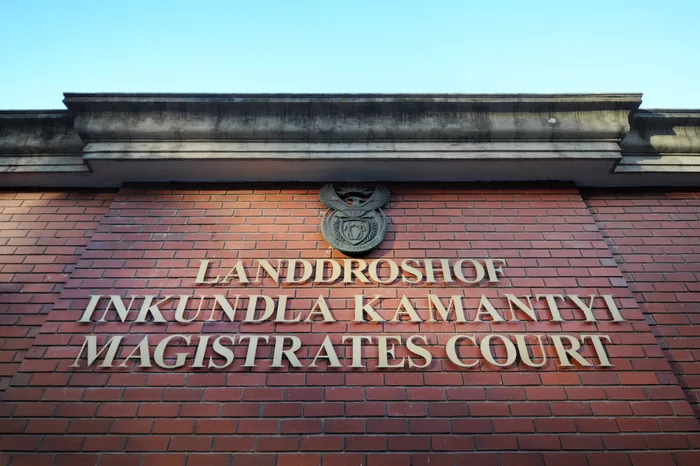
Several courts are facing a shortage of interpreters.
Image: Armand Hough/ Independent Newspapers
The Eastern Cape, Limpopo, Gauteng, the Western Cape, Free State, and KwaZulu-Natal are facing a shortage of court interpreters.
This was recently revealed by Justice and Constitutional Development Minister Mmamoloko Kubayi who said that the department had noted an increased demand for interpreters.
This has resulted in some courts not currently meeting the standard of one interpreter in each court. In KZN, there is a need for IsiXhosa and Mandarin interpreters with Siswati and Portuguese interpreters needed in courts near Swaziland and Mozambique borders.
Kubayi, in a parliamentary response to questions from DA MP Damien Klopper, said the increased demand has placed pressure on the existing interpreter pool, particularly in rural and multilingual areas.
“The requirement for interpreters to be accredited through the South African Language Practitioners’ Council, in line with the South African Language Practitioners’ Council Act, 2014, has also narrowed the pool of eligible candidates in the short term,” she said.
Kubayi said in the 147 identified posts across the country, 77 are filled and 69 remain vacant.
Of the vacant posts, 30 have already been advertised, 37 are yet to be advertised, and two have been re-advertised.
Kubayi said the filling of some of the posts showed that active steps were being taken to address the shortage.
She revealed that there were currently approximately 69 funded vacant court interpreter posts across the country.
The court districts most affected are East London with six vacancies, Thohoyandou four, and Durban three.
The Bloemfontein Magistrate’s Court assists the smaller court in Xhariep District with an interpreter.
The Welkom Magistrate’s Court and Sasolburg Magistrate’s Court are affected on a weekly basis due to high sick leave and annual leaves.
The affected courts in the Free State were being managed through replacement casual interpreters.
Limpopo courts need Sepedi, Xitsonga, and Tshivenḓa interpreters, while there is a shortage of South African Sign Language interpreters in Gauteng and the Free State.
“Although some provinces have appointed Sign Language interpreters, with approximately 20 interpreters permanently appointed across provinces, there are casual interpreters for all official languages and foreign languages in the database, including SASL interpreters.
“In Limpopo, South African Sign Language is not a daily need, and therefore we are still relying on external service providers,” Kubayi said.
In the Western Cape, which has a shortage of 18 court interpreter posts, there is a high demand for South African Sign Language interpreters, which are currently sourced through costly casual contracts.
Kubayi said filling vacant posts, reinstating abolished positions, and managing leave more effectively can significantly improve staffing.
“Investing in permanent interpreter appointments will reduce long-term costs and ensure consistent court operations.”
She said her department has implemented several measures to plug the shortage of court interpreters.
While about 1,824 interpreters, including 20 South African Sign Language interpreters, were appointed across the country, 85 positions were advertised in the past six months and are being filled in a phased approach.
Kubayi also said the department will train 80 interpreters under the 24-month Interpreters’ Learnership Programme and an additional 100 interpreters under the 12-month Recognition of Prior Learning Programme.
“To improve scheduling of interpreters, a centralised interpreter database is being developed to improve coordination and deployment, including for South African Sign Language interpreters.”
She added that they were engaging with higher education institutions to incorporate legal interpreting into academic curricula and to support the training of interpreters.
“Final-year language students are offered Work Integrated Learning opportunities, and internship programmes are in place to create a pipeline of future court interpreters.”