

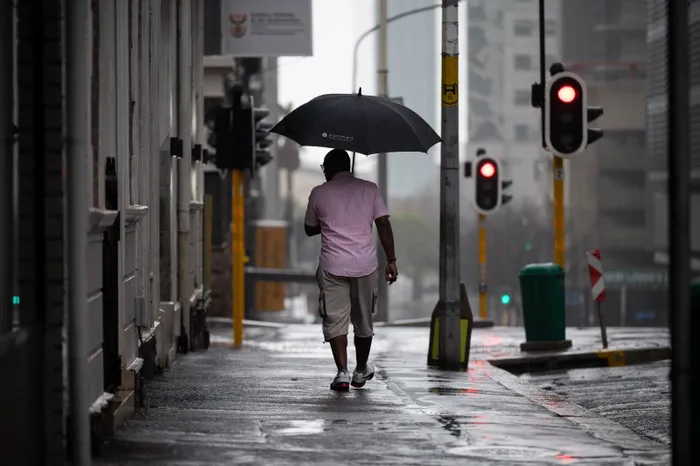
Residents in KwaZulu-Natal are urged to prepare for severe thunderstorms, as the South African Weather Service issues a Yellow Level 2 warning for heavy rains.
Image: Armand Hough / Independent Newspapers
Residents across parts of KwaZulu-Natal have been placed on alert as the South African Weather Service (SAWS) has issued Yellow Level 2 warning for severe thunderstorms.
The warning, valid until 11:59pm on Wednesday, signals the potential for heavy rainfall, strong winds, frequent lightning, and small hail.
The storms are expected to affect the north-western, western, and northern parts of the province, with localised flooding possible on roads, low-lying areas, and bridges
The Weather Service warns of potential damage to infrastructure, settlements, vehicles, agricultural production, and livestock. Minor injuries from flying debris and vehicle accidents are also possible.
Emergency preparedness in KwaZulu-Natal
KwaZulu-Natal Cooperative Governance and Traditional Affairs (Cogta) MEC Reverend Thulasizwe Buthelezi urged residents to take precautions, particularly those in flood-prone areas.
“We plead with communities that will be affected by these storms to exercise extreme caution. Parents are urged to keep children indoors, avoid crossing swollen rivers or streams, and ensure drainage systems around homes are cleared,” said MEC Buthelezi.
Cogta has activated disaster management centres across affected districts and is coordinating with municipalities and emergency services to respond to any incidents. Residents are encouraged to report emergencies to their nearest municipal disaster management centres.
Thunderstorm safety tips
SAWS further cautioned that hot and humid conditions over the extreme north-eastern parts of the province could make the weather extremely uncomfortable, even in areas not directly impacted by the storms.
Officials warned that travel could be hazardous as roads become slippery and low-lying areas flood.
No fire danger warnings have been issued for the province. However, authorities emphasised that the combination of high winds, lightning, and heavy rain could still pose risks to communities, property, and livestock.
Disaster management teams remain on high alert, monitoring weather developments closely and coordinating with local municipalities to ensure a swift response.