

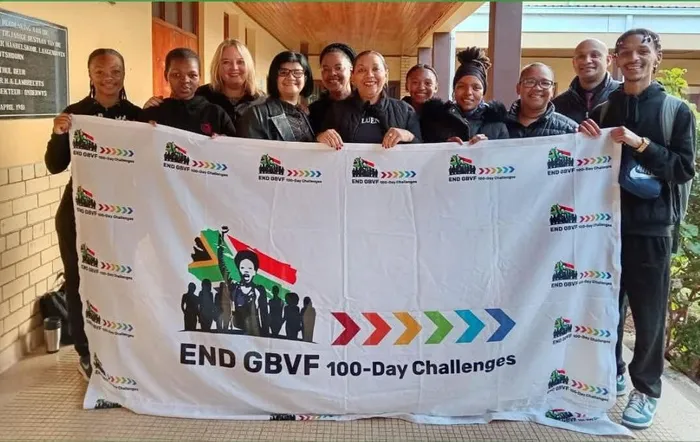
69 South African TVET colleges are transforming learning environments through innovative initiatives to combat gender-based violence and femicide.
Image: End GVBF 100-Day Challenges / Facebook
In a powerful show of solidarity against gender-based violence and femicide (GBVF), 69 Post-School Education and Training (PSET) institutions across South Africa have concluded their End GBVF 100-Day Challenges, marking a significant step toward creating safer learning environments.
The national close-out webinar, held online last week celebrated the innovative and practical initiatives developed by Technical and Vocational Education and Training (TVET) colleges to support survivors and prevent abuse on campuses.
“The results within the PSET ecosystem paint a hopeful picture,” said Nomgqibelo Mdlalose, Movement Navigator for the End GBVF 100-Day Challenges.
“Many teams were able to increase the level of reporting, which is indicative of an increased trust towards campus support systems and breaking the silence and stigma on different forms of abuse.”
Institutions took creative and context-driven approaches to drive change. Tshwane University of Technology (TUT) adopted “artivism”, a blend of art and activism, by creating 100 pieces of art and performances each day for 100 days. The initiative aimed to confront trauma and challenge harmful social norms while opening up dialogue around GBVF.
Majuba TVET College reached over 4,000 students and staff through awareness campaigns and capacity building. The college trained 127 peer educators and 52 staff members on prevention and survivor support. Their strengthened systems led to 23 formal GBVF-related reports, “indicating an increased trust in new reporting channels.”
Maluti TVET College focused on understanding and reducing bullying and GBVF risks through surveys and awareness campaigns. “The number of students reporting they had experienced bullying dropped by 78%,” the college reported, attributing the change to targeted awareness sessions and staff training.
At West Coast College, 585 students received specialised GBVF training, and the college formalised 11 partnerships with stakeholders including SAPS, NGOs, and the Department of Health. Their social media campaign reached 40,000 accounts and garnered over 560,000 post views.
Goldfields TVET partnered with the Commission for Gender Equality to train students on self-defence, while Gert Sibande TVET College recorded a 27% increase in GBVF case reporting and a decrease in case withdrawals after implementing a rapid-response protocol.
As Mdlalose emphasised, this is not a “flash in the pan” initiative. Colleges such as West Coast and Majuba TVET are embedding anti-GBVF work into institutional frameworks to ensure sustainability.
“These concrete actions, formal frameworks, embedded external partnerships, and dedicated wellness programmes are what will sustain this critical work and drive lasting change across the TVET sector,” she said.