

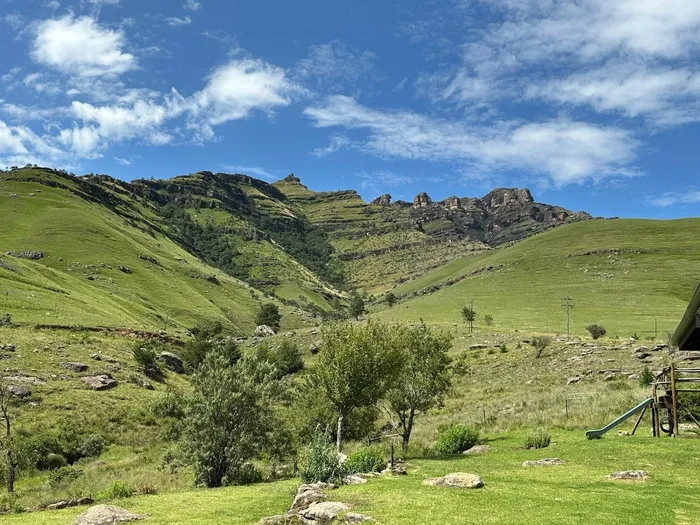
The KwaZulu-Natal government requires over R1 billion to kickstart the Drakensberg cable car project.
Image: Facebook / Southern Drakensberg
The KwaZulu-Natal government needs close to R1 billion to get the Drakensberg cable car project off the ground. There is growing scepticism about the future of the ambitious project, with stakeholders questioning if it will ever get off the ground.
Councillors in the Okhahlamba Municipality, one of the key stakeholders in the project, said they have not been informed about any progress in the project for almost five years.
The R1 billion figure is based on information produced in 2017 and contained in a report by the Department of Economic Development, Tourism, and Environmental Affairs (EDTEA), compiled in June this year.
However, EDTEA MEC Musa Zondi dismissed views that the project has been neglected, stating he had picked it up after it had been dormant for 12 years.
The Drakensberg cable car proposal, described as a game-changer, was proposed as one of the catalytic projects aimed at unlocking the tourism potential of the uKhahlamba–Drakensberg region.
The project aims to attract at least 300,000 cable car visitors a year, with the cableway proposed to run up a mountain along the Busingatha Valley. According to the report based on the 2017 feasibility study, the estimated costs are as follows:
EFF councillor Thulani Sibeko remarked, “Since the beginning of this term in 2021, we have not been told anything about this project.
“The mayor has not briefed the members of the council, and it is creating doubt among us as to whether this project will ever get off the ground.
“It has been years now; the project was first proposed in 2004 when Mike Mabuyakhulu was still the MEC. It is now almost 14 years later, and nothing has moved.
“We know that the project is being driven by the Department of Economic Development and Tourism, but we have not received any briefings as to what is going on with it.
“If they are briefing the mayor and his leadership, the mayor has not bothered to brief the rest of the council,” he said.
Sibeko said the cable car project was supposed to be a game changer for the area by creating jobs and business opportunities for locals.
“But five years later, we have not been told anything, and it seems like it’s all talk and this project will never get off the ground,” he said.
IFP councillor Sanele Buthelezi echoed these sentiments, stating that there has been no official briefing on the matter in years. “The mention of that project was about a few months ago in a meeting with national government officials. Even then, it was mentioned because there were complaints that the project was promised to start years ago and nothing has happened.
“I can tell you now, it has not started, and nothing indicates that it will start anytime soon. There is no work happening that suggests the project might commence.
“This project was first promised when I was in school; now I am a councillor and I am on my second term, so it’s 10 years later.
“This is causing frustration among the community,” he said.
DA’s Meshack Mlangeni laughed when asked about the progress. “Since I joined the council, there has been no discussion on this matter.”
Suraya Asmal, senior Communication Officer for the Okhahlamba Municipality, said it is possible that councillors have not been briefed, but she recalled that the mayor had an engagement on the project at the start of his term and in another government meeting recently.
She added that officials from the provincial government, Lesotho, and the Free State are expected to meet in January next year to discuss the project.
Zondi described the cable car initiative as a “complex project.”
“This is a very complex project that touches on another province and a sovereign country.
“In order for us to engage with Lesotho, we need an agreement with the Department of International Relations; that is the first complexity.
“When I was appointed, I picked up the projects after it had been neglected for more than 12 years. In the recent tourism indaba, I engaged with my counterpart from the Free State and from Lesotho.
“Now it is about getting into an agreement and committing funding. The project has been approved by the cabinet of KwaZulu-Natal and now it needs to be approved by the cabinet of the Free State and that of Lesotho, and we need the involvement of DIRCO as well as the Presidency.”