

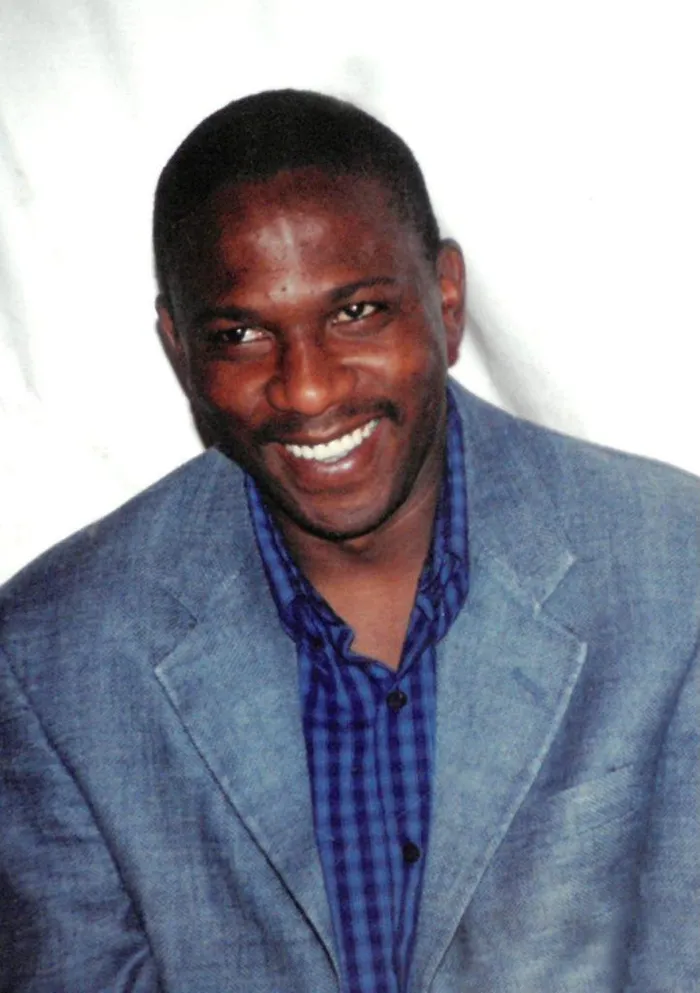
Emmanuel-Mbense
Image: AfriForum
The family of a Gauteng man, who was allegedly tortured, murdered and dumped in a dam by police and private security officers three years ago, in a matter brought to light at the Madlanga Commission of Inquiry, are pleading for justice.
The family of Emmanuel Mbense, 51, a father of five, have now approached AfriForum’s Private Prosecution Unit in a bid to seek justice. His case is under investigation by the Independent Police Investigative Directorate (IPID).
Mbense's death was detailed in evidence by Marius van der Merwe, also known as Witness D, before the Madlanga Commission.
Van der Merwe, who was shot dead a week ago in front of his home, had testified that suspended Ekurhuleni Metropolitan Police Department (EMPD) acting chief Brigadier Julius Mkhwanazi allegedly instructed him to dispose of the body of a suspect killed by EMPD officers.
He had said the suspect was allegedly suffocated in a bedroom with the help of two SAPS officers and an informant.
According to AfriForum’s Private Prosecution Unit, Mbense was murdered on 15 April 2022 at his home in Brakpan. His body was discovered the following day at the Duduza dam in Nigel, with his car keys and drivers’ licence in his pocket. The unit has reportedly seen the death certificate, which records that the cause of death was blunt force trauma to his head.
“For a long time, we lived with unanswered questions, not knowing how he died, what transpired exactly,” says Mbense’s brother, Nhlanhla, who, due to the circumstances of the matter, asked not to be identified by his full name.
“The truth only started to surface before the commission. It forced us to relive the horror of his final moments in public, surrounded by strangers. Receiving such devastating news at the same time as everyone else has been very painful. It has stripped away any chance for us to prepare ourselves emotionally. We were re-traumatised again as the details unfolded.”
After Van der Merwe's testimony at the Madlanga Commission, Nhlanhla and his family met with the unit for consultation.
Mbense's brother said he has been asking SAPS and IPID for updates on the case for the past three years, but each time he has been informed that arrests are on the horizon.
Advocate Gerrie Nel, Head of the Private Prosecution Unit, wrote a letter to Jennifer Ntlatseng, Head of IPID to inquire about the case on behalf of the family.
He said that the IPID’s conduct suggests that the implicated parties are being shielded from investigation and prosecution. “We write this letter at a time when it appears that almost all law enforcement agencies’ alleged levels of incompetence and criminal conduct can no longer be kept secret.”
According to Nel, recent developments have shone a spotlight on the failure to speedily finalise Mbense’s case.
Following the apparent assassination of Van der Merwe, who had made no secret of how and who was involved in Mbense’s heinous murder, including his own involvement, the failure to decisively deal with this investigation and bring it to a close after years of investigation is deplorable and calls for a meaningful response as to the status of the matter.
“Deeply concerning is the evidence of retired Deputy Chief of the Ekurhuleni Metropolitan Police, Revo Spies, who testified that Van der Merwe was identified as a possible witness in terms of Section 204 of the Criminal Procedure Act 51 of 1977. If correct, an explanation for the failure to arrest the suspects and enrol the matter becomes more pressing,” says Nel.
Nhlanhla described his brother as a rock in the family, providing for his mother, siblings, and five children. He claims that the handling of the case has undermined their faith in the criminal justice system.
“The family has been left with no choice but to seek assistance from AfriForum’s Private Prosecution Unit. The decision was not taken lightly. It reflects the sense of abandonment that we have experienced as a family. The very same institutions we have entrusted with seeking justice have failed to act on our behalf. This is a direct result of our determination to ensure that accountability and to protect our dignity,” says Nhlanhla.