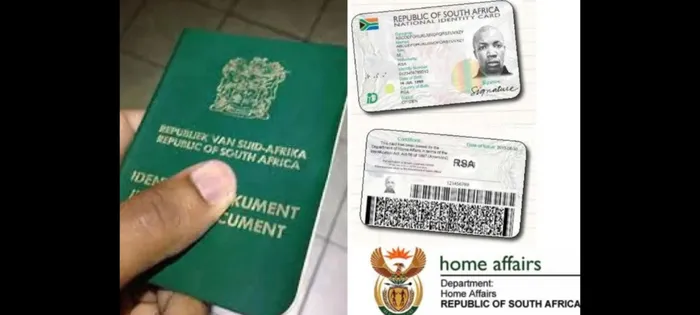
South Africans have been urged to have their say on the Draft Revised White Paper on Citizenship, Immigration and Refugee Protection which has been published in the Government Gazette for public comment.
The Home Affairs Ministry said in keeping with a directive by Cabinet to maximise public participation beyond the festive season, the period for public comment will be open until 31 January 2026.
The department said the Draft Revised White Paper outlines a vision for the most fundamental reform to South Africa’s citizenship, immigration and refugee protection frameworks.
“It is designed to clamp down on fraud and abuse, enhance national security, improve service delivery, and promote economic development.”
Key reforms proposed in the Draft Revised White Paper include:
- Refugee management reforms The refinement and implementation of the “First Safe Country Principle,” which states that asylum seekers who have been granted refugee status or lawful protection in another country, or who pass through safe third countries to reach South Africa, are ineligible for asylum in South Africa. This is designed to combat the phenomenon of applicants “picking and choosing” South Africa as their preferred destination to claim asylum, while passing through other safe countries on the way. In order to mitigate the risk of refoulement, this reform will require the Minister of Home Affairs to, on an annual basis, designate safe third countries that have ratified the 1951 Convention relating to the Status of Refugees, and to withdraw such designation as and when the need arises. It will also mandate the government to enter into bilateral agreements with safe third countries in order for the burden of migration in sub-Saharan Africa to be shared on a more equitable basis.
- Citizenship reforms These reforms introduce merit-based criteria for naturalisation and an annual window period for the submission of applications to prevent backlogs, a Citizenship Advisory Panel (CAP) to objectively consider and advise on applications, and a point-based system for economic pathways to citizenship. This is a new, merit-based approach to the granting of citizenship, as opposed to basing qualification solely on the number of years a foreigner has resided in the country. This new system will operate in parallel to the existing principle that a child with at least one parent who is a South African citizen at the time of birth automatically becomes a citizen, while a child born to non-South African parents has to apply for naturalisation.
- Immigration reforms: Reforms to the immigration system are designed to ensure alignment of the visa system with the recommendations of OV and to the Department’s digital transformation agenda. This includes the introduction of new visa categories for remote-work, start-ups, skilled workers (which combines the existing critical skills and general work visas into one category), sports and culture, and the replacement of corporate visas with sectoral work visas for specific industries. It also introduces a new, merit-based points-based system for certain visas and permanent residency, and supports the rollout of the Electronic Travel Authorisation (ETA) to record biometrics for every foreigner in South Africa.
- Civil registration reforms Civil registration reforms are anchored in the transformation of South Africa’s National Population Register (NPR) into a modern, digitally enabled Intelligent Population Register (IPR) as the foundation for a Digital ID system. Unlike the existing NPR, which simply records basic information, including names, births, and deaths, an IPR uses advanced technologies, such as artificial intelligence, machine learning, biometrics, interoperability and real-time data integration, to improve governance, integrated service delivery, and national planning.
Individuals, organisations, and interested parties are invited to submit written comments and participate in provincial and national public consultation sessions.
A series of public consultations will take place between January 15 and 30, 2026, covering all nine provinces. The gazette is available here. Comments may be submitted in writing before 31 January 2026 to: Email: Whitepaper@dha.gov.za
THE MERCURY