

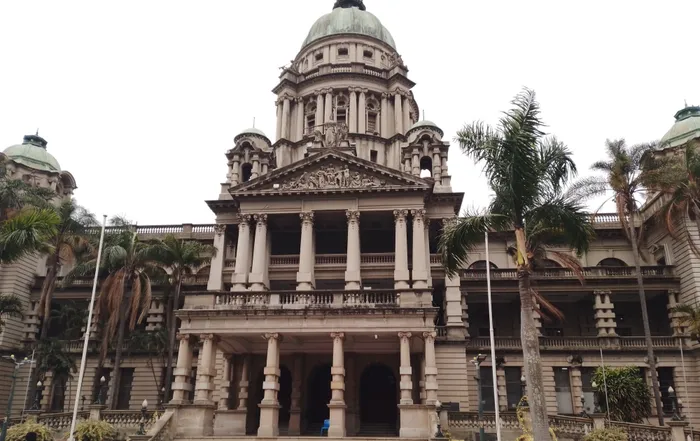
The eThekwini Municipality says it is tackling long-standing water and sanitation challenges and addressing billing complaints.
Image: Willem Phungula
Headaches caused by incorrect billing could soon be a thing of the past as the eThekwini Municipality is set to go live with a new billing system.
The city stated recently that in a strategic move to enhance operational efficiency, embrace technological innovation, and foster a customer-focused service environment, the municipality will replace its Revenue Management System (RMS).
The Mercury reported in 2023 that a controversial billing system, which was installed at a cost of more than R1 billion, faces the chop as it is not compatible with some of the “financial control tools” that are to be implemented by the municipality.
The Revenue Management System (RMS), which was implemented in 2016, was a source of endless problems for ratepayers who complained of inflated bills. Billing problems have persisted with ratepayers and councillors also recently raising concerns.
The system also came with a price tag of more than R1 billion after costs had ballooned from an initial amount of R150 million.
At the time, the councillors were told during the briefing that the RMS was not compatible with the Municipal Regulations on Standard Chart of Accounts (mSCOA). The mSCOA project has been spearheaded by the National Treasury with the aim of improving financial reporting across local governments.
It was initiated to address concerns around inconsistencies in local government financial processes, irregular reporting, and poor data integration. It enforces accounting standards, including for the collection of financial data.
Officials with an understanding of the project said it was more cost-effective to go out and source a new system that could be configured to comply with mSCOA than to spend more money trying to fix a system that was already nearing the end of its lifespan.
“The new system, Revenue Management System: Customer to Meter (C2M), is scheduled to go live in July 2026. The C2M system will integrate water and electricity meter management with customer service operations, including billing and rates, on a unified platform.
“This modernised approach is expected to enhance the overall customer experience. The system will streamline the billing process, improve customer interactions, and provide a comprehensive view of customer data.
“This will lead to better service delivery and customer satisfaction, along with enhanced accuracy, transparency, and customer engagement. The new system is fully compliant with the Municipal Standard Chart of Accounts regulations, aligning with national efforts to modernise financial management through the adoption of updated systems and technologies,” it said.
The City said it remains committed to maintaining open communication and ensuring a smooth transition throughout the implementation process.
DA councillor Mxolisi Khubisa said they believed the new system would cost hundreds of millions of rand.
“While the original RMS cost the city over R1 billion (and sparked significant audit queries), the new system’s implementation is part of a multi-year IT capital expenditure budget. Recent council reports suggest the City has allocated hundreds of millions for “Digital Transformation,” though a final, singular price tag for just the software replacement is often bundled with hardware and security upgrades.
“The primary reason for this overhaul is that the RMS was famously incompatible with the Municipal Standard Chart of Accounts – a mandatory National Treasury requirement.
“The phased rollout is targeted for 2026, with critical testing and data migration beginning in early 2025 to ensure the ‘live’ transition is smoother than previous attempts,” he said.
EThekwini Ratepayers and Residents Association president Ish Prahladh voiced concerns. “First of all, has eThekwini produced the evidence of how much it cost the ratepayers for the RMS system which was implemented in 2016 and who are the officials who signed this system off which cost the ratepayers about R150 million to R1 billion now?”
He said the new system that eThekwini is looking at must be tried and tested; its procurement must be transparent.
“It is crucial that the Ratepayers Associations from each area get involved so that there is no corruption in the tender process and the system this time is beneficial to the Ratepayer and Community who are the actual payers and the custodians who fund the system,” he said.