

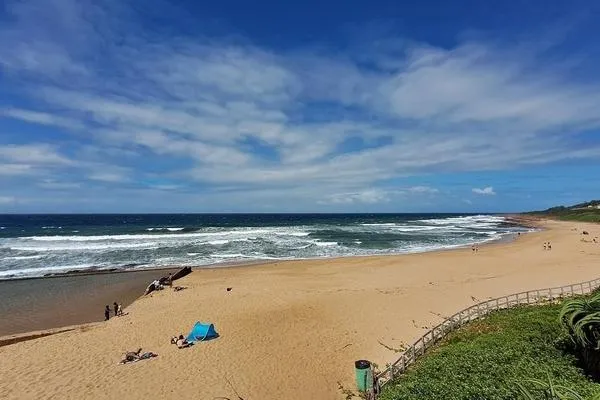
File image: Human remains have been found at Pennington Beach on the KwaZulu-Natal south coast after three bathers were swept away on New Year's Day.
Image: National Sea Rescue Institute (NSRI)
Reports have emerged that human remains have been recovered at Pennington Beach, on the KwaZulu-Natal south coast where three bathers went missing on New Year's Day.
According to a report on news channel Newzroom Afrika, the remains were found on a rock near the shore by a relative of the missing men who has been continuously searching for the young men.
Due to the state of the human remains, DNA testing would have to be conducted to confirm the identity of the deceased, it was report.
The relatives have been keeping vigil at the beach since New Year's Day. On Sunday, January 4, families joined by church members gathered in prayer at the beach for the recovery of their loved ones.
Umdoni mayor Mbali Cele-Luthuli was also present at the prayer and pledged that search operations would continue.
In total there were seven people who were swept away by a rip current while they swam at Pennington beach on the New Year’s Day, three were found dead while one was rescued and three men remain missing.
Lifesaving South Africa said in a statement on Tuesday that the new year began on a tragic note, with several drowning incidents reported along South Africa’s coastline.
“The first two days of January were particularly devastating, beginning with the widely reported mass drowning at Pennington Beach. This was followed by reports of bathers missing at Ballito, Blue Water Bay (Gqeberha), Wedge Beach, South Beach and Country Club Beach (Durban), St Lucia (Jabula Beach), and most recently at Banana Beach on the South Coast, where a fisherman went missing.
“Lifesaving South Africa extends its deepest condolences to the families who have lost loved ones. Our thoughts and prayers are also with those families who continue to maintain vigils, hoping for the safe return of those still missing.”
The organisation added that despite the exceptionally large numbers of beachgoers across the country during the holiday period, it must be noted that there were very few drownings that occurred during official lifeguard duty hours.
It added that the January remains a high-risk period and supervision of children on holiday becomes increasingly important.
Children between the ages of 5 and 17 years represent the largest proportion of both fatal and non-fatal drowning cases in South Africa.
“Lifesaving South Africa urges all parents, caregivers, and beachgoers to remain alert and to make safety a priority so that preventable tragedies do not continue to mar the 2026 holiday season.”