

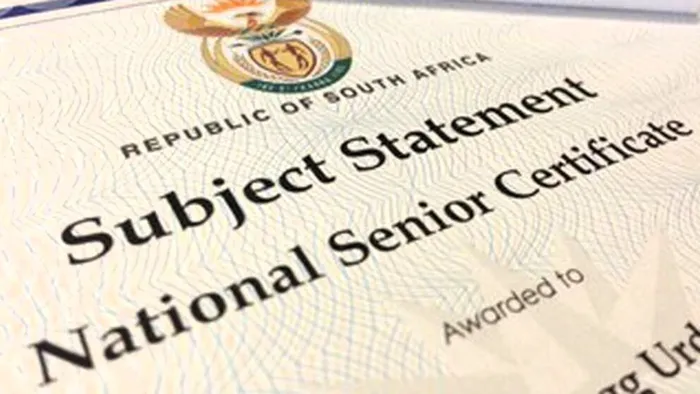
The Information Regulator is seeking leave to appeal a court ruling that gave the Department of Basic Education the greenlight to publish matric results in newspapers.
Image: FILE
The Information Regulator's chairperson Advocate Pansy Tlakula says its case regarding the media's publication of the matric results centres on the interpretation of the Protection of Personal Information Act (POPIA) and is a technical matter.
The Information Regulator (IR) and the Department of Basic Education (DBE) have been in a dispute over the publication of matric results in newspapers since 2022. Previous courts have ruled that the DBE can release the results using exam numbers and not names for publishing in newspapers across the country.
In response to the DBE publishing the 2024 results, the IR issued an infringement notice and fine to the DBE for contravening POPIA. This matter was again taken to court and in December the Gauteng High Court ruled that the results can be published in newspapers using examination numbers, without requiring parental or learner consent.
The IR is seeking leave to appeal this ruling to the Supreme Court of Appeal.
Speaking on SAfm, Tlakula said the case is not about preventing the publication of results, but about ensuring consent is obtained where required.
“Our case is that those results can be published in the newspapers with parental consent for learners who are below 18 or with the consent of the learners who are above the age of 18,” she said.
The court dismissed the regulator’s argument, ruling that examination numbers do not constitute personally identifiable information as defined by the Protection of Personal Information Act (POPIA).
Tlakula disagreed with the court’s interpretation.
“Definitely, because it’s an identifying number, it’s linked to a student. It’s not de-identified,” she said. She added that the court did not consider other arguments raised by the regulator, including the requirement to obtain consent.
“The court took the view that an examination number is not personally identifiable information, and therefore POPIA did not apply. So because the court took that view, it did not even entertain our argument on section 11, obtaining of consent, and also the arguments of the DBE that consent is not required in this case because there are other grounds that allowed them to publish without consent,” she said.
The regulator also addressed the court’s claim that students would not be able to identify peers from exam numbers, which the High Court described as “fanciful.” “The argument is whether the examination number is personal information or not, and it is personal information. It’s not de-identified,” Tlakula said.
She emphasised that the legal interpretation is the focus, not what may or may not happen in practice.
Tlakula further explained that the case raises questions about the definition of personal information and the interpretation of POPIA. “Once you say that this is de-identified personal information… then we have to dig deeper to say, what is identified personal information? And we don’t feel that this is de-identified. This case creates precedent, which, if we leave without really challenging, it is going to give us an interpretation that will make it difficult for us to regulate,” she said.
Regarding the current status of the infringement and enforcement notices issued to the DBE, Tlakula said that the appeal effectively suspends the High Court’s ruling.
“We have written to the lawyers of the DBE and, in our view, the noting of the appeal set aside the order of the court. So we do not expect the DBE to publish the results… without consent,” she said. She confirmed that both the infringement notice and the enforcement notice remain in place. “As far as we are concerned, the enforcement notice and the infringement notice both remain in place,” she said.
However it seems that the Basic Education department will release the results for publication in newspapers. On Tuesday, the department published official guidelines on its Facebook page as to how learners can access their results next week. One of the points was that they can, on the day of the results being released, check this in their local newspaper, using their exam number.
Learners can also view their results through the DBE’s website, using their examination numbers and date of birth, or via SMS. Official printed statements can also be collected from the various schools or examination centres.