

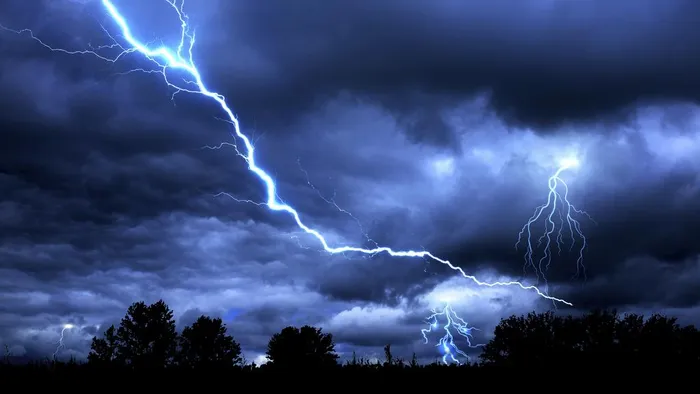
About 40 people were struck by lightning during a severe storm in Majaneng, Gauteng.
Image: Freepik
At least 40 people were injured during a severe lightning storm in Majaneng, a rural village near Hammanskraal in Gauteng, prompting renewed warnings from the South African Weather Service (SAWS) about the dangers of summer storms.
“Recent reports of people being struck by lightning in Majaneng in Gauteng have raised serious concerns about public safety during the current thunderstorm season,” SAWS said.
The incident occurred on January 3 between midday and late evening, when intense thunderstorm activity developed over northern Gauteng. SAWS reported that “a total of 40 people were reported to be hit by lightning around Majaneng,” during a period of exceptionally high lightning concentration.
Data collected by the weather service shows that between 12 midday and 10pm, “lightning within a 20 km radius of Majaneng was intense and concentrated, with 1,830 strikes recorded.” The most dangerous conditions occurred in the early evening, when “activity peaked between 5pm and 6pm, with 713 strikes (39%)”.
Most of the strikes were negative cloud-to-ground lightning, which SAWS described as particularly hazardous. During the storm, “1,764 negative” strikes were recorded compared to “66 positive,” with some reaching extreme strength. One strike registered “a maximum of -179.7 kA,” which SAWS said indicated “an exceptionally powerful lightning strike during the period.”
The threat to residents was immediate and direct. According to the report, “the closest strike was 1.4 km, showing direct risk to the settlement.”
SAWS noted that the incident highlights South Africa’s ongoing vulnerability to lightning-related disasters. “South Africa is one of the most lightning-prone countries in the world,” the service said, with Gauteng experiencing regular summer thunderstorms linked to the Highveld climate.
The weather service cautioned that lightning injuries often occur without a direct strike. “People do not need to be hit directly to be harmed by lightning,” SAWS said, explaining that “ground current is the leading cause of lightning-related injuries in South Africa.” It added that “gatherings in open spaces significantly increase the risk of multiple injuries.”
As thunderstorms continue across large parts of the country, SAWS urged the public to act quickly when storms approach. “If thunder is heard, it means lightning is close enough to pose a danger,” the statement said, stressing that outdoor activities should stop immediately and safe shelter should be sought.
The weather service emphasised that “lightning-related injuries and fatalities are largely preventable through awareness, preparedness, and timely action,” and confirmed it would continue issuing alerts and updates during the summer storm season.