

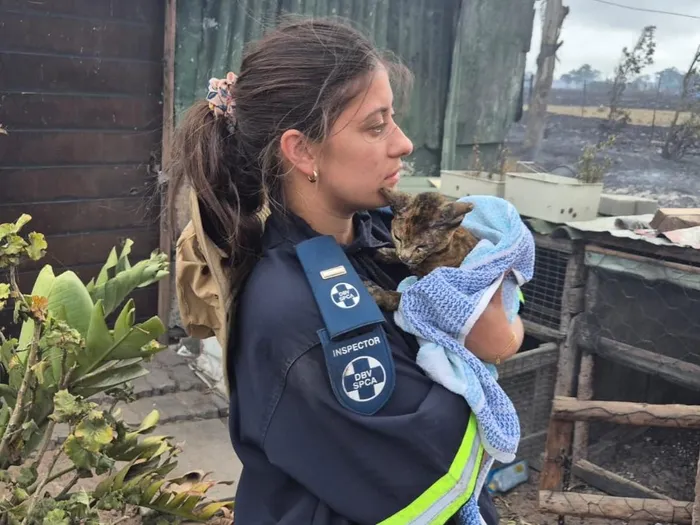
The NSPCA disaster response team has rescued several animals over the past few days after wildfires swept through parts of the Eastern Cape
Image: NSPCA / Facebook
The National Council of SPCAs (NSPCA) has deployed its Disaster Response Team to assist with urgent animal search and rescue operations following devastating wildfires that swept through large parts of the Eastern and Western Cape over the past week.
“During the past week, intense wildfires swept along the coastline of the Eastern and Western Cape, severely affecting communities in Kouga Municipality, Mossel Bay, Overberg, Stanford, and Gqeberha,” the NSPCA said.
As fires advanced rapidly through residential, agricultural, and conservation areas, animals were left particularly vulnerable. Emergency evacuations forced many residents to flee their homes and farms, often leaving domestic pets, livestock, and wildlife behind.
“Large-scale fires pose serious risks not only to human life but also to domestic, farm, and wild animals,” the NSPCA said, noting that slow-moving species and confined animals face the greatest danger during such disasters.
The NSPCA Disaster Response Team operated primarily in Kouga Municipality and Gqeberha, working alongside other animal welfare organisations and emergency response teams. According to the organisation, “slow-moving species such as tortoises and snails, as well as animals confined by fencing and boundaries, including farm animals, are especially vulnerable, as they are unable to escape rapidly advancing flames.”
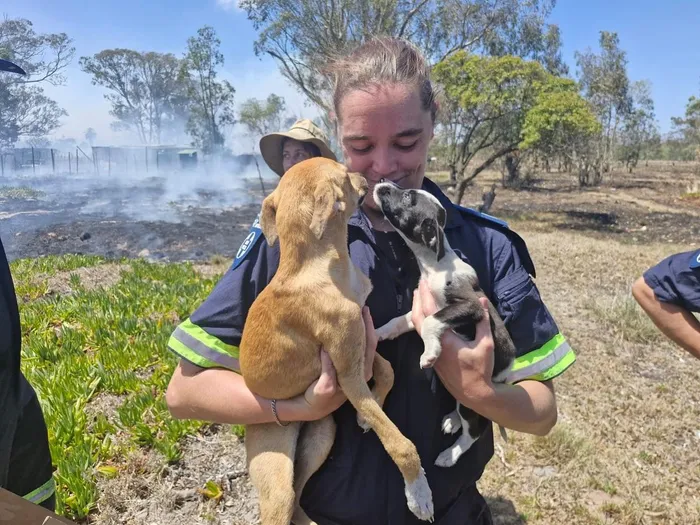
Several animals including domestic pets and wildlife were rescued.
Image: NSPCA / Facebook
Teams conducted extensive ground searches across fire-affected areas, locating animals that were “injured, disoriented, dehydrated, or otherwise compromised by fire and smoke inhalation.” Where possible, animals were removed to safety and stabilised. In cases of extreme injury, “humane euthanasia was performed to prevent further suffering.”
Animals rescued or assisted during the operations included “tortoises, snakes, birds, snails, antelope, cats, dogs, and farm animals.”
The fires also directly impacted animal welfare infrastructure. “Tragically, one of the NSPCA’s accredited rehabilitation centres and sanctuaries, Panthera Africa, was severely affected by the fires and was forced to evacuate its large predators,” the organisation stated. While the evacuation was successfully completed, “only one animal succumbed to complications related to smoke inhalation.”
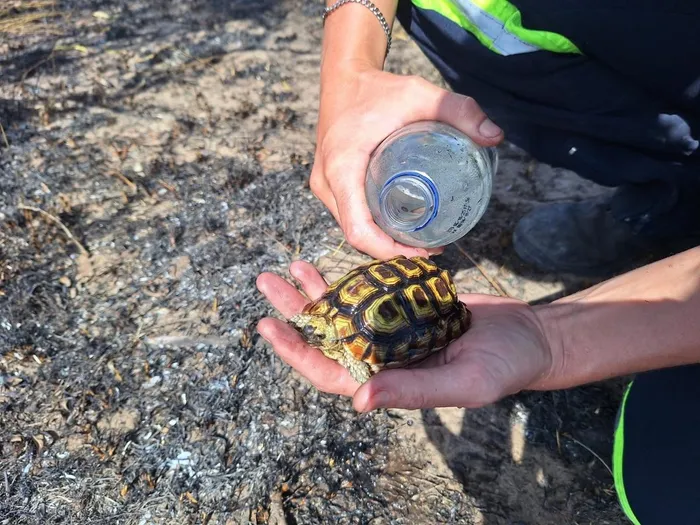
Small, slow moving animals were the most vulnerable when the fires spread.
Image: NSPCA / Facebook
The NSPCA acknowledged the collaborative effort behind the response, stating that they extend their sincere gratitude to the Assisi SPCA and the Garden Route SPCA for deploying teams to assist with search and rescue efforts.
Additional support was provided by the Cape of Good Hope SPCA, which assisted “in Western Cape areas where there is no local SPCA.”
The NSPCA’s has appealed for donations of lucerne, oathay, game blocks, game pellets, water, and water troughs.
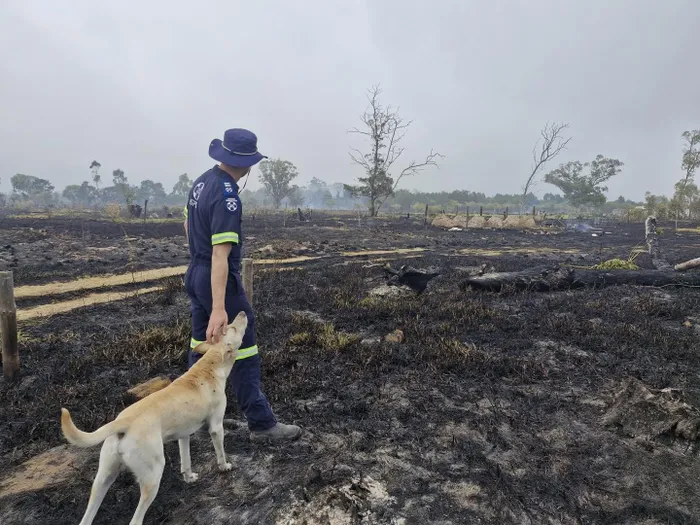
The Kouga Municipality and Nelson Mandela Bay Metro were among the hardest hit by the fires.
Image: NSPCA / Facebook
To ensure donations are received and distributed effectively, please contact the coordinators below before dropping off any items.
• Ward Councillor Steven Fourie 072 346 3245 | blomrug@gmail.com
• Alderman Dudley Coetzee 082 574 4404 | dcoetzee@overstrand.gov.za
• Inspector Kruger at Assisi SPCA 083 607 8596
• Senior Inspector Cooke (drop-off at Mossel Bay SPCA) 072 517 5775
For more stories from The Mercury, click the link THE MERCURY