

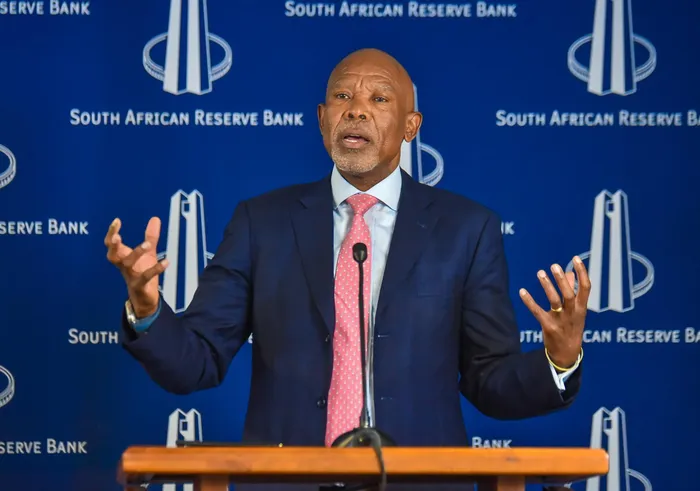
Lesetja Kganyago, Governor of the South African Reserve Bank.
Image: SARB | Facebook
The South African Reserve Bank (Sarb) Governor Lesetja Kganyago on Thursday announced that the central bank's Monetary Policy Committee (MPC) voted to keep the repo rate unchanged.
This means that the repo rate will remain at 6.75% and the prime lending rate at 10.25%.
The Governor said that all members of the MPC voted to keep the rate unchanged.
The decision from Sarb comes after escalating tensions in the Middle East have pushed the global economy into a period of heightened uncertainty, with South Africa vulnerable to rising fuel costs, a weaker currency and inflationary pressures.
Kganyago said on Thursday, "Since our last meeting, the key event has been the outbreak of conflict in the Middle East. Prices for commodities like oil, gas and fertiliser have moved sharply higher. Meanwhile, there have been broad losses across equity, bond and currency markets, with only a few safe havens."
"We are just a few weeks into this shock, and conditions remain extremely uncertain. At this stage, it is obvious that global inflation will be higher in the near term, while growth will probably suffer from supply-chain disruptions and rising costs. But the longer-term outlook is less clear," the Sarb Governor warned.
He added that leading central banks have generally kept rates unchanged, as they await more information.
"Markets have largely dropped expectations for rate cuts in major economies, and probabilities of rate hikes have risen," Kganyago said.
He said that looking ahead, the central bank will take a decision on interest rates on a meeting by meeting basis.
Neil Roets, founder and CEO of Debt Rescue, said that the decision by the US Federal Reserve to keep interest rates unchanged reinforces a more cautious global monetary environment, and this has important implications for South Africa. “We at Debt Rescue believe that, while the Fed’s pause may provide some short-term stability in global markets, it does not necessarily translate into relief for local interest rates. In fact, the outlook has shifted meaningfully in recent weeks. Escalating geopolitical tensions in the Middle East have pushed oil prices above $100 (R1679) per barrel, which is a significant concern for South Africa as a net importer of fuel.”
Follow Business Report on Facebook, X and on LinkedIn for the latest Business and tech news.