

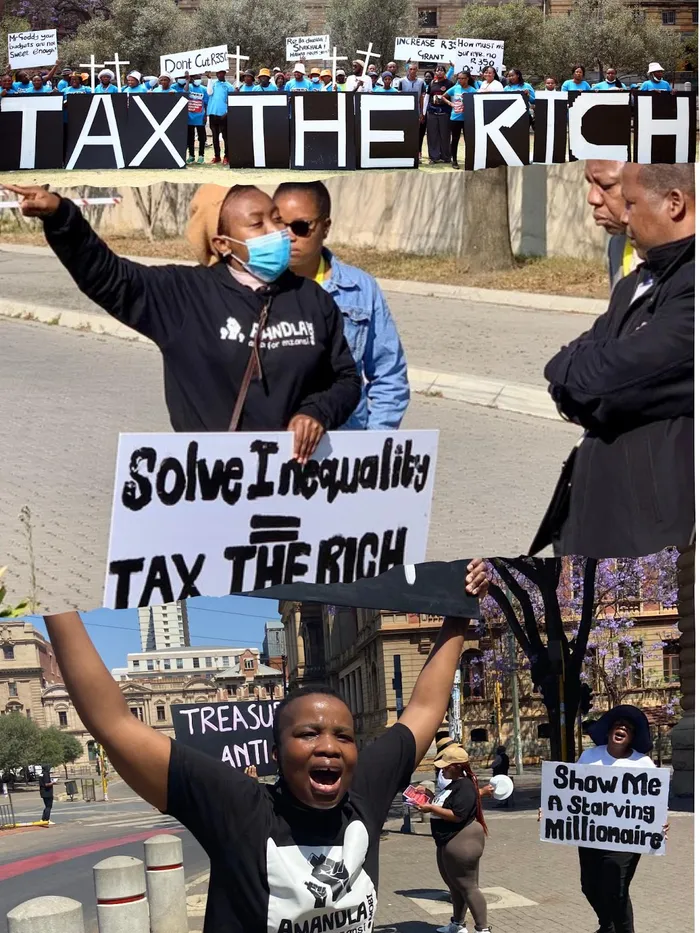
Amandla Mobi's call for a wealth tax: A necessary step to address South Africa's inequality crisis
Image: Facebook/Amandla Mobi
Civil society organisation Amandla Mobi has called on Parliament’s Select Committee on Appropriations to push for stronger taxation of the ultra-wealthy, arguing that pro-poor interventions cannot succeed while inequality continues to soar.
The organisation made its submission on Wednesday, during virtual public hearings on the Division of Revenue Amendment Bill and the Adjustments Appropriation Bill.
"We continue to call on this committee to support implementing more taxes for the super-rich. A survey by Oxfam South Africa and Patriotic Millionaires has found that 64% of South African millionaires would support a 2% wealth tax to fund social programs. Increasing taxes for the ultra-rich is no longer a topic of debate. It is a necessary step that needs to be taken," the organisation's Tlou Seopa said.
Seopa emphasised that taxing the wealthy is essential to bridge South Africa’s growing inequality gap. She argued that while government budgets project optimism, millions of citizens remain excluded from basic social support.
"For far too long, the rich have hoarded more and more wealth while the poor continue to suffer. Tax for the rich"
She also called on the government to introduce a sugary drinks tax, saying that it is not just a revenue measure but a public health intervention.
"Big businesses, companies and some Members of Parliament who are against a 20% sugary drinks tax are ultimately against a healthy nation. But to what benefit? It has been proven many times by countless studies from experts that the sugary drinks tax has been effective in fighting cancer and non-communicable diseases caused by sugary drinks. Mexico did it"
Earlier this year, IOL reported that Finance Minister Enoch Godongwana has rejected calls for a wealth tax, describing the proposal as a “dangerous gamble” that could trigger capital flight and undermine the economy.
“Should this group decide to relocate, it would impact negatively on capital and investment flows, as they often have business interests which generate employment and contribute towards economic growth and capital formation locally,” Godongwana said.
IOL Business
mthobisi.nozulela@iol.co.za