

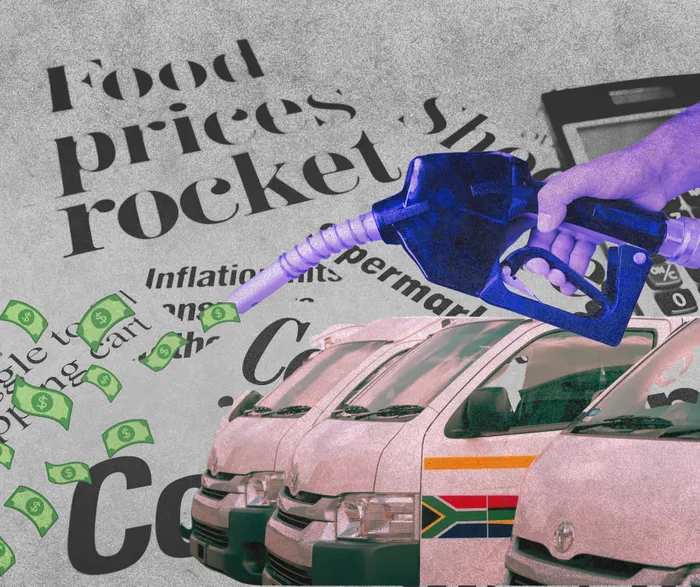
The news that many South Africans were dreading this week was finally confirmed: fuel prices have surged, and with them, taxi and ride-hailing fares are set to rise.
Image: IOL Graphics
The news that many South Africans were dreading this week was finally confirmed: fuel prices have surged, and with them, taxi and ride-hailing fares are set to rise.
The government announced that fuel prices will increase from April 1, with petrol rising by up to R5 per litre and diesel by more than R10 per litre, despite a temporary R3 per litre tax relief for the month. After the adjustments, 95 Unleaded petrol will cost between R22.53 and R23.36 per litre, while 50ppm diesel will range from R25.35 to R26.11 per litre, depending on the region.
The increases are mainly due to the ongoing war in the Middle East, which has disrupted oil supplies and pushed Brent crude prices up by around 38% in the past month, combined with a weaker rand and existing fuel levies.
The increases have immediately prompted reactions across several industries, including the transport sector. The South African National Taxi Council (SANTACO) has warned that taxi fares may rise as operators grapple with higher diesel costs and supply constraints.
SANTACO spokesperson Rebecca Phala said the organisation was already contemplating increasing taxi fares to help operators cope with the rising costs.
"Yes, we are. The anticipated fuel price increases, coupled with concerns around supply constraints and early price adjustments at some petrol stations, are already placing significant pressure on the taxi industry. As a result, many taxi associations are being compelled to consider fare adjustments," Phala said.
She said some taxi associations have already implemented fare increases, while others are in the process of finalising their decisions.
"It is important to note that taxi fares are not determined by fuel prices alone, but by a range of operational factors, inclusive of vehicle instalment costs, admin costs, vehicle maintenance, and business growth prospects. Given the current urgency and prevailing economic conditions, fare increases have become necessary for associations to sustain their operations".
The National Taxi Alliance (NTA) has been more specific, urging operators to consider fare increases of R3 to R6 for local trips and R10 to R30 for long-distance travel in response to the fuel price hikes.
NTA spokesperson Theo Malele said while the government’s short-term relief measures are welcome, more support is needed, as the increases will place additional strain on both operators and commuters.
Meanwhile, it’s not only traditional taxis that have announced fare hikes. Popular ride-hailing platform Bolt has also confirmed that it will implement temporary fare adjustments to help drivers cope with rising fuel costs.
The company said the increases will be reviewed regularly in line with fuel price movements and will be accompanied by targeted discounts and subsidies to keep rides affordable for passengers.
"Bolt South Africa can confirm that it will implement fare adjustments in response to the anticipated fuel price increases taking effect in April 2026, as fuel remains a significant component of driver operating costs. These adjustments are expected to be temporary and responsive to market conditions, and will be reviewed regularly in line with fuel price movements," the company said.
It’s currently unclear if Uber will also implement similar fare adjustments in response to the rising fuel prices.
IOL has previously reported that South Africans looking to book flights in the coming weeks have been dealt bad news after several airlines, including FlySafair, Airlink, and SAA, announced fare increases and temporary fuel surcharges.
The hikes are in response to rising Jet A1 fuel costs caused by the ongoing Middle East conflict and disruptions to shipping through the Strait of Hormuz.
mthobisi.nozulela@iol.co.za
IOL Business