

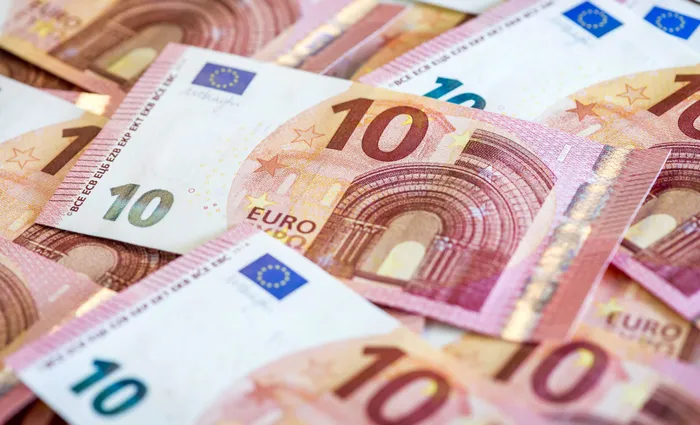
The rand was 1.7% weaker year-on-year against the euro over 2025, and 0.6% against the pound.
Image: EPA
The rand started 2026 on a firmer footing against the US dollar, but that strength did not carry through against the euro and the pound.
According to Investec chief economist Annabel Bishop, the difference comes down largely to what was happening to the major global currencies themselves, rather than to strong local factors.
Bishop said the rand was 1.7% weaker year-on-year against the euro over 2025, and 0.6% against the pound, while gaining against the dollar because of the greenback’s recent weakness.
The rand started 2026 in good cheer, having ended the previous year with a 12.4% lift against the dollar.
The US dollar weakened by “3.3% year-on-year over 2025”, while the rand gained “only 2.5% year-on-year against the US dollar for the year”, meaning it “actually lost ground against the greenback as well last year,” said Bishop.
Broadly speaking, the rand’s gains against the dollar reflected a softer dollar, not a broadly stronger rand.
In December, Bishop said the currency had paid little attention to local developments.
“The rand has largely ignored developments domestically, strengthening on its own against the US dollar by only 0.5% this year on average to date versus last year as a whole, and essentially flat against the euro and pound.”
Bishop added that December and January often bring some seasonal support for the rand as risk aversion eases and year-end trade thins, which can help the currency test stronger levels against the dollar.
At the same time, the euro has held its global position. European Central Bank President Christine Lagarde said in mid-year that the euro’s share of international currency use has remained around 19% since Russia’s invasion of Ukraine, keeping it the world’s second most important currency.
Lagarde said this stability came despite policy rate cuts and ongoing geopolitical tensions, adding that recent US tariffs had created “highly unusual cross-asset correlations”.
“The global appeal of the euro is underpinned by sound policies in the euro area and strong, rules-based institutions. Upholding the rule of law remains essential for maintaining, and potentially increasing, global trust in the euro.”
Global currency trends also matter.
The Bank for International Settlements said in its Quarterly Review for the final three months of 2025 that emerging market currencies accounted for a record 29% of global foreign-exchange turnover, with the Chinese renminbi leading the increase.
Together, these factors help explain why the rand could look stronger against a weakening dollar, while still losing ground to the euro and the pound.
IOL BUSINESS