
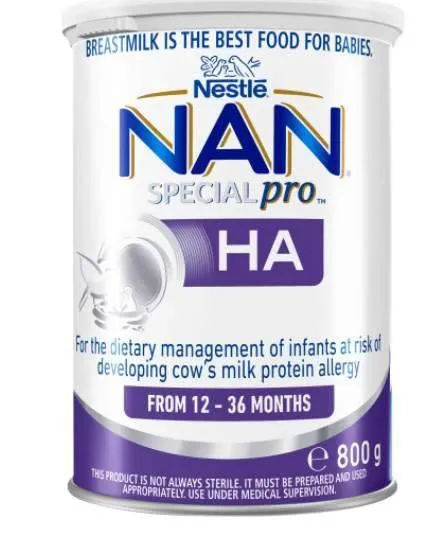
The National Consumer Commission recently announced the recall of a batch of NAN Special Pro HA infant formula due to safety concerns, one of several recalls this year.
Image: Facebook
If your pantry or your garage feels a little more like a hazardous materials site lately, you aren’t imagining it.
Since the start of 2026, the National Consumer Commission (NCC) has been on a tear, issuing high-profile alerts that range from luxury EVs and heavy-duty trucks to staple food items.
While recalls are a standard part of any consumer market, the nature of this recent cluster – stretching from December 2025 into February 2026 – suggests that South African consumers are living through a moment of industrial and biological vulnerability.
The kitchen crisis: toxic spreads and infant safety
The most recent came in early February 2026 with the ButtaNutt Peanut Butter recall. Testing revealed aflatoxin levels exceeding legal limits, a fungal toxin linked to severe liver damage.
This isn’t just a “bad batch” story. Coming on the heels of the NAN Special Pro HA formula recall in January (due to potential Cereulide toxins, which causes rapid-onset food poisoning, primarily nausea and vomiting), a pattern is emerging.
These aren’t manufacturing errors in the traditional sense; they are supply chain failures. In both cases, the contamination was traced back to raw ingredients – peanuts and oil mixes – sourced from third-party suppliers.
Analytical Note: The ButtaNutt data reveals that while retail stock was secured quickly, online sales remain the “wild west” of recalls.
As of 10 February, desktop research shows nearly 100 units sold via digital platforms remain “outstanding”. In 2026, the speed of E-commerce is officially outpacing the speed of consumer safety enforcement.
The garage: from “inertia forces” to battery fires
The automotive sector is currently grappling with a “two-front war” involving legacy mechanical issues and new-age tech glitches:
Looking back to late 2025, there were also recalls of Ford Rangers, Jeep Wranglers, and Kia.
Why Now? The 2026 Regulatory “Perfect Storm”
Data analysis shows there are three reasons why the NCC’s feed is suddenly so crowded:
IOL BUSINESS