

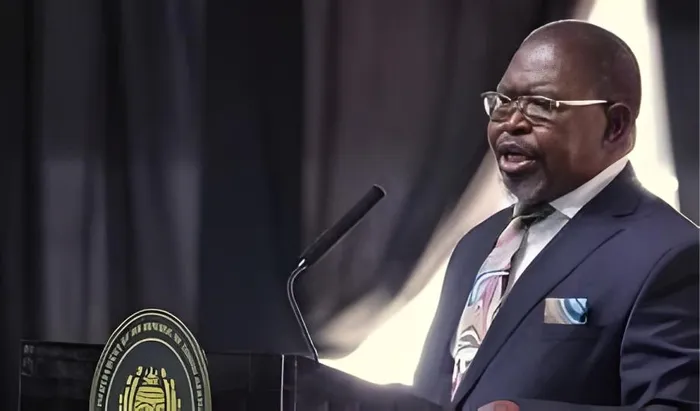
Finance Minister Enoch Godongwana again increased "sin taxes".
Image: GCIS
Finance Minister Enoch Godongwana has raised 'sin' and fuel taxes, but also provided inflation-linked relief for personal income taxpayers in the 2026 National Budget.
Personal income tax brackets and rebates will be fully adjusted for inflation, preventing bracket creep.
“We are also proposing additional tax measures to ease the financial burden on households and businesses, by adjusting personal income tax brackets and rebates fully in line with inflation.”
Ahead of the National Budget, many commentators were concerned that there would be no inflation-related increase in tax brackets. As a result, they warned, consumers would theoretically earn more, but their disposable income would drop.
Treasury said the adjustment would help protect disposable income at a time when many households remain financially constrained.
Government also proposed boosting tax-advantaged savings incentives. The annual tax-free investment contribution limit will increase from R36,000 to R46,000, while the cap on retirement fund deductions will rise from R350,000 to R430,000.
Godongwana said increases in so-called “sin taxes” were unavoidable despite an improved revenue outlook. The minister, addressing Parliament this afternoon, said: “Madam Speaker, increases to certain taxes are unavoidable.”
As a result, the tax on tobacco products will rise in line with inflation in 2026/27, including taxes on electronic nicotine and non-nicotine delivery systems, Godongwana announced.
Excise duties on alcoholic beverages will also increase by inflation.
Inflation is 3.5%. Ahead of the Budget, Diageo cautioned that an increase of around 6% - in line with previous years – would push the tax on a bottle of spirits to more than R100.
Fuel-related taxes will also climb.
The general fuel levy will increase by 9 cents per litre for petrol and 8 cents per litre for diesel. In addition, the carbon fuel levy will go up 5 cents per litre for petrol and 6 cents per litre for diesel, while the Road Accident Fund levy will increase by 7 cents per litre.
While consumers will pay more for alcohol, tobacco, and fuel, Godongwana announced measures aimed at shielding households from additional income tax pressure.
Small businesses also receive some relief. Responding to Renette Oosthuizen, a small business owner from Gauteng, who asked the minister to please increase the registration threshold for small businesses to R2 million, Godongwana went a step further and pushed it out an additional R300,000.
Each year, National Treasury asks South Africans to send in their “Tips for the Budget”. This year, more than 1,200 citizens sent us their opinions and suggestions, said the minister.
Godongwana also said that the capital gains tax exemption for the sale of a small business for older persons would be raised from R1.8 million to R2.7 million.
“This applies to small businesses worth R15 million instead of the R10 million previously. It will enable small business owners to receive more tax relief when they sell their businesses,” he said.
IOL BUSINESS