

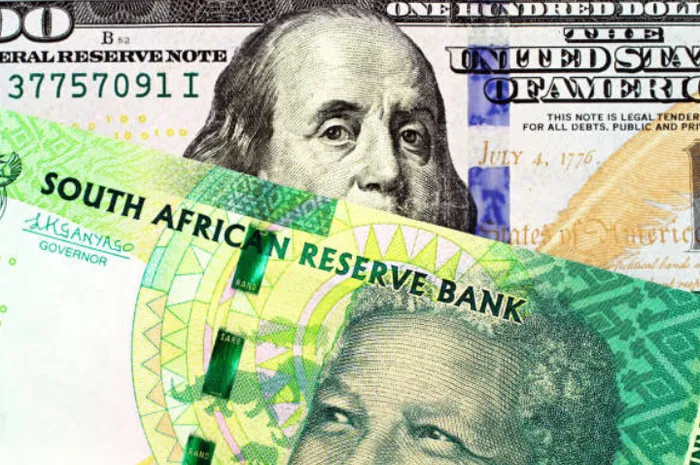
Explore the key factors influencing the USDZAR exchange rate as we head into 2026 and discover what this means for traders and businesses alike.
Image: Supplied
The USDZAR exchange rate has always reflected global confidence and how South Africa fits into an increasingly uncertain world.
As traders and investors head into 2026, analysts are sketching a picture of global monetary policy shifts, domestic reform efforts and the ongoing push and pull of risk appetite across emerging markets.
While no forecast is ever certain, several clear themes are beginning to emerge.
At the global level, analysts expect the US dollar to lose some of its dominance compared to the highs seen earlier in the decade. As inflation cools and growth normalizes, the US Federal Reserve is widely expected to move toward a more neutral interest rate stance.
This matters because a softer dollar often creates breathing room for emerging market currencies like the rand.
At the same time, global capital flows remain sensitive. Geopolitical tensions, energy transitions and uneven growth between regions continue to spark volatility.
Analysts note that in this environment, USDZAR is likely to remain reactive rather than trend smoothly, strengthening during periods of global optimism while retreating when investors rush back to perceived safe havens.
Closer to home, forecasts for 2026 hinge heavily on South Africa’s ability to stabilize key structural issues. Analysts are cautiously optimistic about incremental progress in energy availability, logistics and fiscal discipline, especially if reform momentum holds.
Economic growth is expected to remain modest, but even small gains can have an outsized impact on sentiment. A steadier electricity supply along with improved port and rail efficiency could strengthen export performance, which in turn supports the rand.
At the same time, persistent unemployment and fiscal pressure continue to cap enthusiasm, keeping forecasts grounded rather than euphoric.
Rather than pinning predictions to a single number, many analysts prefer projected ranges. For 2026, a commonly discussed band places USDZAR trading between the mid-to-high teens and the low twenties, depending on global conditions.
In more constructive scenarios where global risk appetite improves and domestic reforms gain traction; the rand strengthens toward the stronger end of that range.
In contrast, renewed global shocks or local setbacks could push USDZAR back toward weaker levels. The takeaway is flexibility rather than precision.
For traders, analysts suggest that 2026 may reward adaptability over long-term directional bets. Range trading strategies and attention to macro signals are likely to be more impactful than chasing bold forecasts.
Businesses exposed to USDZAR are encouraged to plan for ongoing volatility. Hedging strategies, diversified sourcing and pricing flexibility can help smooth currency swings, protect margins while allow room to grow.
Overall, analyst predictions for USDZAR in 2026 strike a balanced tone. The rand is not expected to dramatically rewrite its long-term story, but neither is it viewed as helplessly fragile. Instead, it remains a currency affected by global tides as well as local choices.