


Female buyers and agents are shaping the South African housing market with informed, strategic property decisions.
Image: Freepik
Forget the old days when men strutted into bank offices like they owned the world and women tagged along for moral support. New data from Lightstone shows that women are involved in about 70% of residential property purchases across the country, whether buying on their own or with a partner.
Between June 2024 and May 2025, 36% of all individual buyers were women buying alone, while another 33% were women buying in partnership.
“As women increasingly prioritise financial independence and take the lead in property decisions, our partnership with Lightstone supports this shift,” says Seugnette van Wyngaard, head of 1st for Women Insurance.
“By integrating our tailored home and contents insurance into the property‑buying journey, we empower women to move from homeowner to protected homeowner with cover designed specifically for them.”
Women’s roles in purchasing have steadily grown over the past decade as financial confidence and agency have increased.
Historically, property ownership in South Africa was dominated by men, mirroring broader patterns of economic power inherited from both cultural norms and economic inequality. But in recent years, that mould has cracked.
Data shows that women in South Africa now own or co‑own roughly 60% to 71% of all residential properties, depending on the measure used, with women‑only ownership climbing markedly compared to a decade ago.
So, why are women suddenly out-buying men? Roles in the workplace, financial independence, and changing social norms.
Decades ago, property ownership in South Africa mirrored the global stereotype: men earned, men owned, men decided. Women who worked were often earning “pin money” or supporting the household, rarely buying homes outright.
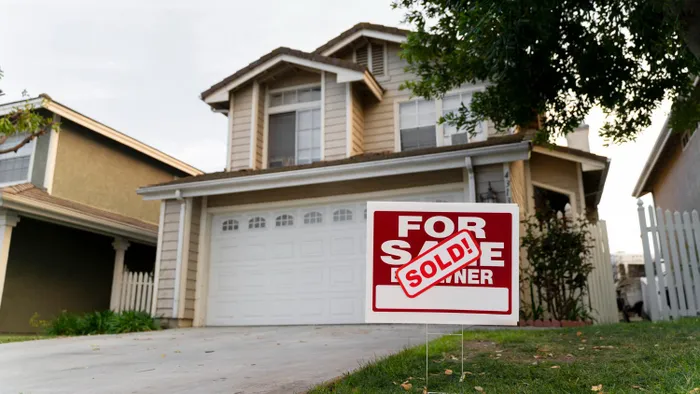
Women are increasingly purchasing homes on their own, reflecting rising financial independence and market influence.
Image: Freepik
Now, women are earning more, climbing the corporate ladder, and investing smarter. Many are primary earners in their households, and that confidence spills into homeownership.
In the past, very few women purchased homes independently; today, women buying solo outpace men in many markets, especially first-time buyers and those snagging properties under R1 million. It’s like the property market got a glow-up, and women brought the style, brains, and financial chops to the table.
The rise of female buyers reflects broader economic and social changes: women’s participation in the workforce, higher education levels, and growing financial independence.
Standard Bank data shows nearly 40% of main home-loan applicants are women, and that number keeps climbing. Translation: more women are flexing their financial muscles, and the market is noticing.
Yet, the story doesn’t stop at ownership numbers. Women influence how homes are chosen with priorities such as safety, community, sustainability and convenience shaping demand in ways that are reshaping development trends across urban and suburban areas.
Basically, women aren’t just here for the mundane reasons of buying a roof over their heads; they’re building communities, setting expectations, and yes, judging if the Wi-Fi can survive Zoom calls and TikTok scrolling at the same time.
Developers and lenders have taken note, increasingly tailoring products and services to meet the needs and preferences of female buyers.
In a society where economic power was once heavily gendered, these shifts signal progress. Women are owning homes, shaping neighbourhoods, and flipping the property script.