

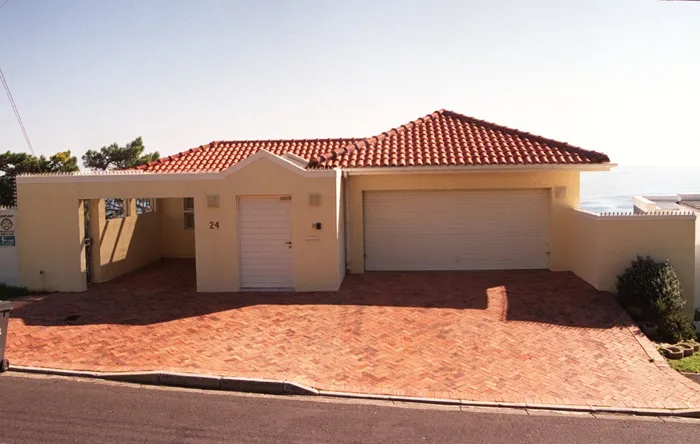
Many homeowners would previously have crossed the old R2 million threshold due to the steady increase in property values over the last few years.
Image: File
The South African Revenue Services (SARS) revised tax tables released on February 26 spell a major financial boost for ordinary homeowners.
Delivering the 2026 Budget last month, Finance Minister Enoch Godongwana said they were taking other measures to support small businesses: "We are raising the capital gains tax exemption for the sale of a small business for older persons from R1.8 million to R2.7 million.
"This applies to small businesses worth R15 million instead of the R10 million previously. It will enable small business owners to receive more tax relief when they sell their businesses.”
The capital gains tax (CGT) exclusion on primary residences has jumped from R2 million to R3 million effective from the beginning of this month, says Paul Stevens, CEO of Just Property.
“This is not R3 million of the selling price - it’s R3 million of the capital gain,” Stevens explains. “For many sellers, that difference will translate directly into more money in their pockets.”
He says families, retirees, and long-term owners will all benefit, since the new R3 million exclusion will change the maths in their favour.
What will sellers be saving?
1. A family home in a growth suburb:
“A family selling a home that’s increased modestly will now keep almost R90 000 more of their profit.”
2. A long-term owner in a high-value suburb:
“This translates to a saving of roughly R144 000, which is meaningful money in anyone’s book.”
3. A retiree downsizing after decades in the same home:
“For retirees, that’s nearly R100 000 more of their equity preserved.”
With property values having increased steadily in the last few years, many homeowners would previously have crossed the old R2 million threshold. Under the new R3 million exclusion, a far larger percentage of sellers will now fall comfortably within the tax-free band.
Stevens says he expects the tax relief to influence the market in four key ways:
For Stevens, this is the moment for sellers to recalculate their numbers.
“The single biggest mistake sellers make is focusing only on the selling price. What matters most is the net number - what you walk away with after costs and tax. Under the new R3 million exclusion, that number has just improved for thousands of South Africans.”
He adds that in a market where every rand counts, the Government’s CGT threshold increase is a welcome break that will give homeowners more breathing space and more options.
Before delivering the 2026 Budget last month, Samuel Seeff, chairman of the Seeff Property Group, argued that the primary home allowance had remained at R2 million since 2012, and it should increase to R3 million to reflect current property values.
Additionally, he said the government should consider enabling loan interest as a deduction to reduce the gains and avoid “double taxation” (since the interest is paid from after-tax funds).
Section 9H of the Income Tax Act, commonly known as “Exit Tax”, applies when a South African tax resident ceases to be a resident, said Mbalenhle Mahlaba, the team lead for Expatriate at Tax Consulting SA.
She says SARS treats certain qualifying worldwide assets, such as shares, investments, and foreign property, but excluding South African immovable property, as if they were sold the day before the taxpayer ceases residency.
“This triggers a capital gains tax event, whereby the capital gains are taxed accordingly, based on accurate market valuations, historical cost records, and detailed calculations,” Mahlaba said.
The tax consultancy said this is an important consideration when ceasing tax residency, even more so now, following this latest move by the National Treasury to ensure that they do not miss out on taxes due by a departing taxpayer.
Independent Media Property