

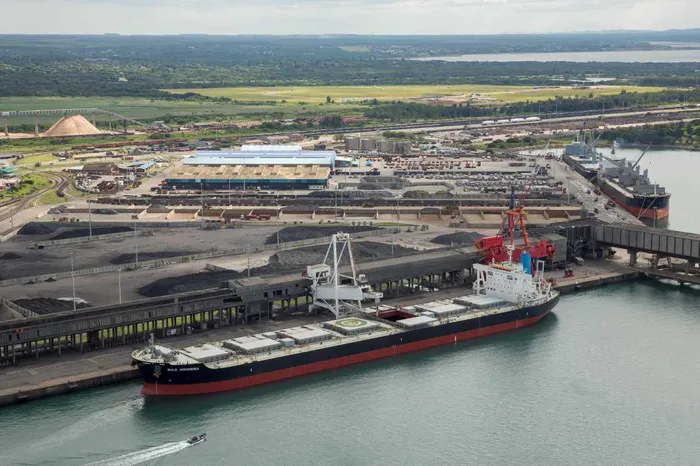
Richards Bay and Empangeni buyer activity lifted meaningfully over the past year.
Image: File
Where industry, infrastructure and lifestyle intersect, smaller towns are carving out new roles in the country’s property landscape.
The “twin-towns” of Empangeni and Richards Bay in KwaZulu-Natal are one such enclave, according to Regis Usaiwevhu, principal at Tyson Properties Richards Bay.
“This is not a retirement town. This is where people come to work, build careers and grow businesses-and still enjoy a great lifestyle,” he says.
As economic recovery reshapes property demand, living in a smaller town can be a smart career and investment move. The trick, however, is finding the right small town.
Usaiwevhu recommends that buyers and investors do their research, identifying not only where they have the best short-term quality of life but also where there are strong future growth prospects.
The most promising towns tend to share certain characteristics: diversified local economies, access to transport infrastructure, ongoing private or public investment and strong regional roles in tourism, agriculture or industry.
Whilst some former industrial hubs where older companies are closing and major sectors such as the steel and sugar industries are faltering, others are buying into growing sectors such as logistics.
Given that Richard’s Bay is home to Africa’s largest deep-water port and one of the continent’s largest coal terminals, this applies. It is also populated by major employers, including aluminium smelters, forestry groups and mining operations.
These large multinational companies attract skilled professionals and support a growing network of service industries.
“In Richards Bay and Empangeni, you’re investing in an area with a solid economic base. That gives buyers confidence that they will see equity growth over time,” Usaiwevhu says.
He says it comes as no surprise that, in Richards Bay and Empangeni, buyer activity has picked up noticeably over the past year: “We’ve definitely seen an increase in enquiries compared with last year.
"More calls are coming through, and more activity on property portals. Interest-rate cuts have helped.”
Here, affordability is a key driver. As many professionals prepared to relocate to smaller towns for career opportunities are just starting, many are first-time buyers.
“You’ll find that the area is quite attractive for young professionals because of the mines and the industries around Richards Bay. There’s employment potential, not just in the large companies themselves but also in the supply chain and downstream industries.”
"In many smaller towns, buyers can secure larger homes, more land and proximity to lifestyle attractions for the same price, or less than a modest property in a major city.
"Richards Bay and Empangeni, therefore, tend to go counterflow whilst estate living is booming in nearby enclaves like Ballito and Salt Rock, where freehold properties sell quickly whilst more expensive estate properties remain on the market for longer, he says.
This influx of young professionals is also driving strong demand for rentals, particularly among professionals who work locally during the week but maintain family homes elsewhere.
“The rental market here is extremely busy. If a property is priced correctly, you’re unlikely to wait more than a month for a tenant. Many people are buying properties specifically to rent,” he says.
Usaiwevhu adds that another niche that has expanded rapidly is student accommodation, following the growth of the nearby University of Zululand.
“There’s high demand at the moment. A lot of investors are buying houses or converting properties to cater for students.”
A mere 15-minute drive inland, Empangeni is benefiting from spill-over demand and new development.
A major catalyst is the upcoming Prince Buthelezi Mall - a 36,000 m² retail development with over 140 stores, which is scheduled to open later this year. It is expected to reinforce Empangeni’s role as a regional service hub, especially in light of the large numbers of cross-border travelling shoppers from Swaziland and Mozambique.
“There’s definitely been an increase in demand for property in Empangeni,” says Usaiwevhu. “Historically, property prices have been lower than in Richards Bay, but they’re starting to pick up. Buyers are seeing the potential for better resale value.”
Proposals to relocate the Richards Bay airport closer to the N2 corridor near Empangeni aim to support long-term industrial and tourism expansion and improve regional connectivity.
“Richards Bay is an industrial hub that still offers a strong family lifestyle. It’s a place where business, family and leisure can coexist. In many ways, it’s the gateway to Zululand,” Usaiwevhu continues.
The region offers easy access to beaches, big five game reserves and the UNESCO-listed iSimangaliso Wetland Park, while still providing the services expected of a modern town, from private hospitals to schools and retail centres.
With the imminent opening of the Club Med resort in Tinley Manor, the broader KZN north coast is also set to benefit.
“You get a quality of life here that can be difficult to find in bigger cities. There’s a strong culture, rich heritage, and you’re close to some of the best natural attractions in the country,” he points out.
Delivering a speech at the KwaZulu-Natal Energy Indaba held at the City of Umhlathuze earlier this week, Nomalungelo Gina, the Deputy Minister of Science, Technology and Innovation of South Africa, said the province consumes over 6 700 megawatts and faces an annual shortfall of 400 to 470 megawatts to sustain projected economic growth.
She said the province has set a target of generating 5 000 megawatts of renewable energy by 2030. It is a positive sign that the National Energy Regulator of South Africa (NERSA) has approved a 3 000 megawatt gas power station in Richards Bay.
“President Cyril Ramaphosa has been backing the Richards Bay location as a regional strategic energy hub for a few years now, stating in his speech that Richards Bay must be positioned as a critical pillar of South Africa’s energy transition, industrialisation, and export-led growth strategy,” said Gina.
In December, Adrian Goslett, the CEO and regional director of REMAX Southern Africa, said there have been growing indications of a gradual shift towards small towns, as property consumers are rethinking the long-term decisions around family life, profession, and retirement.
He said that over the years, many South Africans have gravitated towards the big cities in the hopes of career prospects, entertainment, and access to amenities.
The CEO said there has been growing interest in smaller towns as buyers and tenants alike are becoming more intentional with their lifestyle choices.
Independent Media Property