

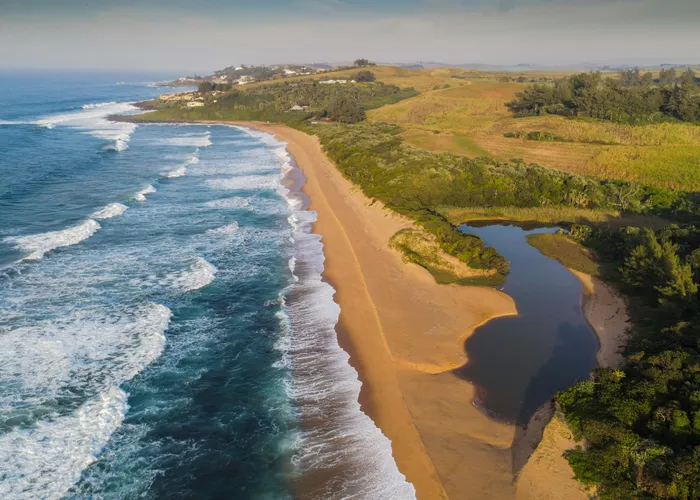
No precinct can succeed in isolation as purpose-led development requires collaboration between planners, technologists, authorities, environmental experts and communities.
Image: Supplied
A new model for urban living which prioritises connectivity, sustainability and human wellbeing is emerging globally.
This is as cities around the world grapple with urbanisation, climate change and shifting societal needs.
In South Africa, this shift is gaining momentum through developments like the Sibaya Precinct, a flagship project transforming the KwaZulu-Natal North Coast into a blueprint for future-ready urban design, Brad Winstanley, the Development Executive at Devmco Group.
He says connected precincts are reshaping the country’s urban future, offering a powerful response to spatial and infrastructural challenges while creating integrated communities that thrive beyond the built environment.
“What makes this model increasingly compelling is not only how these precincts are designed, but who they attract. At Sibaya, the presence of globally recognised and design-led brands signals a deeper shift where leading businesses choose to embed themselves within ecosystems that reflect how people want to live, work and engage.”
Suburban sprawl and long commutes with disconnected zones does not cut it.
The property development group that has delivered R8 billion in property development between Umhlanga Ridgeside and the Sibaya Coastal Precinct says from Urban Fragmentation to Functional Integration Urbanisation, climate disruption and changing social expectations have rendered the traditional city model obsolete.
It says suburban sprawl, long commutes with disconnected zones no longer meet modern needs.
“In their place, integrated precincts where people can live, work, learn and relax within walkable, digitally connected environments are emerging as the new benchmark."
Globally inspired yet locally grounded, these precincts champion mixed-use development, environmental sensitivity and technology integration.
The Sibaya Precinct demonstrates how global trends can be adapted to local realities, not just through density, but through carefully curated, holistic environments that foster inclusion, economic opportunity and long-term sustainability.
"This curation extends beyond infrastructure to the intentional selection of tenants and experiences, ensuring that residential, commercial and lifestyle components reinforce one another."
A convergence of megatrends is accelerating urban transformation. The UN Sustainable Development Goals project that 70% of the global population will live in cities by 2050, placing pressure on urban areas to grow sustainably.
Climate change demands eco-conscious design, while digital transformation continues to reshape how people live and work.
In South Africa, the Devmco Group says these pressures are intensified. It says post-pandemic lifestyles have increased demand for green spaces, flexibility and health-focused environments.
Precincts that enable decentralised living where nature, workspaces and services coexist are no longer aspirational and have become essential, it says.
This shift is also influencing where businesses choose to locate, with brands seeking environments that align with lifestyle, accessibility and long-term values which is increasingly evident along the KZN North Coast, says Winstanley.
The executive says while cities like Paris and Singapore have pioneered the 15-minute city model, SA’s unique challenges ranging from spatial inequality to infrastructure backlogs make precinct-driven design even more relevant.
“Developments like Sibaya show that it is not only possible to localise global best practices, but to build on them. A key differentiator has been the deliberate creation of a design-led commercial ecosystem.”
The group says the introduction of brands such as Porsche, Weylandts and Hertex reflects more than tenant demand, signalling confidence in a precinct defined by scale, infrastructure and long-term vision.
It adds that these brands are not simply occupying retail space, they are aligning with a development that prioritises architectural integrity, lifestyle integration and enduring value.
At the same time, it adds that precincts continue to attract a diverse mix of residents from young professionals to retirees united by a desire for security, accessibility and community-focused living.
True integration lies in the seamless transition between daily activities, says the developer.
It says in a well-planned precinct, homes, offices, retail and recreational spaces coexist in a way that complements rather than competes.
As retail evolves beyond transaction into destination this is achieved through immersive showrooms, curated lifestyle spaces and collaborative environments that encourage interaction and discovery.
“This creates a new urban rhythm where people don’t simply move through spaces they engage with them. Technology supports this balance, enabling environments that are connected, responsive and aligned with modern work and lifestyle patterns.”
According to Winstanley, liveability is not about luxury but dignity and about creating urban spaces that support mental, physical and social health.
“In the context of the Sibaya Precinct, this means prioritising access to green spaces, embedding fitness and wellness facilities and ensuring safety through smart security infrastructure.”
It also means creating environments where design, nature and lifestyle intersect meaningfully, he adds.
“Many of the brands entering the precinct are responding directly to this drawing inspiration from the coastal landscape, integrating indoor-outdoor living, and creating spaces that feel both authentic and aspirational. The goal is simple yet ambitious, to build communities where people flourish, not merely function.”
Sustainability must move beyond branding to become a measurable design philosophy. This includes embedding solar power, smart metering, rainwater harvesting and climate-responsive architecture from the outset.
Technology is the enabler that brings it all together through supporting convenience, safety, responsiveness and long-term adaptability.
Sibaya’s smart precinct model includes high-speed fibre, IoT-based systems and digital platforms that enhance how residents and businesses interact with their environment.
For tenants and visitors alike, this translates into a more seamless, responsive experience from connected retail environments to digitally enabled spaces that support evolving consumer behaviours and flexible working patterns.
No precinct can succeed in isolation as purpose-led development requires collaboration between planners, technologists, authorities, environmental experts and communities.
It also depends on alignment with the right commercial partners.
At Sibaya, the growing mix of global and national brands reflects a shared commitment to quality, innovation and long-term value. This collaborative approach ensures resilience and relevance well into the future, says the Devmco Group.
The developer says urban development is no longer about constructing buildings, it's about crafting systems that support human and environmental wellbeing.
It says the Sibaya Precinct is not just a project, it is a working model of what South Africa’s urban future can look like sustainable through inclusive, tech-enabled and deeply connected to its context.
“If South African cities are to thrive amidst the twin pressures of urbanisation and climate change, the connected precinct model must become the rule, not the exception.”
Meanwhile, the South African government is rolling out an initiative called the Eastern Seaboard Development initiative which serves as a starting point to unlock the economic potential of the Eastern Cape and KwaZulu-Natal.
A document outlining this initiative says the Eastern Seaboard is located along an approximately 250 km coastal stretch between Coffee Bay in the King Sabata Dalindyebo Local Municipality in the south and Scottburgh in Umdoni Local Municipality in the north.
It consists of regional development anchors, rural service centres and dispersed rural settlements across and along the N2 corridor in municipalities within KwaZulu-Natal to the Eastern Cape province mainly by the road network.
Currently, it is said that there is limited physical and ICT infrastructure as well as economic development. This area is said to be endowed with natural resources spanning across multiple administrative boundaries and lies between 2 provinces, the Eastern Cape and KwaZulu-Natal, 4 District Municipalities namely, Harry Gwala, Ugu, Alfred Nzo and OR Tambo, and 17 municipalities depicted under key partners.
The purpose of the project is to develop the Eastern Seaboard Regional Spatial Development Framework (ESRSDF) in terms of the Spatial Planning and Land Use Management Act (SPLUMA) to address the legacy of apartheid spatial planning and to provide increased sustainable service delivery that will improve the quality of life of current and future residents across the region.
Independent Media Property