

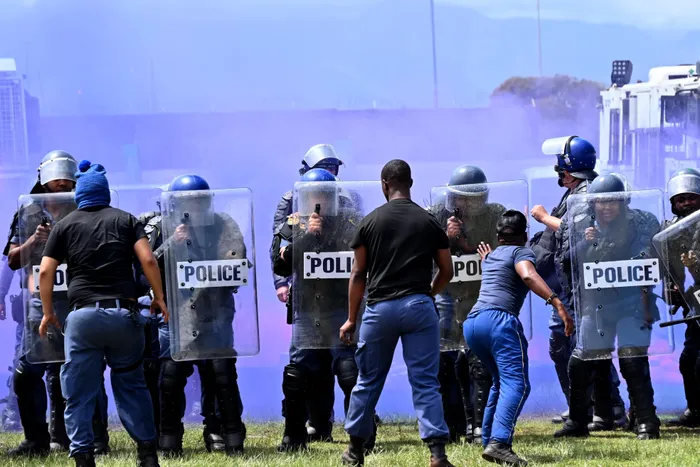
The Western Cape police demonstrate their commitment to public safety with a new crime plan targeting gang violence and illegal firearms this festive season.
Image: Ayanda Ndamane/Independent Newspapers
As the police launched the Festive Season Safety Plan, top management revealed that while the Western Cape remains one of the country's most violent provinces, it was home to 138 gangs, with over 4000 firearms linked to deceased owners potentially being used to commit crime and ongoing taxi violence.
The officers on Wednesday demonstrated their operational readiness and also showed off their new gadgets, a drone and a helicopter, and 88 vehicles for hotspot areas just as another triple murder rocked Imizamo Yethu, Hout Bay, on Tuesday night.
Deputy National Commissioner Lieutenant-General Tebello Mosikili said the Western Cape is one of four provinces being monitored daily by national management due to its persistently high levels of violent crime.
“Daily, we get reports of violent crime in the Western Cape. But it is not the only province facing this challenge; there are four provinces we are monitoring daily because of the nature of the violence,” she said.
She added that shortly after taking office, the Acting Minister of Police, Professor Firoz Cachalia, visited the province to assess interventions and meet civil society groups.
“The minister looked at the plans and directed us to strengthen our response. What was presented was an extended intervention plan incorporating the existing Operation Shanela, but also adding new strategies and resource requests.”
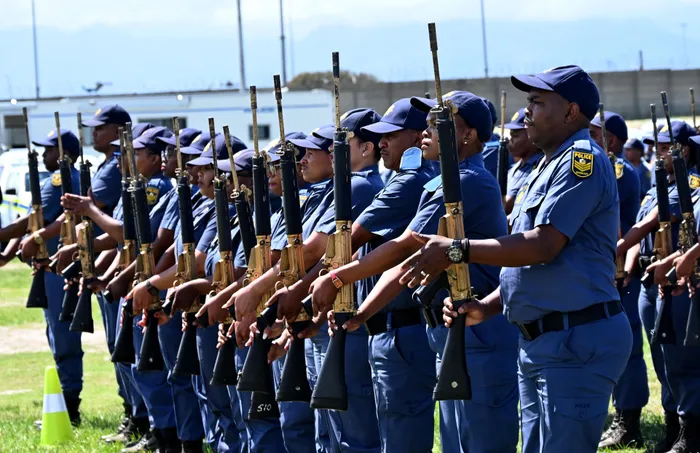
The Western Cape SAPS together with its law enforcement partners officially launched its Season Operations at Khayelitsha stadium.
Image: Ayanda Ndamane/ Independent Media
She confirmed that the SAPS requested additional funding beyond its baseline budget to support operations in high-risk areas.
“The Minister met with JCPS ministers and the Treasury to look at additional funding. We’ve since communicated that back to the province, allowing the provincial commissioner to call up further resources.”
Mosikili said a key focus of the revised plan is integration across departments and community involvement.
“What’s most important is the integrated nature of the plan, to have everybody, including the communities, addressing the issues on the Cape Flats. Unfortunately, incidents still occur daily, but when intelligence is available, we can respond and mitigate the threat. The Western Cape remains a hotspot province,” she said.
Mosikili recounted an earlier incident to illustrate the dangers faced by officers: “In January, a police official was attacked while witnessing a crime and killed while sitting in his car. When he tried to intervene, he lost his life. That shows how brazen criminals are in this province.”
When asked how the new plan differs from the previous version, she said: "It’s not that it was unsatisfactory, but now we’ve brought in more structures and community partners. Civil society organisations approached the minister, offering to work with the police, bringing their own resources and strategies."
"We are implementing measures under the Prevention of Organised Crime Act because most of what we are dealing with involves organised criminal activity."
Western Cape Police Commissioner, Lieutenant-General Thembisile Patekile on the province’s specific crime challenges, cited multiple factors driving violence.
“With taxis, there are intra-association conflicts where hitmen are targeting each other, especially in Nyanga. There’s also conflict between CATA and CODETA, which has led to route closures. “Then we have extortion, particularly in townships, and gang rivalries. There are 138 gangs in the City of Cape Town alone. We have targeted the top leaders in some, but that often sparks internal fights for leadership.”
He added that released gang leaders also reignite territorial disputes.
“We’re focusing on seizing both illegal and legal firearms where they’re being misused. We’ve identified more than 4,000 firearms linked to deceased owners where no one has applied for transfer, and we suspect many may have been used in crimes.”
He confirmed police confiscated more than 200 rifles this year.
On provincial crime statistics expected later this week, he said SAPS did not wish to pre-empt the figures.
Cape Argus