

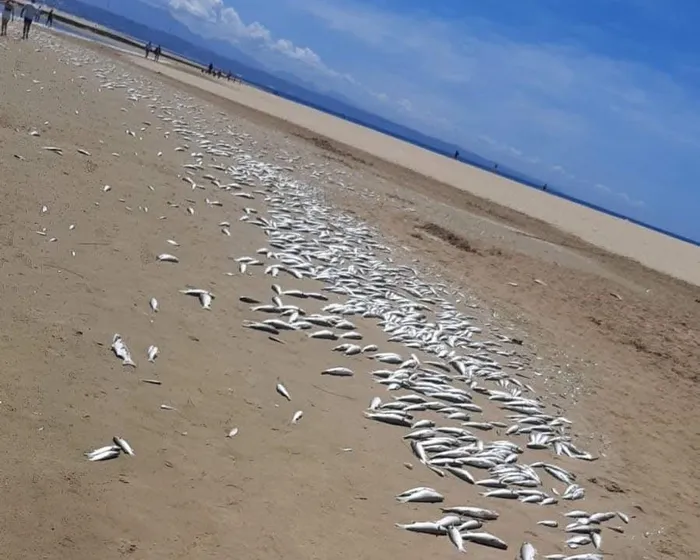
Critically low dissolved oxygen levels were recorded in the system, triggering an intervention
Image: Mossel Bay Municipality/ Facebook
Authorities have confirmed that the recent mass fish mortality in the Hartenbos Estuary was not caused by a red tide and was not linked to a sewage spill, but resulted from severe oxygen depletion triggered by eutrophication and an algal bloom.
The Department of Forestry, Fisheries and the Environment (DFFE) said investigations conducted in consultation with the Mossel Bay Municipality found that the incident was caused by a combination of interacting environmental factors rather than a single pollution event.
According to the department, elevated nutrient inputs from multiple sources led to eutrophication, while reduced freshwater inflow — linked to water abstraction and dam development within catchments — slowed water movement in the estuary. This created conditions favourable for harmful algal blooms and high phytoplankton biomass, ultimately resulting in critically low dissolved oxygen levels.
“These are some of the conditions that lead to eutrophication and ammonia toxicity, which the recently released National Biodiversity Assessment and earlier studies highlight as key contributors to fish mortalities in South African estuaries – especially in smaller and temporarily closed systems, such as Hartenbos,” the DFFE said.
An emergency mechanical breaching of the estuary mouth was carried out in the early hours of January 3, after oxygen levels dropped to critically low levels. The intervention was implemented in line with the Approved Estuary Mouth Management Plan, which allows for emergency breaching when ecological functioning is under threat.
Scientific observations following the operation confirmed that the fish kill resulted from severe oxygen depletion caused by an algal bloom, exacerbated by low water levels, elevated temperatures and nutrient-rich conditions — all factors known to accelerate oxygen consumption and create hypoxic conditions.
The Garden Route District Municipality, through its routine recreational water-quality sampling programme, confirmed that recent water samples from the estuary were compliant with applicable standards. DFFE water-quality monitors have since verified that oxygen levels have normalised and that the situation is now under control, while clean-up operations continue.
The department has urged the public not to touch or consume any dead or washed-up marine life. “All shellfish, irrespective of being washed out or collected from shore or subtidal, should not be eaten,” the DFFE cautioned, warning that such organisms may pose serious health risks regardless of the suspected cause of death.
The DFFE also emphasised that the Hartenbos incident is unrelated to separate red-tide events currently affecting parts of the West Coast, including areas around St Helena Bay and Elandsbaai, where shellfish wash-ups have been reported. The department said it would continue monitoring both coastal and estuarine conditions and issue updates as required.
Cape Argus