

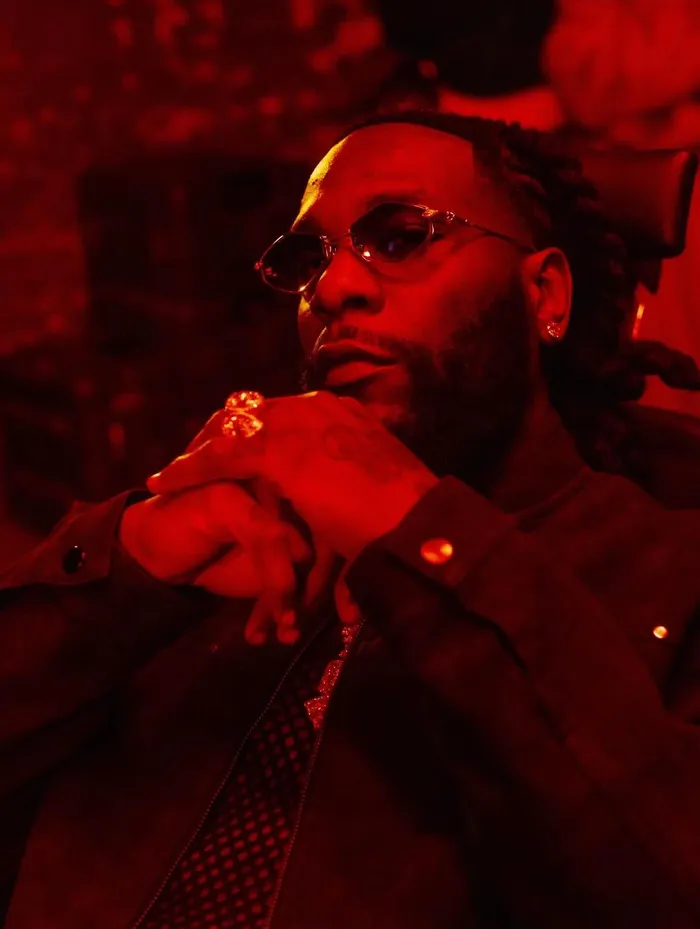
Burna Boy confronts sleeping fans
Image: Instagram
Concert etiquette has never been more in the spotlight than it was on Wednesday night at the Red Rocks Amphitheatre in Colorado.
What should have been another electric performance from Grammy-winning Nigerian superstar Burna Boy became a global talking point after he dramatically paused his set to confront a sleeping couple in the front row.
In a viral video that has since spread across TikTok, Instagram, and X, Burna stopped mid-performance and pointed directly at the pair:
“When I stand up here and see you with your girl sleeping in front of me… that’s where y’all f* off. Please, take her the f*** home!”
The crowd gasped. Some laughed nervously. Others went silent. The girlfriend, clearly startled, remained seated as her partner gently tried to pull her to her feet under the gaze of thousands and phone cameras.
Burna Boy refused to continue until they left. Security eventually escorted them out while the amphitheatre buzzed with disbelief.
But behind the spectacle was a deeper, more complicated story, one now forcing us to ask uncomfortable questions about artists, audience responsibility and the emotional reality of fans who show up even when they’re not okay.
According to several attendees, including a fan quoted by Nehanda Radio, Burna Boy had earlier in the night confessed that he had almost cancelled the show because he was extremely ill.
“I almost didn’t make the show. I’m so sick… but the show goes on,” he reportedly told the crowd.
Witnesses say he frequently stopped for water and appeared to be pushing himself physically throughout the night. So, when he noticed people asleep near the stage after sharing his condition, it struck a nerve.
“I told y’all I was sick… and the fact y’all sitting here sleeping while I’m giving my best?” he said in frustration.
It was raw. Human. But was it fair?
“I was embarrassed, humiliated, and grieving”
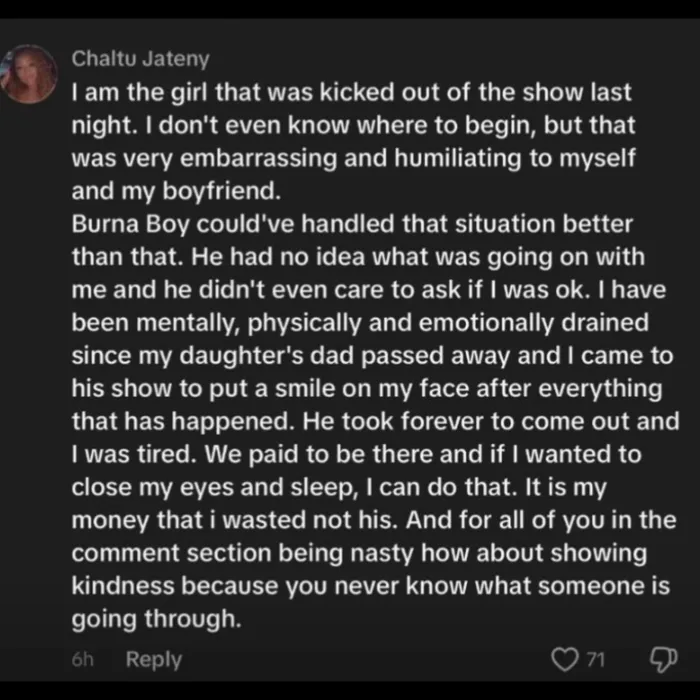
Hours later, the woman at the centre of the storm identified herself online as Chaltu Jateny, leaving a heartfelt comment under a TikTok video. Her version of events painted a vastly different picture.
“I am the girl that was kicked out of the show last night. It was embarrassing and humiliating,” she wrote.
Burna Boy has developed a reputation for embarrassing his fans
Image: X
She then revealed she has been “mentally, physically and emotionally drained” since the father of her daughter passed away. The concert was supposed to lift her spirits, not break them.
Jateny said Burna Boy arrived on stage much later than scheduled, and she was exhausted after a long, emotionally heavy day.
“If I wanted to close my eyes and sleep, I can do that. It is my money I wasted, not his,” she wrote.
Her comment triggered a wave of empathy online, with many fans questioning why Burna didn’t pause to ask whether something might have been wrong.
One user wrote: “What if she was grieving? What if she had a long work day? You never know what someone is going through.”
Another echoed a growing sentiment:
“Burna Boy has a culture of embarrassing his fans.”
Where is the line between respecting the craft and respecting the crowd?
This incident exposes a tension that’s becoming increasingly familiar in pop culture: when performers demand high energy, and audiences show up with human limits.
Fans save money for months. They plan outfits. They fight for tickets. But they also carry grief, depression, burnout, and fatigue into the venue because life doesn’t pause for concerts.
Artists, on the other hand, give emotionally and physically demanding performances. They feed off crowd energy. They expect engagement. They take it personally when the front row is flat.
The clash is inevitable unless we rethink what empathy looks like in entertainment spaces.
Burna Boy’s Red Rocks moment has now joined a growing global conversation about musician-audience relationships, fan treatment, and the emotional expectations placed on both sides.
Fans want magic. Artists want respect. Somewhere in between is a messy, very human middle ground.
Whether you think Burna Boy went too far or not, one thing stands out:
Concert expectations now go beyond phones or noise; they require compassion both ways.
Perhaps the true takeaway from Colorado is quite simple: Even a superstar is just a person navigating a difficult day, and every fan is, too.