

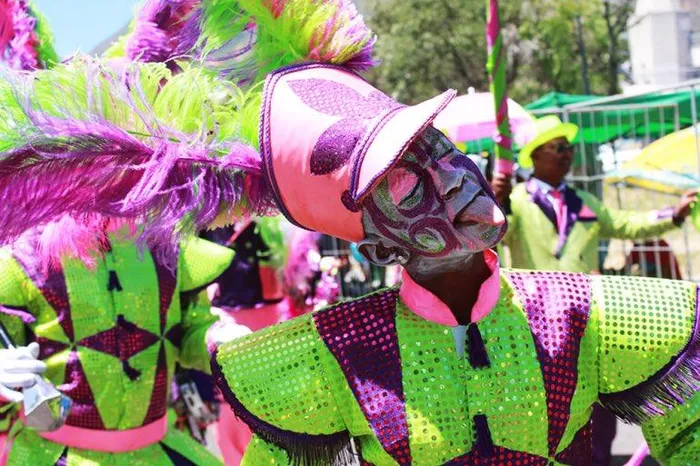
From legal disputes to colourful performances, the Kaapse Klopse parade reminded Capetonians why Tweede Nuwe Jaar is more than just a show.
Image: Picture: X/@queenie4rmnola
Cape Town’s Kaapse Klopse, also known as the Cape Minstrels or Tweede Nuwe Jaar (Second New Year) took over the streets again this January.
Parents hold toddlers on their shoulders, grandparents wave from the sidelines, and everyone remembers their first time hearing the rhythms of goema or catching that perfect snapshot of a glittering troupe. It’s Cape Town’s way of reminding us of its rich, layered history, and it hits different.
This year’s Kaapse Klopse came with a twist that got locals and performers talking.
Traditionally held on January 2, the parade was rescheduled to Monday, January 5, because the original date fell on a Friday, which coincided with Jumu’ah, the Islamic holy day.
Longstanding agreements dictate that when this happens, the celebrations should move to a more suitable day. The change also reflects ongoing efforts to balance tradition with logistics, permits and safety.
For more than 140 years, Cape Town’s Kaapse Klopse parade has marked a special moment in local history.
The tradition dates back to the 19th century when slaves at the Cape were given January 2 off as their only day of freedom each year. They celebrated with music, dance, colour and masquerade, blending influences from Africa, Southeast Asia and Europe, and mocking their former masters through creative satire.
This year’s version was not just a parade but also a statement.
Leading up to the event, the Cape Town Minstrel Carnival Association (CTMCA) and the City of Cape Town were in a legal tussle over venues for the annual competitions that run alongside the street celebrations.
The association had booked Vygieskraal Stadium for early January events, only for that approval to be withdrawn days later, prompting an urgent court application.
A High Court ordered the city to provide a suitable venue, and while the city has appealed that ruling, the legal wrangling underlined how deeply the community feels about holding onto this heritage.
Alongside the legal backdrop, many highlighted why the date and route matter. The CTMCA marched to the Western Cape legislature with a memorandum warning against what they described as “cultural erasure” if the historic celebration is moved away from its roots or reshaped without full community input.
They stressed that Tweede Nuwe Jaar isn’t just entertainment but part of the living history of Cape Town’s Coloured and working‑class communities.
Fashion designer and content creator Laverne Turner-Manuel shared her experience at the event, admitting she’d never fully understood the meaning behind Kaapse Klopse until this year.
“This week I educated myself… I was trying to figure out why they made it such a big thing with the dates being moved,” she said.
Watching the performances made her emotional once she grasped that the date marks the release of slaves from their masters and the colourful dress and satire were tied to mocking that authority.
“We’ve all experienced what it’s like to be mocked… But we’ve never understood what it was like to be slaves. All I can tell you is, I am extremely proud of the troupes that are marching today," she said.
The parade also drew familiar faces. Award-winning actor and comedian Siv Ngesi was spotted proudly taking part, dressed in bright outfits and bringing lively energy to the scene, proving that this tradition continues to resonate across generations and communities.

Award-winning actor and TV presenter Siv Ngesi was spotted proudly taking part in the parade.
Image: Picture: Screenshot
Despite the changes and debates, Kaapse Klopse remains a highlight on Cape Town’s calendar. For many Capetonians, the Kaapse Klopse is a reminder of home, heritage and community.
Families line the streets year after year, passing down the excitement from generation to generation.
Parents point out familiar troupes to their children, grandparents recall marching themselves as youngsters, and the city hums with a sense of shared memory and pride.
The costumes, music and dance aren’t just for show; they connect the present to the past, keeping stories of resilience, freedom and cultural identity alive in the heart of Cape Town.