

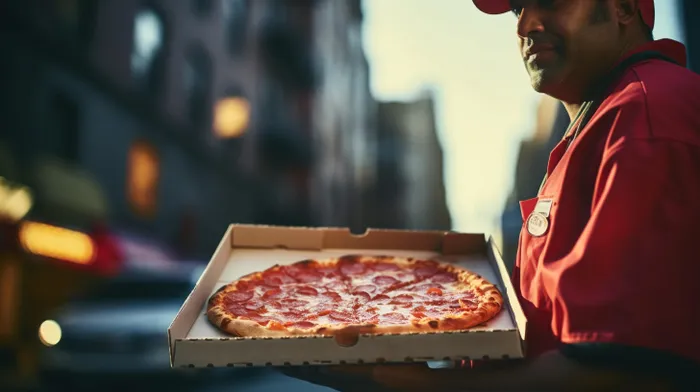
The Pentagon Pizza Theory suggests late‑night pizza orders near US government buildings could signal major global events.
Image: Picture: Freepik
Conspiracies. We love them, we fear them, and most of the time… we can’t officially say they’re true, so we politely call them theories.
The Pentagon Pizza Theory, a strange, semi-serious idea that late-night pizza orders near the Pentagon, CIA, or White House in the US could actually predict major global events. Yes, pizza.
And just when you thought things couldn’t get any wilder, the Pizza Meter Theory made a dramatic return.
Right before the US military operation in Venezuela on January 3, internet trackers noticed a huge spike in late‑night pizza orders near the Pentagon.
The Pentagon Pizza Report on X spotted a sudden rush at a nearby pizzeria around 2 am, lasting about 90 minutes, the perfect mix of midnight hunger and urgent government work.
By the time orders dropped, US forces had launched airstrikes on Caracas and captured Venezuelan President Nicolás Maduro and his wife, part of Operation Absolute Resolve.
Still think it's just a theory?
The story goes back to Domino’s franchisee Frank Meeks, who noticed something unusual.
During times of heightened activity at government buildings (wars, crises, major operations) there seemed to be a sudden spike in local pizza deliveries.
The theory, often called the Pentagon Pizza Index or Pizza Meter, suggests that when staff are burning the midnight oil, convenience food becomes the unofficial barometer of global tension.
Here’s how it works:
Staff at the Pentagon, CIA or White House work long hours when something serious is happening.
To survive the late nights, they order takeout, pizza being the obvious choice.
Analysts and amateur trackers monitor delivery data and notice spikes. The conclusion then was that a surge in pizza orders could indicate something big is about to go down on the world stage.
So while pizza places might be making bank, something serious is likely unfolding and yes, it could even affect them.
History gives us some eyebrow-raising examples. On August 1, 1990, a notable spike in pizza deliveries to the CIA occurred - the very next day, Iraq invaded Kuwait.
Other alleged instances include late-night pizza surges just before the US invaded Grenada in 1983 and prior to Operation Desert Storm in 1991.
Modern tools like Google Maps’ “popular times” have given this oddball theory new life, tracking unusual activity during Middle East tensions or international military moves.
Of course, this isn’t official science. The Pentagon has dismissed the idea, pointing out they have in-house cafeterias, coffee, and yes… even sushi, but the theory persists because it’s fun, visual, and occasionally eerily coincidental.
Pizza, it seems, may be more than just comfort food.
And because we’re talking about pizza theories, we’d be remiss not to mention how deep this stuff goes in online conspiracy culture.
It sometimes blurs into Hollywood gossip and secret codes.
The most famous example is Pizzagate, a thoroughly debunked theory from the 2016 US election cycle claiming a pizza restaurant in Washington, D.C., was a front for a child sex-trafficking ring run by powerful political figures.
Believers pointed to innocuous mentions of “pizza” and “cheese pizza” in leaked emails, insisting it was coded language for criminal activity like child exploitation.
Because of that, extremist message boards and social media commenters started using “pizza” or related food words as stand-ins for sinister concepts, even suggesting that deep-state elites, celebrities and secret parties had their own pizza code words.
Part of the chatter online has even loosely referenced high-profile gatherings, including some events linked to Sean “Diddy” Combs.
In late 2024, a recording circulated on social platforms that allegedly captured a prison phone call between Diddy and one of his sons, where he said, “Imma need you to get rid of all the pizza boxes… make sure you recycle the plastic like we talked about.”
Right away, conspiracy communities began spinning this in all kinds of directions, speculating that “pizza boxes” could be coded language - a callback to the discredited Pizzagate theory from 2016.
There are also allegations swirling around Jay‑Z, the theory has once again clawed its way back into public conversation, this time via something as ordinary as a white hoodie.
The hoodie in question has been spotted on Jay‑Z and, according to online sleuths, other celebrities including Ellen DeGeneres.
At first glance, it looks harmless. On the front is an image of Wilson, the beloved volleyball from Tom Hanks’s 2000 film "Cast Away". Nostalgic? Sure. Sinister? According to conspiracy forums, absolutely!
In these circles, the graphic has been wildly reinterpreted and linked to the long‑debunked “frazzledrip”, a claim identified by organisations like the Anti‑Defamation League as false and rooted in extremist conspiracy culture.
The hoodie’s sleeve text, written in what appears to be childlike handwriting and reading “AAAAAAAAAAAA!!!”, has only fueled further speculation.
Soon, the rest of the world will wake up to the fact that not everything is as it seems, and that the world is far darker than we’re led to believe. But hey - it’s only a “theory”.