Why South Africa must prioritise funding for the SANDF
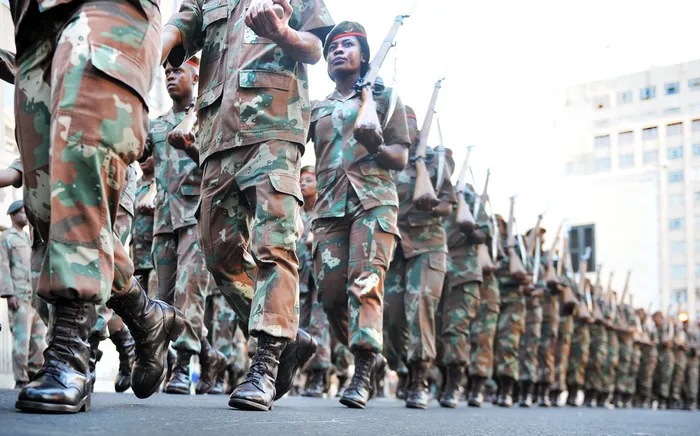
Defence spending is close to 0.7 percent of the GDP, one of the lowest levels in the world for a country of South Africa’s size and influence, says the writer.
Image: Independent Newspapers Archives
Since 1994, South Africa has walked a delicate path, rebuilding its democracy, mending divisions, and re-imagining its place in the world. In doing so, one of the most profound yet under-discussed shifts has been the demobilisation and defunding of the South African National Defence Force (SANDF).
While those in power speak of peace, development and regional leadership, the reality is that the institution meant to safeguard the country’s sovereignty and secure its borders has steadily withered.
At first glance, this weakening may appear deliberate, even justified. In the glow of the democratic transition, many believed that South Africa no longer needed a large, expensive military.
The country was not facing imminent invasion, and resources were urgently required for housing, education and health. In that context, reducing the budget for SANDF seemed sensible. But three decades later, the long-term consequences of that choice are coming home to roost.
At the dawn of democracy, the SANDF emerged as a diverse institution, integrating soldiers from the old SADF, Umkhonto we Sizwe, the Azanian People’s Liberation Army, and the former “homeland” forces. It was a symbol of reconciliation and national unity.
Yet, by the early 2000s, its numbers had dropped from around 100,000 to just over 70,000. On paper, this was framed as efficiency and rationalisation. In practice, it meant fewer boots on the ground to guard borders, patrol the seas, or staff peacekeeping missions.
This thinning out coincided with mounting pressures. South Africa’s borders grew more porous, with a rising tide of undocumented migration, cross-border smuggling, and human trafficking. International criminal syndicates, arms smugglers and drug cartels took advantage of the gaps. While the police struggled with crime at home, the SANDF meant to be the shield at the borders—was increasingly stretched and under-resourced.
The financial story is even more telling. In the mid-1990s, defence spending was close to three per cent of GDP. By the end of the decade, it had fallen to under two per cent, and by the 2010s it was hovering around one per cent. Today, it is closer to 0.7 percent, one of the lowest levels in the world for a country of South Africa’s size and influence.
What does this look like in real terms? The 2025/26 defence allocation stands at just over R57 billion. Of this, nearly two-thirds is swallowed by salaries, leaving a fraction for training, equipment, maintenance, or technology. It is like paying the fire brigade to exist, but not giving them hoses or water when the blaze erupts.
Despite dwindling resources, South Africa has not retreated from its regional commitments. Our soldiers have been deployed in the Democratic Republic of Congo for over two decades under UN and AU banners. They have fought and died in the Central African Republic. They continue to operate in northern Mozambique, where insurgents with links to global extremist networks have destabilised the region.
Each deployment is a test of courage and professionalism. But without adequate funding, training, or equipment, these missions too often become a story of sacrifice rather than success. The deaths of South African soldiers in Bangui in 2013 and later in the DRC shocked the nation, prompting a wave of grief and anger. Yet the outrage has not been matched with the will to invest in a capable, modern force.
The risks are not theoretical. The world is changing rapidly. The wars in Eastern Europe and the Middle East have shown how modern conflicts rely on technology: drones, cyber warfare, precision missiles, and sophisticated surveillance systems.
South Africa, however, remains trapped in an outdated defence posture, struggling even to keep its Gripen jets flying or its naval vessels seaworthy. At a time when global terrorism, cyber sabotage and mercenary recruitment have become pressing threats, our defences resemble a patched-up fence rather than a fortress.
A weak SANDF is not just a military concern; it is a national one. Porous borders facilitate the smuggling of drugs, weapons and even people. Criminal syndicates drain billions through illicit financial flows. The absence of a credible deterrent emboldens those who seek to destabilise the state, whether through terrorism or economic sabotage.
For ordinary South Africans, this translates into insecurity, higher crime, fragile borders, and a country that feels increasingly vulnerable in a volatile world.
Moreover, our credibility in Africa and beyond is tied to our ability to back our diplomacy with real capability. South Africa aspires to be a regional leader and a continental peace broker. But how can we command respect in Addis Ababa or New York if our soldiers are under-equipped, our ships remain in dock, and our air force is grounded?
What is required is not a return to the bloated militarism of the apartheid era, but a sober re-investment in a lean, professional, and technologically modern force. Salaries must be rebalanced against equipment and training. Partnerships with the private sector and friendly states could provide innovative funding models. Above all, government must acknowledge that defence is not a luxury or an afterthought—it is a pillar of sovereignty and stability.
The SANDF was once a symbol of reconciliation, discipline and national pride. Today, it risks becoming a hollowed-out institution, unable to meet the challenges of our times. The gradual demobilisation and defunding since 1994 may have been born of noble intentions—redirecting resources to social upliftment—but in the process, we have left ourselves dangerously exposed.
The time has come to confront this reality honestly. A strong defence force is not a drain on democracy; it is its insurance policy. If we wish to secure our borders, protect our citizens, and honour our commitments to Africa, South Africa must reinvest strategically, responsibly, and urgently in its armed forces. The cost of neglect will not be counted in rands alone, but in lives, sovereignty, and the future stability of the Republic.
| Councillor Nkosenhle Madlala is the chairperson of the Governance and Human Capital Committee in the eThekwini Municipality. He writes in his personal capacity.