

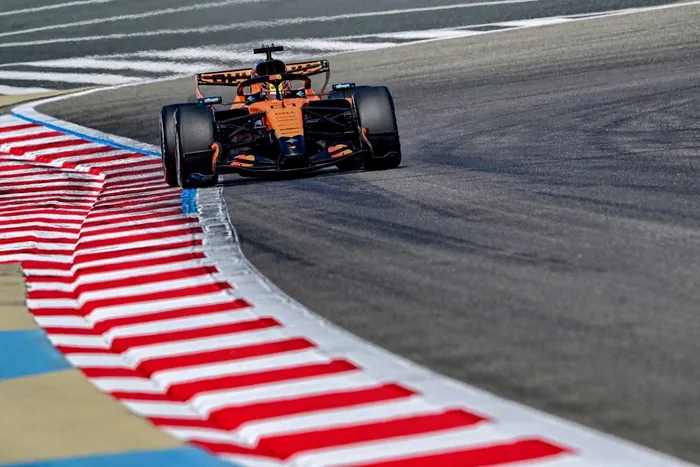
Oscar Piastri isn't holding back on F1's 2026 active aero plans, calling the prospect of 22 cars launching in "Straight-Line Mode" a "recipe for disaster." Photo: AFP
Image: AFP
Oscar Piastri did not mince his words this past week when asked about Formula One's new 'Straight Line Mode (SLM)' ahead of the 2026 season and his comments struck a chord across the paddock. The McLaren driver warned that allowing cars to use the low drag active aero setting at race starts could be unsafe.
“Whether we use straight mode at the start or not, I think a pack of 22 cars with a couple hundred points less downforce sounds like a recipe for disaster to me” Piastri said, highlighting that the combination of reduced aerodynamic grip and tightly bunched cars was a genuine safety concern.
Piastri’s words come amid broader unease about the new regulations. Teams have had a taste of the new procedures during preseason testing and it is clear drivers and engineers are still ironing out the complexities of race starts.
The crux of Piastri’s concern is that the cars now do more than simply launch and settle into a high downforce setup. With SLM engaged both front and rear wings adopt a low drag configuration similar to the old DRS but at strategic discretion.
Transitioning from low downforce to high downforce settings in the heat of a start when reactions are split second and tyres are cold could lead to unpredictable pack dynamics. To understand what Piastri is talking about here is a quick summary of the key modes on 2026 F1 cars:
Together these tools make each lap a blend of aerodynamic choices and energy strategy rather than a straightforward speed contest. Drivers must choose not just when to accelerate or brake but how to balance drag downforce and electrical power across every phase of a lap.
While Piastri’s comments focus on safety, there is another side to the story: this complex system also opens strategic opportunities, especially for teams outside the traditional top tier. Midfield outfits could leverage savvy use of SLM and tactical energy deployment to out-start or outmanoeuvre faster cars off the grid.
A clever launch and well-timed use of overtake or boost mode might allow a midfield car to punch above its weight early in races, holding up pace-leading rivals and turning a solid start into a points haul. That unpredictability — a direct consequence of the new system — might be exactly what F1 needs to shake up tightly controlled race rhythms.
Without DRS and with energy tactics playing a bigger role, races could see more varied strategies and genuine uncertainty about how the pack will evolve through the opening laps. In that sense, the chaos some fear might actually turn into a richer, more dynamic spectacle — as long as teams, drivers, and the FIA get the details right before the lights go out in Melbourne.