

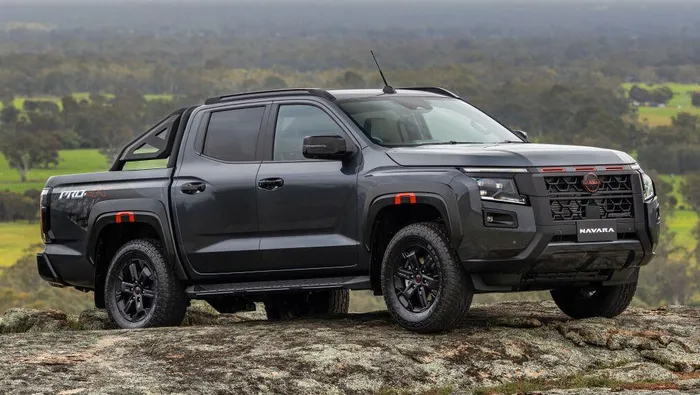
The new Nissan Navara is closely based on the Mitsubishi Triton.
Image: Supplied
Nissan has pulled the covers off its new-generation Navara bakkie, and for the first time, it’s not an in-house product. The newcomer is very closely based on the Mitsubishi Triton.
Rebadging bakkies is not a new phenomenon. For many years, the Mazda BT-50 was a close relative of the Ford Ranger, and today it’s built by Isuzu on D-Max underpinnings. The latest Volkswagen Amarok is built by Ford, carrying much of the Ranger’s DNA. The Peugeot Landtrek is essentially a Changan Hunter.
Built alongside the Triton by Mitsubishi in Thailand through Nissan's Alliance ties, the new Navara shares its middle and rear sections with the vehicle that it’s based on, right down to the body side creases and outer taillight contours. The interior is also a close clone of the Triton, with only minor details such as the steering wheel setting it apart.
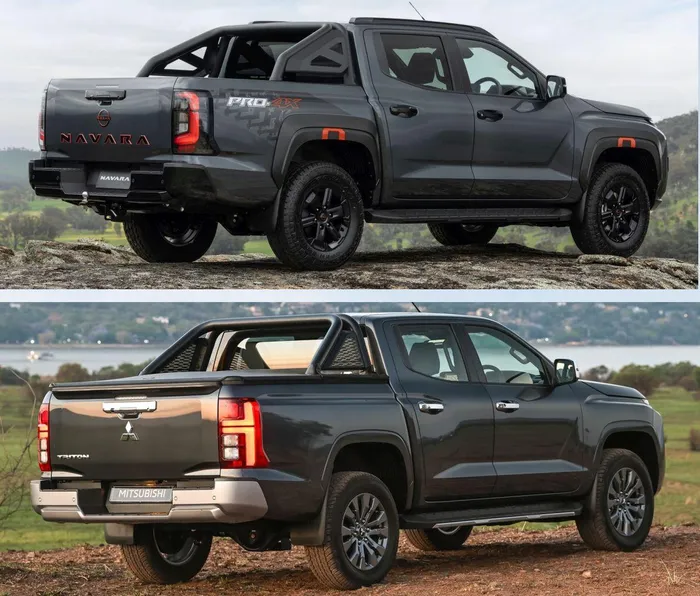
Sport the differences: New Nissan Navara (top) and Mitsubishi Triton (bottom).
Image: Jason Woosey
It’s the same beneath the bonnet, as you would expect, with power coming from Mitsubishi’s 2.4-litre turbodiesel engine, delivering 150kW and 470Nm through a wide-ratio six-speed automatic gearbox. Two four-wheel drive systems are available in the Navara’s core market of Australia, while an electronic rear differential is standard.
What is different on the design front?
The 2026 Nissan Navara boasts a unique frontal design, with C-shaped headlights and a large grille, which sports a three-tier top section inspired by the 1980s generation Navara, which was known as the Hardbody in South Africa. The inner taillight elements are also unique.
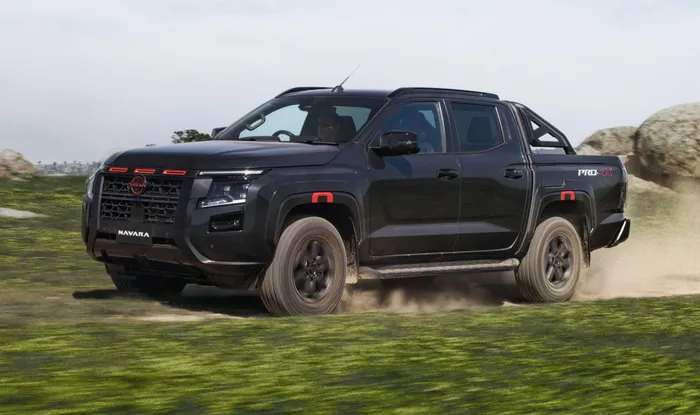
The Navara has unique frontal styling.
Image: Supplied
As with the Triton, features include a 9.0-inch infotainment system, wireless Apple CarPlay, 7.0-inch TFT driver information system and a wide range of driver assistance systems such as Emergency Lane Assist, Front and Rear Cross Traffic Alert, Driver Monitoring System and Adaptive Cruise Control.
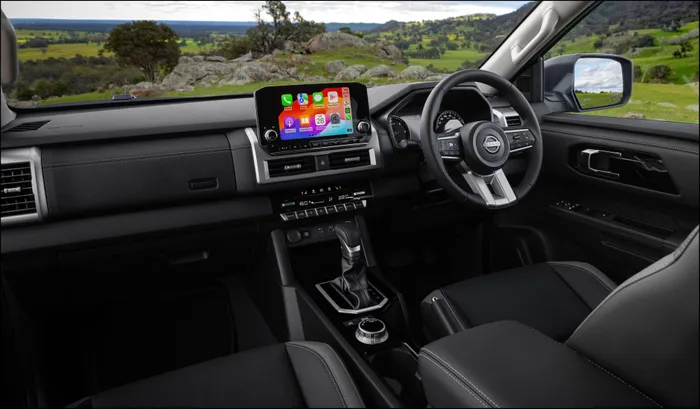
Nissan Navara interior.
Image: Supplied
At this stage, local plans for the new model are unclear and we are awaiting confirmation from our sources at Nissan SA.
The current, third-generation (D23) Navara is produced at Nissan’s Rosslyn plant outside Pretoria.
As IOL reported in May, reports from Japan indicate that Nissan is considering closing the Gauteng plant as part of its broader restructuring that will see it shut seven of its 17 international factories by 2027. Although apparently based on inside information, the report remains speculative, however, and Nissan states that no final decisions have been made regarding the plant’s operations.
The local division’s managing director, Maciej Klenkiewicz, confirmed to local media last month that although there was no news on the plant’s long-term future, Nissan was committed to staying in South Africa and that it was still producing and “investing in” the current Navara, Moneyweb reported.
The plant is currently underutilised, but if it were to receive a stay of execution, would it really invest in a new-generation Mitsubishi-based Navara? Perhaps it would look instead at a heavily revised version of the current Navara.
The D23 model is set to receive another facelift for the South American market.
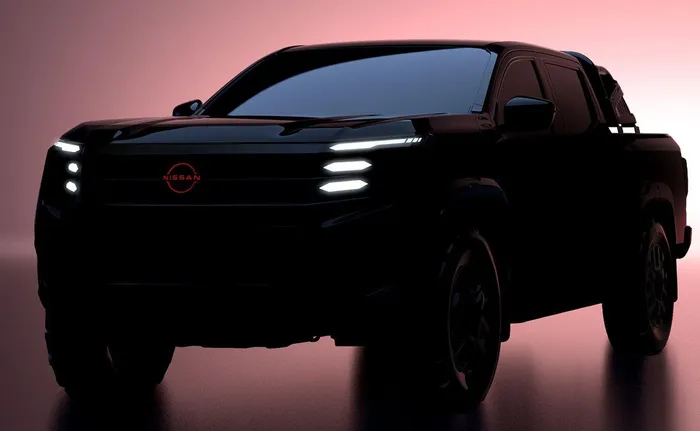
The current Navara will get another facelift for the South American market.
Image: Supplied
The updated model (shown in a teaser image above) features new Tri-LED headlights, a more modern grille and flared fenders. Likely, Nissan will also update the cabin, which is looking dated given that the current generation dates back to 2015.
The revised D23 Navara could certainly make sense for the South African market as it would not require as significant an investment.
Alternatively, should Nissan opt to close the Rosslyn plant, the Mitsubishi-based model from Thailand could certainly be considered for our market as an import.
IOL Motoring