

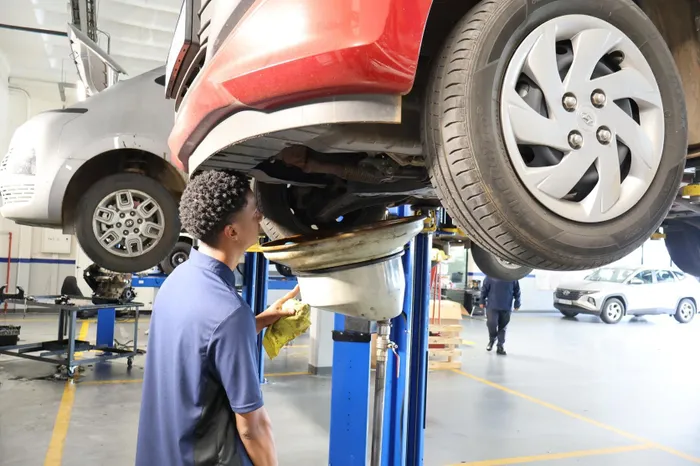
A few last minute checks before heading on holiday could save your life.
Image: Supplied
The playlist is queued, and the boot is packed.
Many South Africans are about to travel to the coast or the bush and settle in for a long-awaited break. But before you roll out of the driveway, it’s worth doing a quick check.
The festive season consistently delivers the highest road fatality figures of the year, and most crashes are not caused by bad luck alone.
Vehicles that aren’t quite ready for the journey, and drivers who push on when they shouldn’t, are two things that significantly increase the risk of a tragedy.
Most motorists will check oil and tyre pressures before a long trip, but professionals warn that several critical items are often overlooked and they tend to fail without warning.
MasterDrive CEO Eugene Herbert notes that, unlike a warning light that gives you time to pull over, many of these failures happen suddenly and during high-stress situations.
Brake fluid
Over time, hydraulic fluid absorbs moisture, which lowers its boiling point and reduces braking performance, particularly on long downhill stretches. Dark or murky fluid is a sign that it’s overdue for replacement.
It’s a small detail, but one that matters when the car is fully loaded, and traffic suddenly slows.
Batteries
Battery terminals are another easy miss. Corrosion or loose connections can cause unexpected electrical failures far from help, especially when air-conditioning, lights, and multiple charging devices are drawing extra current.
A quick clean and firm connection can prevent a roadside stop you didn’t plan for.
Hoses and cooling
Cooling systems deserve more than a glance at the reservoir. Hoses should feel firm, not spongy, and show no cracks or bulges. A failed hose on a hot December highway can quickly destroy an engine, and even a faulty reservoir cap can lead to overheating through pressure loss.
Bearings
Wheel bearings rarely get attention, yet worn bearings often give subtle warnings before failure. Any play or grinding noise when a wheel is checked off the ground points to a problem that can escalate into a seized wheel and loss of control.
Spare
And then there’s the spare wheel. Many drivers only discover it’s flat when they’re already on the shoulder. Check its pressure, make sure the jack, wheel brace and wheel-lock key are present, and be honest about whether you actually know how to change a tyre under pressure.
Final check
Before you leave, do a final walk-around with the vehicle fully loaded. Adjust tyre pressures for the extra weight, check that all lights work, and make sure nothing compromises visibility. These quick checks can decide how your holiday story ends.
Rubber on the road
Tyres, in particular, deserve special attention on routes like the N3 between Johannesburg and Durban, one of the busiest roads in the festive season. A blowout in heavy holiday traffic can have serious consequences.
Tyre experts recommend a professional inspection before departure to check pressures, tread depth and any cuts or bulges, including the spare. Legal tread depth is 1.6mm, but more tread means better grip and safer braking in summer storms.
On the road, build inspections into your breaks. Stop a couple of hours in to stretch and check tyres, pay attention to trailer loads before tackling Van Reenen’s Pass, and use meal stops to hydrate and reset, not just refuel the car.
Avoid adjusting tyre pressures mid-journey unless necessary, as heat can give misleading readings.
Drowsy drivers
Just as important as the car is the condition of the person behind the wheel. Festive schedules, late nights and long distances make drowsy driving a major risk. Fatigue creeps in stages, with warning signs most drivers recognise only in hindsight.
Early signals include frequent yawning, heavy eyelids, blurred focus and a wandering mind. If you can’t remember the last few kilometres, it’s a cue to stop. As fatigue deepens, physical control suffers, nodding heads, inconsistent speeds and lane drift become common.
The most dangerous stage is the micro-sleep - a few seconds of unconsciousness that can cover the length of a rugby field at highway speed.
When those signs appear, pull over safely, stretch, or take a short nap. Convincing yourself you can push through is how ordinary holiday drives turn into headlines.
Your destination will still be there after a break. The chance to fix a small mechanical issue or respond to your own fatigue won’t wait.