

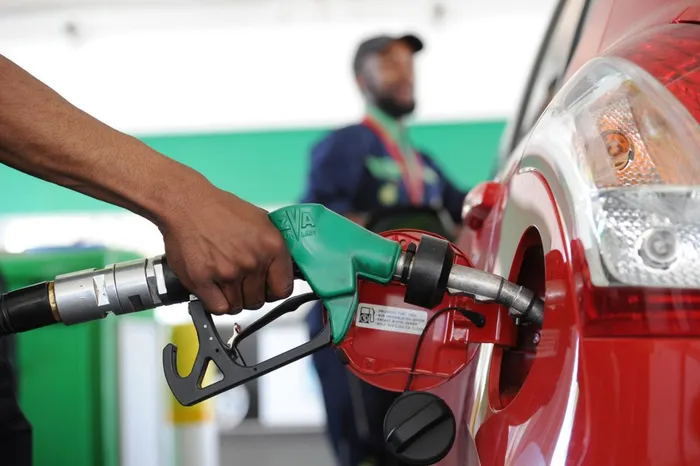
Petrol and diesel will become cheaper from Wednesday, January 07.
Image: Karen Sandison / Independent Media
South Africans can look forward to lower fuel prices this week, as a stronger rand and lower international oil prices have led to a significant over-recovery for both petrol and diesel.
The Department of Mineral and Petroleum Resources has confirmed petrol price decreases of between 62 cents per litre for 93 Unleaded and 66 cents for 95 Unleaded. Diesel will see price cuts of R1.37 for 500ppm and R1.50 for 50ppm.
These cuts will bring the coastal prices of 95 Unleaded and 50ppm diesel to their lowest levels since February 2022.
A litre of 95 Unleaded is expected to cost R19.92 at the coast from Wednesday, bringing it below the R20 barrier for the first time in almost four years. Those in the inland regions will pay around R20.75 for 95 ULP and R20.64 for 93 ULP.
The wholesale price of 50ppm diesel will drop to around R17.76 at the coast and R18.52 in the inland regions.
These adjustments follow December's petrol price hike of 29 cents and diesel increases of up to 82 cents.
The strong over-recoveries on both petrol and diesel are a result of a stronger South African rand and lower international product prices.
After starting the month around the R17.40 to the US Dollar mark, the local currency dipped below the R17 mark around mid-December and on January 3 was trading at R16.49 to the greenback. It averaged R16.84 against the dollar during the most recent review period, versus R17.23 during the previous period, the energy department said.
Brent Crude oil has also receded, from around $62 per barrel at the beginning of December to $60 at month-end, reaching a low of $58.68 on December 16.
Oil prices were pressured lower by ample global supply outpacing demand expectations, with producers continuing high output and inventories remaining elevated, according to Reuters. Analysts describe the market as “oversupplied,” which has helped push Brent toward multi‑year lows.
Slower economic momentum — particularly soft demand in major markets like China, coupled with weak global demand signals — has also dampened upward price pressure, CFI reports.
All of this is good news for consumers.
However, the recent US invasion of Venezuela could bring instability to the market, potentially even pushing crude prices higher initially. This makes it difficult to predict how fuel prices could shift further into 2026.
IOL Motoring