

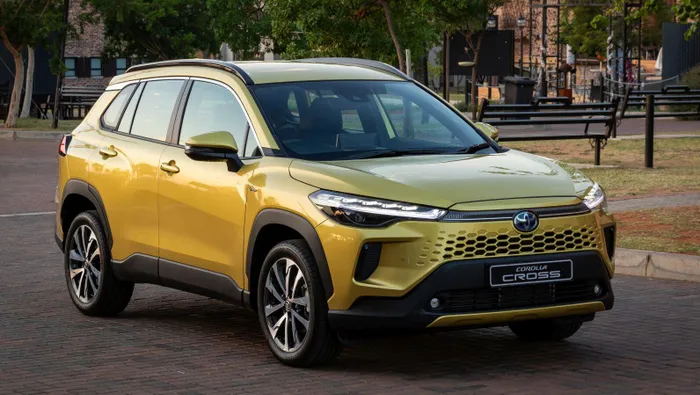
Searches for used new energy vehicles have increased dramatically.
Image: supplied
Interest in electrified vehicles is rising in South Africa, with search and enquiry data pointing to a growing willingness among motorists to consider alternatives to petrol and diesel models.
South African motorists appear to be responding to mounting fuel-price pressure by increasingly researching new energy vehicles, with fresh AutoTrader data showing a substantial rise in interest in hybrids, plug-in hybrids, and electric vehicles.
The figures point to a clear shift in early-stage consumer behaviour. Comparing data from March 2025 with March 2026, total searches for electrified vehicles on the platform rose from 26,306 to 84,705, representing a jump of approximately +222%. That means search activity almost tripled year-on-year, suggesting that a growing number of car shoppers are actively exploring alternatives to traditional petrol and diesel models.
The rise was not limited to casual browsing. Total enquiries across this segment increased from 3,498 to 6,308, an uplift of +80.3% year-on-year.
Used vehicle listings and searches: 2025 vs 2026.
Image: AutoTrader
While that is a slower rate of growth than the increase in searches, it still points to meaningful buyer engagement and indicates that their interest is moving beyond simple curiosity. Taken together, the data suggest that concerns around running costs are beginning to shape how South Africans are researching their next vehicle purchase.
“Consumers are not necessarily abandoning petrol and diesel overnight, but they are becoming far more pragmatic about what their next car will cost to own,” said George Mienie, CEO of AutoTrader. “What this data tells us is that fuel prices are pushing more South Africans to at least consider electrified vehicles in a serious way, particularly models that fit everyday family use.”
When fuel prices become a bigger household concern, consumers often start by reassessing what a car will cost to live with over time, rather than focusing only on sticker price. In that environment, hybrids, plug-in hybrids, and EVs naturally become more relevant.
A particularly important part of the story is that shopper interest grew faster than stock availability. The number of electrified vehicles listed on the platform increased from 1,696 to 2,961, a +74.6% increase. That is a notable expansion in supply, but it still trails the near-tripling in search activity.
That gap matters because it suggests the increased attention cannot be explained purely by there being more vehicles to browse. More stock clearly improved visibility and choice, but demand-side interest appears to have accelerated even faster. In other words, South Africans were not just seeing more electrified vehicles on AutoTrader; they were actively looking for them in much greater numbers.
There are also signs that shoppers are engaging more deeply with listings once they find vehicles that interest them. Email enquiries climbed from 1,136 to 1,828, while WhatsApp enquiries surged from 142 to 1,164.
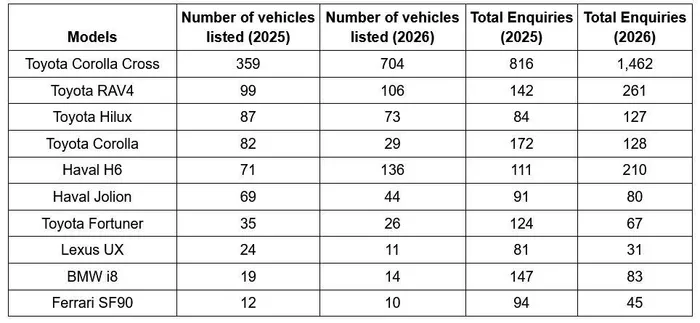
At a model level, the increase in interest was led by nameplates that already enjoy relatively strong consumer recognition. The Toyota Corolla Cross stood out as the clear leader. Enquiries for the model rose from 816 in 2025 to 1,462 in 2026, while the number of listed vehicles jumped from 359 to 704. That performance suggests the Corolla Cross remains the benchmark electrified model for many South African shoppers. This is likely because it combines a familiar badge, crossover practicality, and the promise of improved fuel efficiency in a format that the mainstream market already understands.
The RAV4 also showed solid momentum. Vehicle listings rose from 99 to 106, but enquiries performed more strongly, increasing from 142 to 261. Another strong performer was the Haval H6, which saw listed stock rise from 71 to 136 units, and total enquiries increased from 111 to 210.
At the same time, not every model recorded gains. The Toyota Corolla fell from 172 enquiries to 128, while the BMW i8 dropped from 147 to 83. Even popular buys like the mild-hybrid Toyota Fortuner saw a decline, from 124 to 67, along with the Haval Jolion, which eased from 91 to 80. These declines suggest that while overall category interest is rising, shoppers are being selective about which electrified vehicles they are willing to explore more seriously.
This suggests that fuel-price pressure alone is not lifting every electrified vehicle equally. Instead, the strongest gains appear to be concentrated in models that are more practical, more visible in the market, or more closely aligned with what mainstream South African buyers already want from a car. Put differently, the data may reflect not just rising interest in electrification, but rising interest in electrification that fits familiar use cases and budgets.
This makes the broader trend even more telling. The growth in searches shows that more consumers are considering an electrified vehicle at the research stage. The growth in enquiries shows that a smaller but still meaningful share of those consumers is taking the next step and contacting sellers. And the sharp increase in WhatsApp leads suggests that this consideration is becoming more active and immediate.
Importantly, search data is not the same thing as confirmed sales. It cannot be proven that large numbers of South African consumers are already switching to hybrids or EVs in the showroom. What it can show, however, is where consumer attention is moving. And in the car-buying journey, attention is often the earliest reliable signal of change.
But as fuel costs place more pressure on household budgets, South African car shoppers are increasingly looking at vehicles that promise some relief at the pump. The AutoTrader data suggests that hybrids, plug-in hybrids, and EVs are moving further into the mainstream consideration set, not only as future technologies, but as real options for buyers trying to manage day-to-day motoring costs.
IOL Motoring