

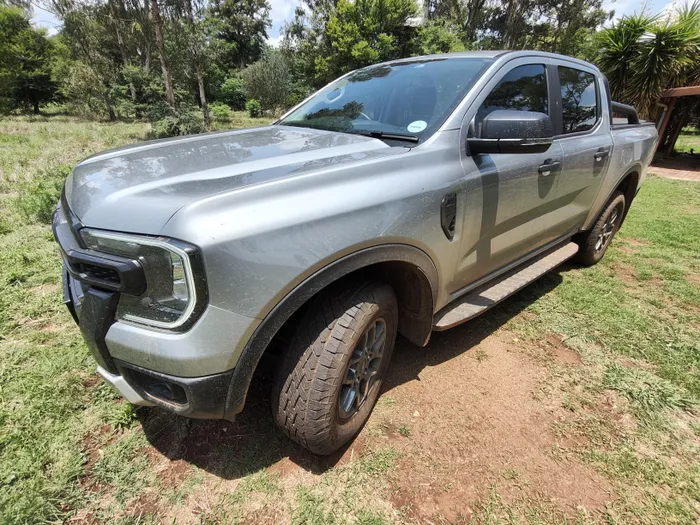
The Ranger XLT is comfortable on tar and dirt.
Image: Willem van de Putte
Whether it’s carting garden refuse, moving house, going away for a long weekend or an extended holiday or a black-tie social event, there’s no doubt that we’re a bakkie nation as the monthly sales constantly remind us.
No longer viewed merely as utilitarian bakkies, they have morphed into full-on lifestyle vehicles that we can’t seem to get enough of.
I’ve used them for all of the above over the years, and the latest bakkie to join our long-term test fleet is the Ford Ranger XLT 4x4 double cab.
The Ranger XLT is the company’s mid-specced offering, and as far as I’m concerned, it’s the one to have.
At R766 000, it has everything you need, and while models like the Ranger Wildtrak and Platinum offer an extensive range of nice-to-have features, the XLT gets on with the job without much fanfare.
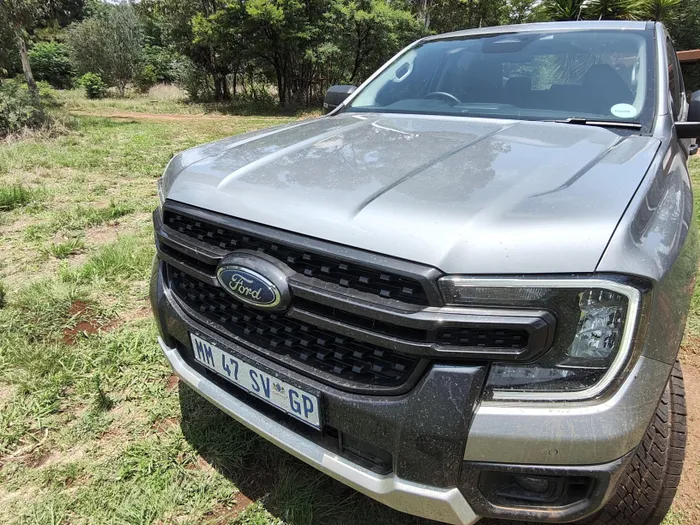
The Ford Ranger XLT is the sweet spot in the Ranger Range.
Image: Willem van de Putte
Exterior
By now, the Ranger needs no introduction. Finished in Iconic Silver, it’s got the same C-Clamp LED headlights with daytime running lights as the rest of the range. Ours is fitted with a black grille bar, side mirrors, and door handles, as well as a roll bar and 17-inch alloys covered in Continental CrossContact 255/70/17 rubber providing a decent profile.
The tow bar comes standard, and I asked for a tonneau cover because we’ll be heading into the Baviaanskloof with my off-road trailer in December.
Interior
Inside the XLT is still a modern layout with buttons and dials for the air conditioning and sound, and it provides a decent mixture of hard-wearing plastics and soft-touch surfaces.
It’s got the smaller 10-inch touchscreen infotainment system fitted with Ford’s Sync 4A system, which, mind you, is ample for most people’s needs. It’s wireless Apple CarPlay and Android Auto compatible, connecting immediately on start-up and hasn’t disconnected in the few weeks that I’ve been driving it.
The eight-inch digital instrument cluster can be set to your individual preferences, and a charge pad keeps your device charged.
It also comes with dual-zone climate control, cruise control, keyless entry/start and in the case of our test unit, optional leather seats.
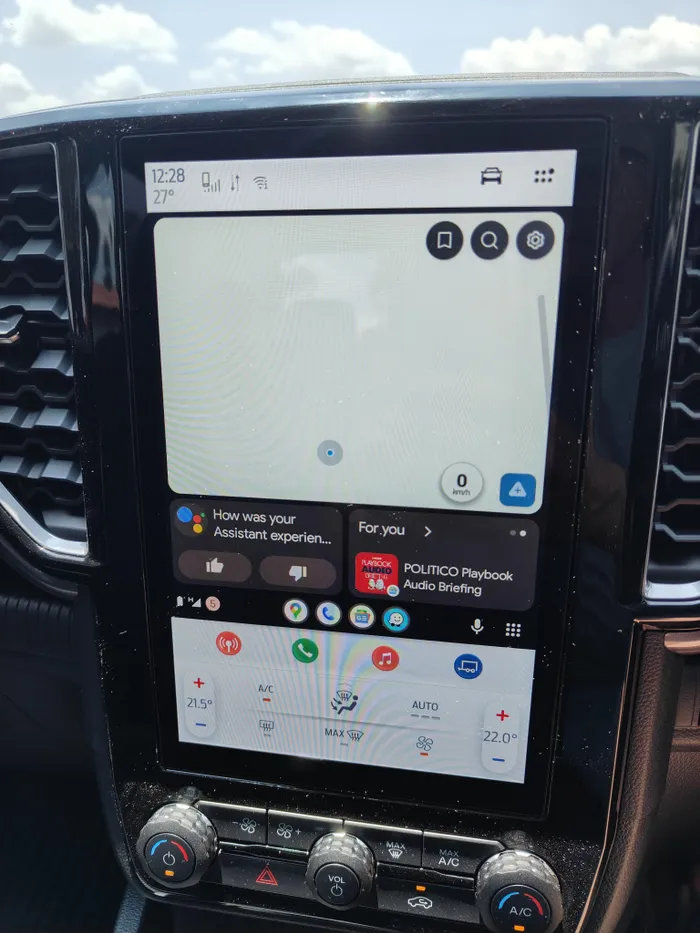
The Ranger XLT has the smaller 10-inch touchscreen infotainment system fitted with Ford’s Sync 4A system.
Image: Willem van de Putte
Powertrain
The XLT is powered by Ford’s 2.0-litre single turbo diesel engine delivering 125kW and 405Nm of torque, coupled to a six-speed automatic transmission driving the rear wheels in its default setting.
With the announcement that Ford will be scrapping the Bi-Turbo diesel in favour of the 2.3-litre petrol EcoBoost engine, it’s perhaps a blessing in disguise that we’re driving the one they intend to keep.
It has Normal, Eco, Slippery and Tow/Haul modes as well as a rear difflock and downhill crawl activated by buttons on the centre console. Moving between 2WD, 4H and 4L is easily done by a rotary dial.
It has a braked towing capacity of 3,500kg, a wading depth of 800mm and 237mm of ground clearance.
In terms of fuel consumption, Ford claims 7.5l/100km, but at this stage, it’s showing 9.3l/100km, which is likely to come down as we put more mileage on it, considering it had just over 2,000 kilometres when it was delivered.
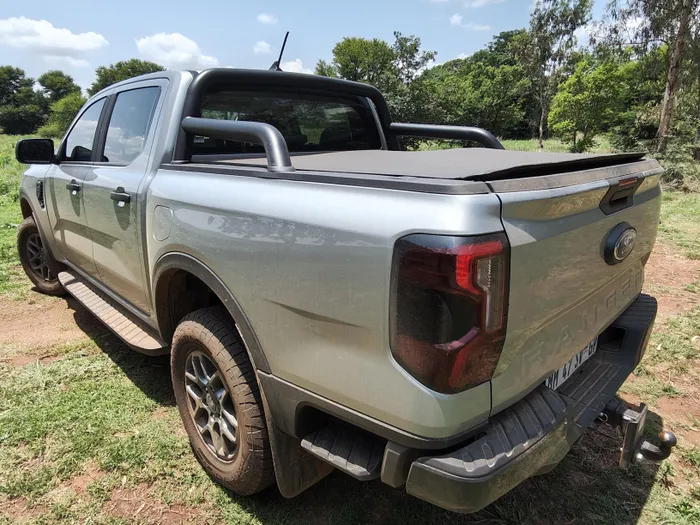
The XLT is powered by Ford’s 2.0-litre single turbo diesel engine delivering 125kW and 405Nm of torque coupled to a six-speed automatic transmission.
Image: Willem van de Putte
Driving
I’ve always maintained that the Ford Ranger has the highest quality ride in the bakkie segment, except perhaps the Nissan Navara, with its rear coil springs.
The 17-inch rims with high-profile tyres and the way the chassis and suspension combine provide a monocoque SUV-like ride rather than a ladder frame bakkie.
The seating is comfortable and provides ample lumbar support, and the six-speed automatic gearbox is as smooth as you could wish.
I’ve also done about 75 kilometres of badly washed-away and muddy farm roads in 4A, and the bakkie handled it with aplomb.
I haven’t towed anything substantial yet and will have a clearer picture of how it performs loaded and towing when we tackle mountain passes and rocky terrain in December.
There’s enough power to pass slower traffic, and it sits comfortably cruising at the national speed limit.
Safety
It’s packed with safety features including dual front, front side, curtain and driver knee airbags, post-collision braking, blind spot monitoring with trailer coverage, cross traffic alert, dynamic stability control (DSC) incorporating ABS, load adaptive control, roll over mitigation, traction control & trailer sway control, hill launch assist, hill descent control, lane keeping system with road edge detection, pre-collision assist, front and rear parking sensors and rear view camera.
Verdict
So far, the Ford Ranger XLT has been a pleasure to drive, and I fully understand why it’s such a popular choice.
It does everything I mentioned well, has enough tech and safety features, the engine is a peach, and also, it doesn’t break the bank.