

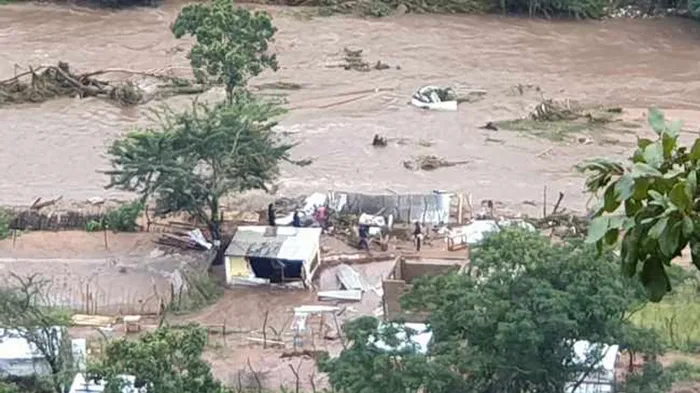
A recent study shows that cities and towns are ill-prepared for coming heavy rains. A shack on the bank of the Umhlatuzana River in the New City informal settlement washed away after heavy rain devastated parts of Marianhill. Picture: Karen Singh.
DURBAN - KwaZulu-Natal’s largest concentration of informal settlements, located in the eThekwini municipality, was at grave risk as a sharp rise in the intensity and frequency of rainstorms is expected.
The city-based majority of the province’s 393 167 informal dwellings face being damaged by severe floods predicted to be headed for the country’s coastal provinces in the near future, according to a study released this month.
At 73%, eThekwini had the highest concentration of informal settlements due to the city being the province’s biggest economic hub, Human Settlements MEC Jomo Sibiya has said.
The city was followed by the uMgungundlovu District at 15%, Sibiya said when delivering the department’s budget policy speech recently.
As the Institute of Security Studies (ISS) places KZN among the provinces that are due to suffer severe storms, the city said its disaster management unit was well equipped and on standby to mitigate the impact.
“Recent disasters such as... floods in KZN and Gauteng in 2019 illustrate just how susceptible our cities and towns are to these dangers. Only five months into 2021, all nine provinces have experienced floods,” writes Alize le Roux, a senior researcher with the African Futures and Innovation branch of the ISS.
“While it’s clear that these hazards are a frequent occurrence, it is worth noting that there has been a 57% increase in recorded events over the past two decades compared to the preceding two.
“Climate scientists also warn that this growing trend of economic and social costs will likely continue into the next couple of decades,” the report says.
“The rise in the frequency and intensity of weather disasters combined with a growing and urbanising population, poor land-use practices, growing informal settlements and slow deployment of resilient infrastructure is likely to result in significant losses,” the ISS reports.
Dr Abiodun Adeola, of the South African Weather Service, concurred that there would be a hike in the intensity of rainstorms in the near future.
“Our climate change projections for future rainfall using nine downscaled Global Climate Models indicates an increase in projected rainfall,” said Adeola.
City spokesperson Msawakhe Mayisela said that the municipality could not afford to install stormwater infrastructure that catered for every eventuality or size of storm.
“The case in eThekwini is that all critical points stormwater infrastructure is designed for a one in 10- year storm flow (with the city budgeting to cover damage costs only once in every 10 years).”
In addition, however, he said the city’s Disaster Management Level 2 Plan showed how major incidents would be addressed.
As part of the plan, a double-edged form of intervention entailed providing immediate, temporary shelter to flood victims before an evacuation process could be applied under extreme cases of danger, he said.
“First (disaster management teams) can make the call to evacuate an area of danger to an area of relative safety, based on information at hand. The Metro has further developed a Generic Response Plan for the South Durban Basin. In due course specific off-site plans will be developed for individual major hazardous areas,” said Mayisela.
THE MERCURY