eThekwini Municipality’s electricity unit suffers losses due to illegal connections and repairs to vandalised infrastructure
|Published
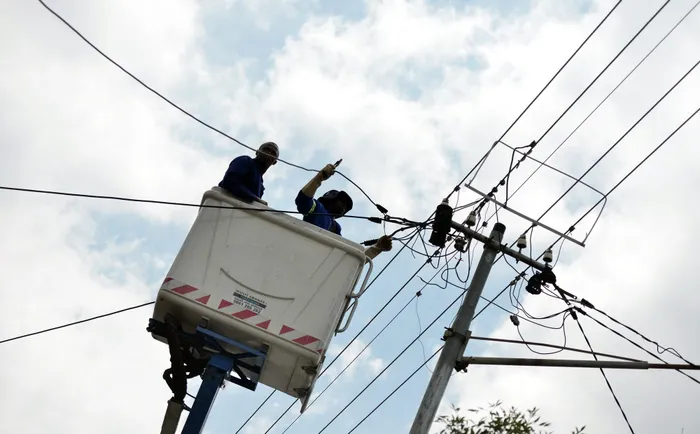
EThekwini Municipality is losing millions of rand due to illegal connections and repairs to vandalised infrastructure. Electricity department workers cut off illegally connected power cables. File Picture: Oupa Mokoena/African News Agency/ANA
Durban - The eThekwini Municipality’s audit committee is concerned about the losses being suffered by the electricity unit.
The electricity losses come as a result of theft and vandalism of infrastructure, illegal connections and technical losses stemming from the poor maintenance and ageing infrastructure.
The municipality is losing millions of rand due to illegal connections and repairs to vandalised infrastructure.
The committee warned in its latest report that the challenges that plagued the electricity unit were causing severe losses that were a threat to the unit and the municipality as a whole.
The city’s infrastructure has been described as fragile as it is largely old. This has been worsened by the recent floods. So fragile is the infrastructure that eThekwini since the floods has been excused from load shedding out of fear that the infrastructure might not be able to cope with the strain of being turned on and off.
The city has announced that it will implement load shedding this month, along with the rest of the country.
However, due to the state of the infrastructure, it will only institute load shedding when Eskom institutes stage 4 and higher stages of the power cuts.
In a section of the audit committee report titled “Sustainability of electricity”, it said: “The audit committee noted that the losses suffered by the city over the years are increasing and it is becoming increasingly costly to manage such losses.
“Infrastructure is ageing to the point it is excessively costly to manage or maintain it. Inadequacies with regard to asset maintenance were noted, the maintenance plans not being in line with the maintenance budget, procurement plans for planned maintenance not prepared.”
It added that there was a need to install CCTV systems at electricity transmission and distribution centres as an addition to the existing security measures in order to reduce increasing theft and vandalism of electrical infrastructure.
“Management was also encouraged to address delays in the implementation of key infrastructure projects proposed as per (the) eThekwini Electricity Transmission network masterplan,” it said.
In its response to the committee, the city said: “The (electricity) unit is cognisant of the threat that the electricity losses pose (to) the sustainability of the unit and the municipality, especially the increasing trend noted in the recent years.
“As such a number of interventions have been put in place and are currently being deployed. These include, but are not limited to, the aggressive rolling out of smart metering infrastructure to combat theft,” it said.
Other interventions include the campaign to tackle debt and reduce revenue leakages, the bolstering of meter-reading capabilities to reduce billing inaccuracies as well as increasing credit control disconnections and illegally by-passed meter sweep.
To combat vandalism and theft, it said teams would be deployed in hot spots to patrol and react to infrastructure theft incidents.
“In addition, the technical department is initiating an exercise that will explore and quantify our technical losses, and identify the hot spots on the electricity grid that contribute to high technical losses,” it said.
Councillors said the electricity infrastructure was a serious concern.
DA councillor Ernest Smith said the losses suffered by the electricity unit were becoming unsustainable and were affecting both residents and commercial entities.
He added that the unreliability of the electricity and water supply in the metro was constantly raised by business owners and private homeowners, who were questioning if they wanted to continue to stay in a municipality that “is more off than on”.
“The real question is: Does the municipality want to keep the ratepayers who keep the cogs of the municipality running?” he said.