Massive effort to extinguish NCT wood chip mill fire
|Published
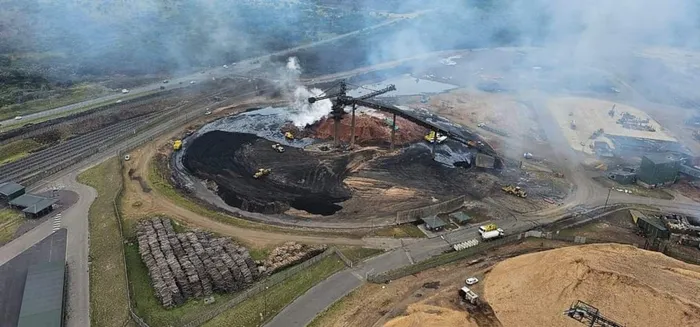
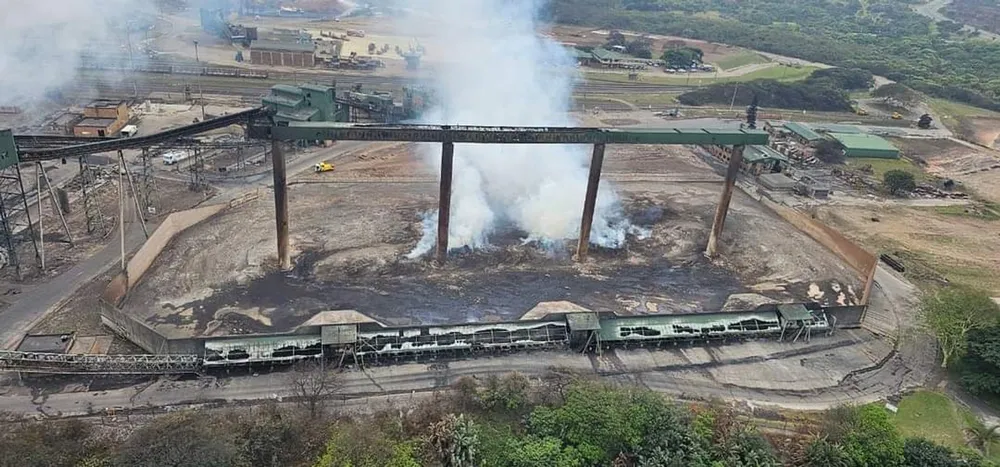
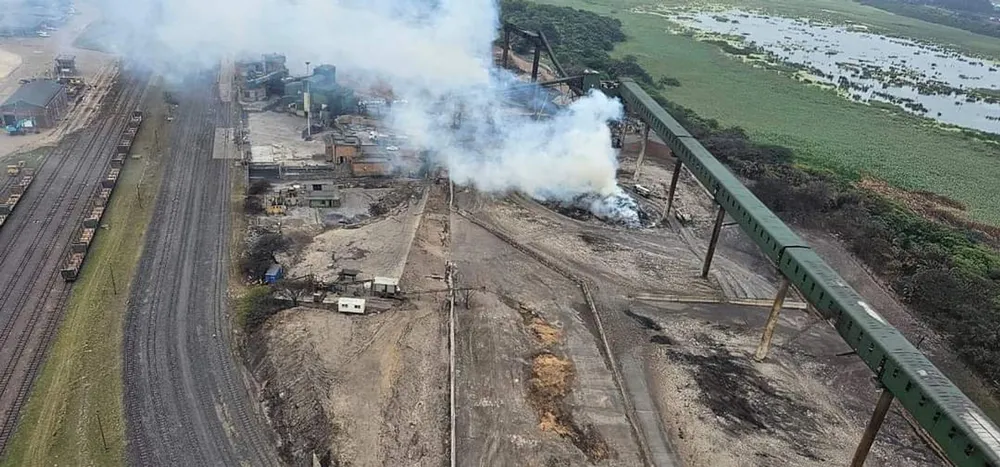
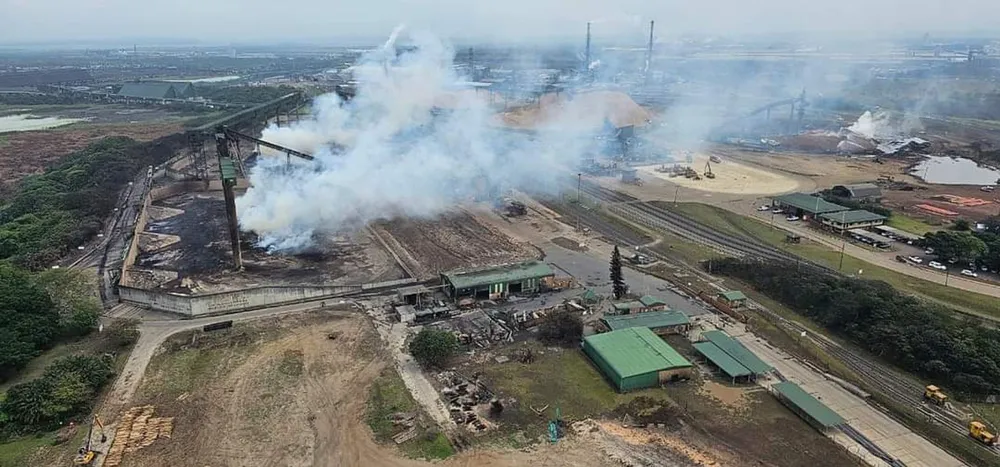
The fire that started on 30 September and lasted more than a week at the NCT wood chip mill in Richards Bay finally came to an end on Tuesday. Picture: uMhlathuze Municipality
Durban - More than a week-long, 24-hour operation to extinguish a huge fire at the NCT wood chip mill in Richards Bay finally came to an end on Tuesday with only the monitoring of smaller burning piles continuing.
The fire started on September 30 and required a combined effort from public and private entities as well as the surrounding community to bring it under control.
NCT general manager Danny Knoesen confirmed the fire had been extinguished. “There are still some smouldering piles and we have guys on standby but the fire is out. We are not throwing any more water on the fire. We have got some product that wasn’t destroyed and it’s still quite hot so there is some flaring up but we have declared the fire (as being) out,” he said.
Knoesen said the fire response teams included City of uMhlathuze Fire and Rescue, Transnet, NCT, Bell, South 32, Leomat, and forestry companies TWK, Montigny, SFC and Peak Timbers.
Aerial helicopters and planes were also used to water bomb the blaze.
NCT’s strategy from day one was to protect neighbouring wood chip mill TWK and phosphate fertiliser company Foskor, he said.
Knoesen said at any given time in the battle there were at least 150 people at the scene rotating in 12-hour shifts.
“Millions and millions of litres of water was used but none of this at the beginning was included in the run-off water because it gets consumed and evaporated. It’s only been since Sunday that we started getting on top of the fire and it was cool enough to get runoff,” he said adding that run-off since Tuesday had been contained on site while testing is being carried out to determine why dead fish were found at the Mzingazi Canal.
“NCT and TWK are eternally grateful for the support we had from a resource point of view and from a community point of view,” said Knoesen.
Chief fire officer Louis Pretorius from SecureFire, a private firefighting company under Fidelity Fire Solutions, said his team were part of the effort and used a gel product, called fireblock.
He said with these types of fires, there is a huge amount of fuel consumed and fumes are noxious.
“The wind churns, it makes a mini tornado at the top of the heap and around the corners, which is problematic because it takes the embers and carries them with convection or airwaves to another spot,” he said.
Pretorius said his team was dedicated and there was a lot of community support. “When you start a fire attack of this magnitude you cannot interrupt it so the operations had to be continuous.
“Fighting a fire is one thing, but making sure the guys are fed and rehydrated, that there is diesel in their engines and a water source, is a collective effort.”