

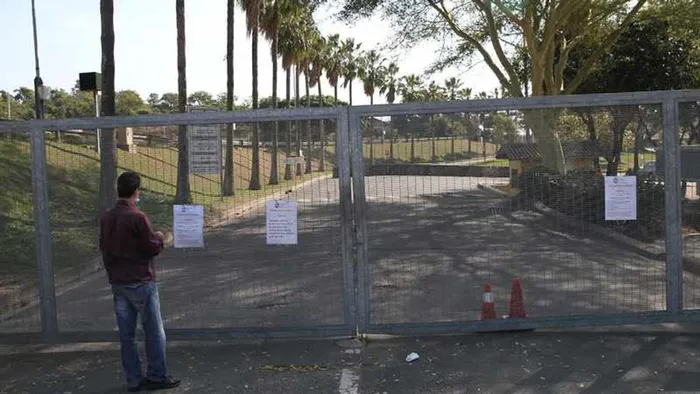
Service delivery in KwaZulu-Natal faces a crisis as key licensing centres, including the Rossburgh Driving Licence Testing Centre (DLTC), shut down over unpaid property rates, leaving motorists stranded and facing fines.
Image: Doctor Ngcobo / Independent Media / File
Service delivery has been severely hampered in KwaZulu-Natal after key licensing and testing centres, including Rossburgh and Umdloti, were forced to close due to disconnected water and electricity supplies.
This disruption, which left a Durban motorist needing to change vehicle ownership turned away from two centres on Tuesday, is allegedly linked to outstanding property rates owed by the provincial Department of Public Works and Infrastructure (DPWI).
Just days before the end-of-November deadline to migrate to the new number plate system, Transport MEC Siboniso Duma alerted the public to the disconnection.
Duma confirmed that while the Transport Department had settled its own utility bills, the centres were allegedly shut down over outstanding rates, a responsibility that falls with the DPWI as the property manager and landlord.
Duma stated on Friday that the Durban region's centres were “badly affected”, despite the head of the Transport Department having engaged with the head of Public Works.
“Members of the public and staff have been severely affected. And service delivery is badly affected,” he stated.
Duma noted that while the number of motorists yet to migrate to the new system is now far below the initial figure of 19,000, those who missed the deadline are now being fined “across the province by RTI and Traffic departments across all municipalities”.
In an effort to set the record straight, DPWI spokesperson Steve Bhengu clarified the department's position.
Bhengu explained that the KZN Public Works and Infrastructure Department is the custodian of 10,067 government properties, which house various departments, located across all 54 municipalities.
The rates for these buildings are covered by the DPWI.
Highlighting the core financial challenge, he said the department’s annual rates bill amounts to R1.8 billion.
“However, the Department of Public Works and Infrastructure only receives around R900 million from the Provincial Treasury to service rates,” said Bhengu, adding that this means the department is “sitting with a significant deficit right off the bat”.
According to Bhengu, much of the rate's debt is historical, spanning a period of about 20 years.
Despite the commitment to honour this debt, Bhengu lamented that “some municipalities have not engaged in good faith and in some cases have constantly moved the goal post”, forcing the DPWI to declare an inter-governmental dispute with the KZN Department of Cooperative Governance and Traditional Affairs.
Using eThekwini Municipality as an example, Bhengu revealed that the DPWI owes the city around R500 million, yet attempts to negotiate a resolution have been unsuccessful.
Furthermore, he claimed that independent evaluators have confirmed that several municipalities are charging the department significantly inflated rates, “in some cases as high as 40%”.
Bhengu pointed out the distinction between rates and utilities. “While KZN Public Works and Infrastructure takes responsibility for the payment of outstanding rates... it should be understood that the department is not responsible for the payment of water and lights. That is the onus of each department.”
The DPWI also raised a concern over a R252 million rates bill levied by municipalities against schools, calling it “worrying, considering how it impacts the right to basic education as afforded by the South African Constitution”.
Meanwhile, eThekwini Municipality did not respond to a request for comment, but Mayor Cyril Xaba addressed the council on Thursday regarding the city's debt collection efforts.
Xaba informed councillors that he had received an email from the MEC for Public Works and Infrastructure, Martin Meyer, who was “threatening to take the municipality to court for disconnecting government facilities for owing us rates”.
The letter, according to Xaba, stated that the MEC's intention was to declare a dispute under the Intergovernmental Relations Governance Act following the disconnections over outstanding rates.
The mayor quoted Meyer's letter, which referred to attempts to negotiate a resolution and requested a meeting.
Xaba's response was direct: “You don't need any discussion. Whoever owes us must pay us the money. Why do you keep quiet when we disconnect residents?”
MEC Meyer was not available for further comment at the time of publication.
karen.singh@inl.co.za