

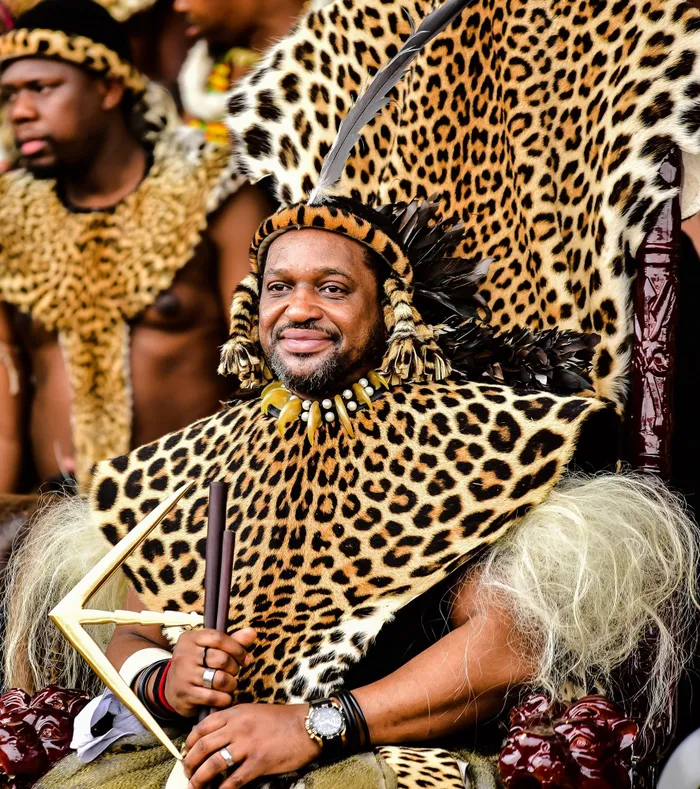
KING Misuzulu kaZwelithini
Image: File
The proposal by His Majesty King Misuzulu to rename the province KwaZulu is gaining traction, with the provincial government stating that it will begin the process of “exploring” this directive.
However, the pronouncement by the king is being challenged by cultural experts who have warned that it will not stand up to history. They argue that the province is culturally diverse and that this should be respected.
While addressing the commemoration of the Battle of Isandlwana, King Misuzulu said the province should be renamed KwaZulu, dropping Natal from its title. Before the 1994 elections and the advent of the new democratic dispensation, the province was officially known as Natal, although the areas across the uThukela River (Tugela) in the northeast of the province were referred to as KwaZulu.
Speaking during the 147th edition of the Battle of Isandlwana in Nquthu in the north of the province on Thursday, the king announced that he would start a campaign to drop the name Natal from the province’s name and insisted that it must be known as KwaZulu.
“We need to remove this Natal. This is KwaZulu, so I don't understand why we have this Natal,” said the king. The king’s argument is that prior to the colonisation of the province, the area was known as KwaZulu and fell under the Zulu kingdom. He said the colonisers renamed it Natal.
During the Convention for a Democratic South Africa (CODESA) negotiations in the early 90s, there was intense debate about the renaming of provinces, particularly Natal. The IFP pushed for the inclusion of KwaZulu in recognition of the Zulu kingdom. This was rejected, and the IFP announced that it would boycott the first democratic elections in 1994. The ANC and the then National Party reached a compromise with the IFP and agreed that provincial governments must be given powers to decide on their names, and Natal was then renamed KwaZulu-Natal.
A senior government official said, “The proposed name change clearly has the desire of unifying the province and surely should be considered. Unfortunately, the process is quite detailed and would require extensive support.”
In a statement, the office of the KZN Premier Thami Ntuli said he has noted the widespread interest that the matter has generated.
“The Premier respects and acknowledges the deep historical and cultural significance behind His Majesty’s call for the province to be known as 'KwaZulu.' This perspective is understood within the broader context of affirming indigenous heritage and identity.”
It said the Premier, in consultation with the Office of the Speaker of the Legislature, will explore mechanisms for initiating the necessary broad public consultations, which would inform a way forward on the proposal by His Majesty.
“We urge all stakeholders and the public to engage in this discussion with the respect and seriousness it deserves, recognising both its cultural significance and its constitutional implications. The process will be transparent and inclusive with the aim of unifying the province,” said the statement.
Willies Mchunu, the leader of MKP in KwaZulu-Natal, said they respect traditional leaders and the king and therefore would take seriously what he says.
“It is not only His Majesty that is saying that; there are other people that are expressing the same opinion. The name KwaZulu-Natal was a compromise. What is important here is that the government finds out the public feeling on the matter. If there is support for the call, then the government moves forward with it, but the key is the public must have a say on the matter.
“At the moment, we are not leading the government. When we do, we will engage His Majesty on this issue,” said Mchunu.
Political analyst Siyabonga Ntombela said the proposal presents complex challenges.
“Others might say it speaks to the province's autonomy. The move reflects the demographics of the province that the majority of its residents are Zulus. However, others might see the king's proposal as divisive and not honouring the British heritage that is strong in KZN.
“Will this proposal extend to changing anything that is colonial, including the Victorian architecture that defines much of KZN's cities like Durban and Pietermaritzburg?”
Cultural expert Professor Musa Xulu said such a proposal cannot be historically justified. “The name KwaZulu-Natal has historical significance. Before the region now called KwaZulu-Natal was named in 1994, there was a whole cultural heritage that had been there since 1497 when Portuguese explorer Vasco da Gama landed in the Durban harbour and named it Natal.”
He added that the proposal is not new. However, it has always been defeated in public spaces because it cannot be historically justified. He said KwaZulu-Natal is a province of cultural diversities.
“It is unclear why a province of cultural diversities would be named after one cultural community. So, if eventually successful, the renaming would be a travesty of cultural justice and an expression of unearned cultural supremacy. The idea should be dropped, in the interests of nation-building and social cohesion,” Xulu.
Premier Thami Ntuli has stated that a constitutional and legislative process governs any change to a provincial name, as this is a matter of profound importance to all citizens of the province and the nation.
“Any formal proposal for a name change must originate from or be adopted by the Provincial Legislature. This necessitates a comprehensive and inclusive public consultation process across all communities and sectors of KwaZulu-Natal. The legislature would then need to pass a resolution supporting the change."
He said the Constitution lists provincial names in Schedule 1. Therefore, altering a name requires a constitutional amendment. "A bill to amend the Constitution must be passed by the National Assembly with a supporting vote of at least two-thirds of its members and by the National Council of Provinces (NCOP) with the support of at least six provinces.”
For more stories from The Mercury, click the link THE MERCURY