

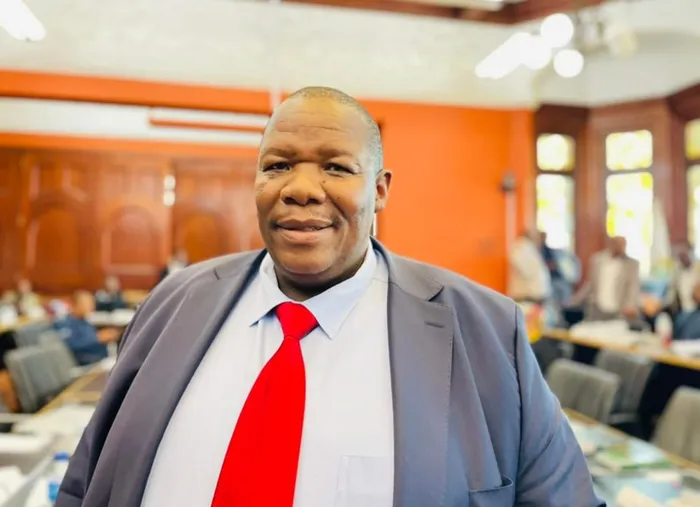
Msunduzi Municipality mayor Mzimkhulu Thebolla said the unqualified audit outcome was evidence of the work being done to turn around the municipality.
Image: Supplied
The announcement that the Msunduzi Municipality has received an unqualified audit opinion from the Auditor-General of South Africa has triggered sharp political disagreement, with the Democratic Alliance (DA) warning that the outcome masks deep-rooted governance and service delivery failures.
In a media statement issued on Wednesday, Msunduzi Municipality welcomed the audit outcome, describing it as confirmation of improved financial reporting, governance, and internal controls.
The municipality said the Auditor-General found that its financial statements were “free from material misstatements, reflecting credible, reliable and transparent reporting.”
Councillor Mzimkhulu Thebolla hailed the outcome as evidence of progress, stating that “the unqualified audit opinion is a clear indication that the municipality is turning the corner.”
“This unqualified audit opinion confirms that the hard work undertaken by council and management over the years is producing results,” Thebolla said.
“It tells us that our financial statements are credible, that we are governing within the law, and that our vision of achieving a clean audit is firmly within reach.”
However, the municipality acknowledged that challenges remain, particularly around expenditure management and delayed creditor payments beyond the legislated 30-day period.
These issues, it said, have been incorporated into its Audit Action Plan, with targeted interventions under way to strengthen financial discipline and cash flow management.
Despite these assurances, the DA has rejected the audit outcome as a misleading reflection of the municipality’s actual condition.
In a statement, DA Msunduzi caucus leader Councillor Ross Strachan said the audit improvement was largely technical and disconnected from the daily experiences of residents.
“While the DA acknowledges this technical improvement, the reality on the ground tells a very different story,” Strachan said.
“Residents continue to experience a rapid deterioration in basic service delivery, collapsing infrastructure, and a clear decline in institutional capacity across the city.”
Strachan questioned the timing of the announcement, noting that it comes in an election year, and warned against treating audit outcomes as a substitute for functional governance.
“An audit outcome, while important, cannot be divorced from service delivery outcomes and the actual condition of the municipality,” he said.
The DA further argued that Msunduzi has failed to act on repeated warnings from the Auditor-General, despite being given multiple opportunities to implement corrective measures.
“For four consecutive years, the Auditor-General has identified serious deficiencies and afforded Msunduzi time to implement corrective action. That time has been exhausted,” Strachan said. “There has been no material improvement in governance, accountability, or service delivery.”
The opposition party is now calling for national intervention, urging the Auditor-General to escalate matters to relevant authorities.
“In the DA’s view, the only viable option remaining is to place Msunduzi Municipality under Section 139(5) of the Constitution, read with the Municipal Finance Management Act (MFMA), through a mandatory intervention led by Treasury,” Strachan said.
He added that such an intervention would remove financial control from what the DA described as an administration that has “repeatedly demonstrated its inability to stabilise the municipality and protect residents from continued decline.”
For more stories from The Mercury, click the link THE MERCURY