

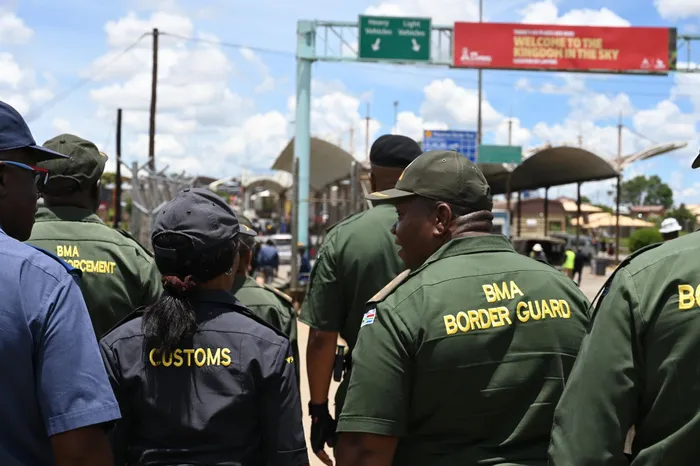
The Border Management Agency ramped up public health screenings at South Africa's ports, successfully detecting cases of Yellow fever and malaria during the festive season, ensuring the safety of millions of travellers.
Image: Border Management Authority
The Border Management Agency (BMA) has intensified its public health screening at South Africa's ports of entry, successfully detecting and intervening in numerous cases of potential infectious disease importation, including Yellow fever and malaria, during the recent 2025/2026 festive season operations.
The BMA’s efforts highlight the crucial role border health services play in protecting national public health.
Over 1.3 million travellers were screened by BMA health specialists during the 36-day operation.
"A critical focus of the 2025/2026 operations was the public health screening of travellers arriving from Yellow fever and other infectious diseases endemic to the regions," said Michael Masiapato, commissioner and CEO of the BMA, during a joint briefing on Friday alongside the Minister of Home Affairs, Leon Schreiber.
The briefing detailed the successes of the BMA's festive season operations.
Masiapato confirmed that 514 travellers from Yellow fever endemic countries were detected and screened, strengthening early detection and prevention efforts.
Furthermore, he said two travellers were detected without valid Yellow fever certificates, prompting immediate action to prevent the potential importation of the virus.
Yellow fever is a serious concern for health authorities. As the Department of Health notes, it is an acute viral haemorrhagic disease transmitted by the Aedes mosquito, and the illness can range from mild to severe, often resulting in death in up to 50% of severely affected individuals.
Symptoms, which mimic other travel-associated diseases like malaria, include a sudden onset of fever, chills, headache, and in severe cases, internal bleeding and jaundice.
Beyond Yellow Fever, the BMA’s intensified surveillance also targeted malaria.
A significant 167,314 travellers from malaria endemic countries were recorded and screened appropriately.
"Additionally, 213 suspected malaria cases were tested upon arrival, strengthening malaria surveillance efforts," Masiapato stated.
This proactive testing is essential, as malaria, according to the Health Department, is a life-threatening disease which remains a significant public health burden globally and is endemic in three provinces of South Africa.
The operation also demonstrated a strong focus on general public health preparedness.
The BMA’s Port Health team ensured the "significant intensification of proactive public health and security measures" due to various global outbreaks.
This included the follow-up screening of 236,844 individuals for various infectious diseases, enhancing the early warning capabilities during a high-risk travel season.
In addition to health screenings, the BMA’s enforcement actions also extended to the confiscation of harmful or prohibited products.
"Our Port Health team has intensified their enforcement actions, successfully confiscating and incinerating harmful products such as pesticides, unauthorised mosquito repellents, and other prohibited products such as hair chemicals, including skin lightening creams," stated Masiapato.
karen.singh@inl.co.za