

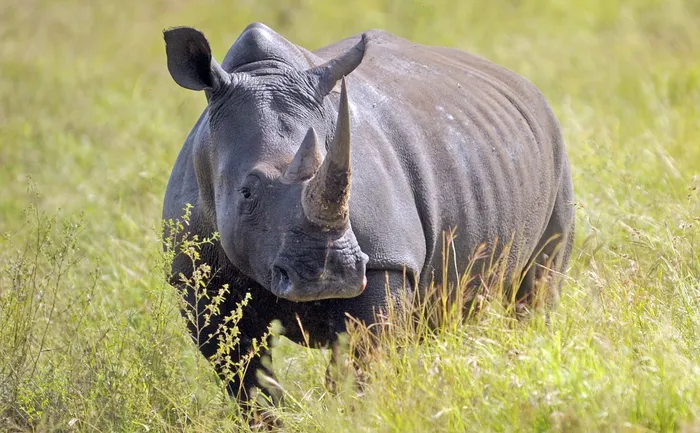
Ezemvelo KZN Wildlife's Hluhluwe-iMfolozi Park had seen poaching incidents drastically drop from 198 in 2024 to 63 in 2025.
Image: File
While 352 rhinos were killed in poaching incidents across the country last year, there was some positive news with a decline in the numbers of rhinos poached in KwaZulu-Natal.
According to stats released by Environment Minister Willie Aucamp, there was 97 rhinos poached in KZN in 2025, a decline from 232 killed in 2024.
Aucamp said the Hluhluwe-iMfolozi Park in KZN, which had been targeted in the past few years, had seen the poaching incidents drastically drop from 198 in 2024 to 63 in 2025.
Ezemvelo KZN Wildlife attributed the significant reduction in poaching in the park to closer collaboration between Ezemvelo and KwaZulu-Natal rhino owners through the Integrated Wildlife Zones (IWZ) Programme, as well as sustained support from key conservation partners, including WWF, Save the Rhino International, Wildlife ACT, and Peace Parks Foundation (PPF).
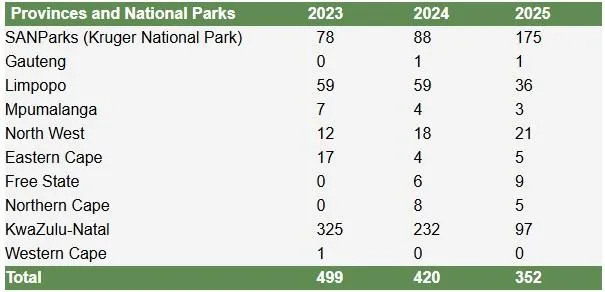
The rhino poaching statistics released by the Department of Forestry, Fisheries and the Environment.
Image: Department of Forestry, Fisheries and the Environment
Ezemvelo also embarked on a dehorning programme in 2024. Other strategies deployed, according to the Department of Forestry, Fisheries and the Environment (DFFE), included enhanced detection and early-warning capability, achieved through the deployment and integration of advanced camera technologies and sensors; and the implementation of the Integrity Implementation Plan, which included the successful polygraphing of all park law-enforcement personnel, reinforcing organisational integrity and public confidence.
The DFFE said Ezemvelo will continue to implement and strengthen its Rhino Guardianship Strategy, incorporating both existing and new interventions, including the following:
The statistics showed that there was a sharp rise in poaching incidents at the Kruger National Park where 175 rhinos were poached last year, compared to 88 in 2024.
The DFFE said Kruger is employing various strategies to curb the wildlife crime including strategic dehorning, layered security and the use of technology, ranger skills development and increased ranger capacity. polygraph testing of staff is also continuing.
For more stories from The Mercury, click the link THE MERCURY