

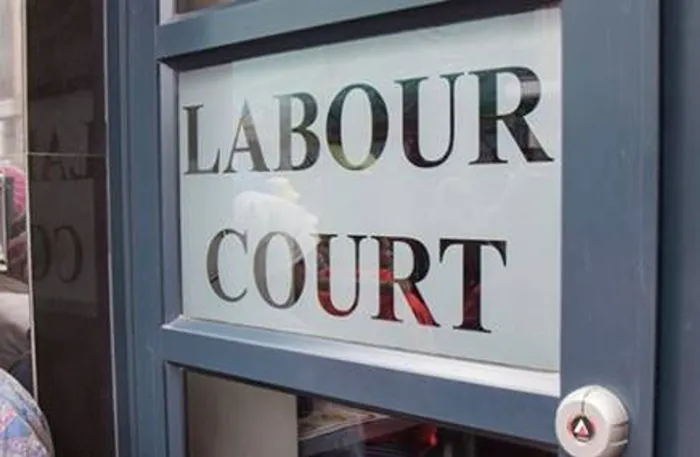
In a landmark ruling, the Labour Court has affirmed that employers cannot unilaterally withdraw December bonuses included in employment contracts, reinforcing employees' rights.
Image: File
Employers cannot just take away December bonuses if they are included in an employee's contract, the Labour Court has ruled in a recent matter.
The court said that a company cannot make changes to the 13th cheque unilaterally. It was dealing with a matter raised by employees at Barrs Pharmaceutical Industries Ltd. Avacare Health Group was also cited as a party to the proceedings.
The employer had argued that the December bonus or the 13th cheque was a workplace practice. The Labour Court, however disagreed and found that withdrawing the benefit was a breach of the Basic Conditions of Employment Act.
The employees were represented by a labour union in the matter.
The applicants had asked the court to enforce their right to payment of a 13th cheque in terms of their contract of employment. They asked the court to declare that their employer’s unilateral withdrawal of the payment of their bonuses with effect from December 2021 was a breach of contract.
The dispute arose during wage negotiations between the company and its employees when Barrs unilaterally decided that it would no longer pay its employees a 13th cheque. Instead, it replaced this benefit with a performance-based bonus system.
Barrs also offered employees who accepted this unilateral change without challenging it, a 5.5% salary increase. This is referred to by the applicants as the “carrot and stick approach”.
The employees argued that they are contractually entitled to payment of a 13th cheque annually in December. In 2021, Barrs issued a letter to the employees amid wage negotiations, advising that the company intended to discontinue the 13th cheque and replace it with a performance-based bonus.
Employees were urged to accept this revised structure, effective from January 2022. Employees who refused the proposal would not qualify for the 5.5% increase, it was said. They were also told that any strike action would be pointless.
The employees initially stood firm and rejected the proposed change, maintaining their contractual entitlement to a 13th cheque. They communicated their rejection of the proposed performance bonus change, but Barrs implemented this change.
The company subsequently failed to pay the 13th cheque. Instead, employees received a discretionary, ex gratia payment of R3,000.
Some of the employees then accepted the 5.5% wage increase and forfeited the 13th cheque with only 45 staff members pursuing the court action.
Barrs had contended that the payment of the 13th cheque was not a contractual right but instead a workplace practice which had developed and was implemented over time. Therefore, it said, the employees have no right to enforce payment of the benefit.
The Labour Court said that after careful consideration of the arguments and applicable authorities, there can be no doubt that the employees are contractually entitled to a 13th cheque.
The court noted that during the CCMA process, Barrs conceded the contractual right to a 13th cheque, and the court said it cannot go back on its word.
The company was ordered to pay the applicants a 13th cheque for each year it has failed to pay, from 2021 to the date of final payment.
For more stories from The Mercury, click the link THE MERCURY