

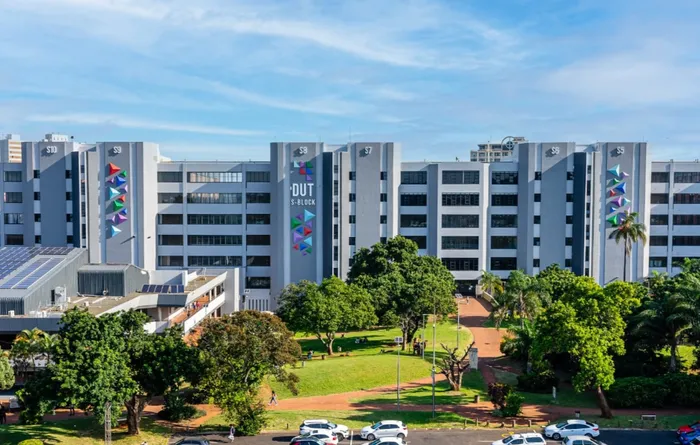
Students at the Durban University of Technology face mounting financial pressures as delays in NSFAS payments threaten their academic success and well-being.
Image: File / Khulasande Tshayile
The start of the academic year at the Durban University of Technology (DUT) has been marred by severe financial strain for numerous students reliant on the National Student Financial Aid Scheme (NSFAS), as delays in the payment of living allowances stretch into the third week of classes.
The late payments have left many students struggling to afford necessities such as food, transport, and essential learning materials, jeopardising their academic success and personal well-being.
Classes at DUT officially commenced on February 9, but for many NSFAS beneficiaries, the expected allowance has failed to materialise.
A returning third-year student in the Faculty of Art and Design, who requested anonymity, described a grim reality that mirrors the challenges faced last year, when allowances were only received in March.
“We normally receive our NSFAS allowance during the second week after returning to campus,” the student explained. “However, almost three weeks into the month, we had not received our allowance.”
For this particular student, the delay means she cannot purchase the materials required for her coursework.
“Without the necessary materials, I cannot complete the expected work. I also need transport money because I attend two campuses that are far from each other. Walking between them is unsafe due to the areas I must pass through in Durban,” she stated.
Her anxiety is compounded by the struggle to secure food and accommodation, and while her parents have offered sporadic help, it is not enough.
“Although my parents have tried to help with food money, it is not consistent, and they cannot cover everything,” she said, admitting that the entire situation has been “very stressful”.
Another third-year student, who is provisionally funded by NSFAS, shared a similarly desperate situation.
Forced to stay home initially due to a lack of funds, she eventually returned to her residence with only R200 from her unemployed father, having to survive on just two meals a day.
“Money is a sensitive matter with other relatives, as they can’t help with the little they have,” she lamented. “This has made me more anxious about survival rather than focusing on my studies.”
She described the beginning of the year as “frustrating”, especially as finances are generally tight in February, yet they cannot access the living allowances, “when we need it the most”.
The students believe the fault lies with the university’s administrative processes, particularly the implementation of a new registration and payment system.
The Art and Design student noted: “From my experience, the delays appear to be coming from the university’s administrative processes.”
She recalled having to resubmit banking details that had been inexplicably erased from her portal after an initial check confirmed her eligibility for funding.
The second student echoed this sentiment, pointing out that NSFAS had already announced allowance payouts to universities in early February.
NSFAS Acting CEO Waseem Carrim recently announced that R3.6 billion was successfully dispersed to universities for allowance payments at the beginning of February
“Firstly, they introduced a new system that was obviously going to have problems with logging in and registrations,” she said, adding that, “most of us were only able to register in late January when classes commenced on February 9.”
She believes the university should have proactively ensured students' banking details were correct on the new system.
“It is really frustrating that it is the beginning of the year... but we still can't get our living allowances when we need it the most,” she said.
The widespread problems have led to disruptions, with the Art and Design student noting that they are currently doing ineffective online classes because protests have prevented a full return to campus, and most modules require practical, physical presence.
In response to the mounting crisis, DUT acknowledged the concerns and confirmed that two NSFAS allowance payments were made to students between February 9th and 13th, with a further payment expected by February 21st.
The university cited “incomplete or unverifiable banking details” as the reason several students were not paid, and assured that weekly payments are scheduled to continue until the end of February. March living allowances are anticipated by March 7th.
Regarding the high volume of queries, DUT stated that its Financial Aid Unit is managing the influx with a limited number of staff, attempting to respond within 72 hours, but noted that “duplicate emails significantly contribute to inbox congestion and delays in response times”.
However, DUT contested the notion of annual delays, stating: “For the past four years, there have been no delays in allowance payments to students.”
In a small sign of relief, the students confirmed late Friday afternoon that they had finally received their DUT student allowances, though they stated that many others are still waiting for the essential funds to reflect.
karen.singh@inl.co.za