

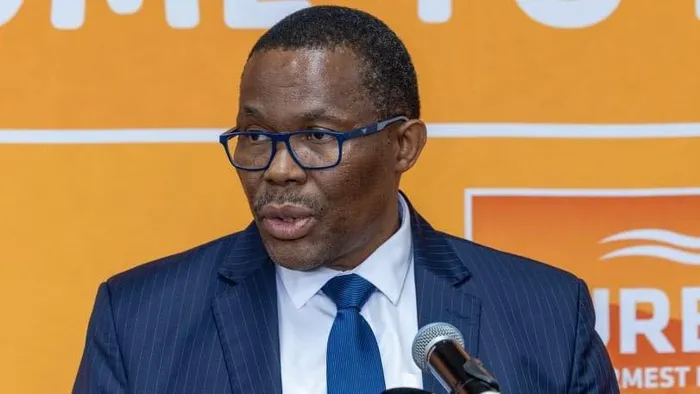
eThekwini mayor Cyril Xaba, during a media briefing yesterday, listed a string of indicators that he said pointed to the municipality’s strong financial standing.
Image: Supplied by Durban Tourism
The eThekwini Municipality is in a strong financial position despite concerns about its low “cash on hand”.
Mayor of the municipality, Cyril Xaba, stated during a media briefing yesterday that the City continues to deliver services unhindered. He listed a string of positive indicators pointing to the municipality’s strong financial standing.
However the City's cash coverage (cash on hand) has come under scrutiny. The term refers to the amount of money the City has available to continue service delivery in the event of a disaster where it is unable to generate or collect funds.
The DA recently raised concerns about the City’s financial position following a finance portfolio committee report that found the city has only 17 days of cash on hand. They stated that the municipality’s overall financial outlook is troubling.
The DA said the committee report indicated that cash on hand is currently sitting at only 17 days, far below the accepted norm of one to three months. The DA said this places the City in a vulnerable position, threatening its ability to meet operational obligations, pay service providers on time, and maintain essential service delivery.
However, Xaba said the City remains financially stable, operational and continues to meet its financial obligations.
“We continue to strengthen compliance, improve cash management, and work with both government and consumers to enhance payment levels so that we can sustain quality service delivery,” he said. He added that the City’s financial position remains stable and sustainable, despite a constrained economic environment and rising service delivery pressures.
Speaking on the concerns about cash on hand, he said the reported 17 days’ cash on hand must be understood in the proper context: “This measure fluctuates during the year depending on payment cycles, collections, and when loans are drawn. It reflects a point-in-time snapshot rather than the City’s full liquidity position.
“The full liquidity position can only be properly assessed at the end of the financial year (June), taking into account the approved budget and closing cash position.”
He continued, “The City continues to honour its financial commitments and maintains access to additional liquidity management instruments where required. While the cash coverage ratio is currently under pressure, service delivery continues in line with the approved budget. Cash coverage is projected to improve to over 30 days by the end of June.”
Pointing to indicators of a positive financial position, the City stated that it continues to meet its financial obligations, including salaries, bulk purchases, creditor payments, and loan repayments. Revenue collection remains resilient, supported by ongoing credit control and customer management initiatives.
The municipality said it remains financially functional and capable of delivering services.
The mayor also pointed out that the municipality continues to face pressure from outstanding debt owed by government institutions and consumers, which directly impacts cash flow, days’ cash on hand, and service delivery capacity. “A significant portion of this debt relates to unpaid consumer accounts, and sustained non-payment places pressure on the City’s ability to maintain infrastructure and deliver services,” he said.
DA councillor Thabani Ndlovu expressed doubt about the City’s ability to improve cash coverage, stating, “We do not believe that eThekwini Municipality will be able to turn around its finances and reach 30 days’ cash on hand by June 2026, as suggested by the mayor.”
“The City did not arrive at this crisis overnight. This financial decline has been building over many months due to persistent mismanagement, declining cash collection rates, and an unacceptably high level of non-revenue water that continues to waste billions of rands annually.”
He said the finance management team has repeatedly promised to turn around this situation, yet it continues to deteriorate instead of improving.
IFP councillor Jonathan Annipen said the municipality’s constrained cash flow is the result of both socio-economic realities and internal systemic failures, including widespread unemployment, which directly impacts residents’ ability to pay for municipal services.
For more stories from The Mercury, click the link THE MERCURY