

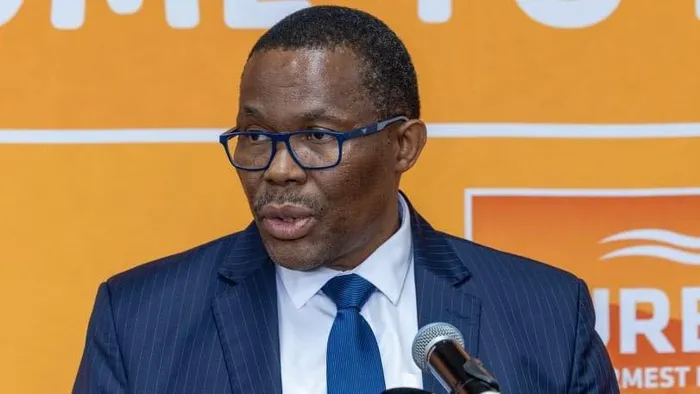
eThekwini mayor Cyril Xaba has voiced his concern about the city's debt relief programme.
Image: Supplied by Durban Tourism
The future of the debt relief programme under the eThekwini Municipality hangs in the balance after concerns that this policy is undermining the culture of paying for services and could lead to the collapse of the municipality.
City leaders indicated that while the intention of the policy had been good, there are now fears it could become counterproductive. The city has had several rounds of the debt relief programme to give customers who are struggling to pay their accounts a discount on their debt under certain conditions.
The last two rounds of the policy had resulted in close to R1.8 billion owed to the municipality being paid by customers. The municipality is owed about R43 billion, and close to 75% of this debt is owed by consumers. Mayor Cyril Xaba indicated that he would prefer to see the end of the debt relief programme.
He made these remarks while meeting with senior management and staff at Independent Media yesterday.
During the discussion, the mayor, together with city manager Musa Mbhele, spoke of the work that had been done and continued to be done to improve service delivery in the city.
Addressing the issue of the debt relief programme, Xaba said, “I do not think this policy must be renewed; I really want to be done with this policy.”
The mayor expressed concern that the policy might soon work against the interests of the city, placing it at financial risk.
“If the city is budgeting R70 billion, that means you are budgeting to get half of that. There is a concern that people could simply decide to stop paying their accounts, hoping that in a few months, they will be able to apply for the debt relief programme.
“This policy could undermine those who are paying their accounts consistently; they might decide to stop paying and adopt a wait-and-see attitude towards payment, hoping for the debt relief programme, and that could lead the city to collapse. “We should also keep in mind that when we give discounts on water and electricity, we do not get a discount from the Umgeni Water Board or from Eskom,” said the mayor, suggesting that these discounts come at a massive cost to the city. “The sooner this is out of people’s minds, the better.”
Mbhele spoke of the last two rounds of the programme and added that in the previous round, they had collected about R1 billion. “The latest round was disappointing; we collected about R500 million, and we understand that this was around the period where people were also spending their money on other things.”
He said in the last two rounds, they estimated that the programme would have netted R1.8 billion in total. Mbhele also touched on other issues aimed at ensuring that the city remains in a financially strong position.
He pointed out that the city is looking to address the issue of non-payment for services by some residents. He said one of the things being explored is charging a flat rate in some areas after they have conducted an assessment of what the people can pay.
He said the current situation where some areas are not paying anything at all is dangerous and unsustainable. “The situation could lead to the city becoming more expensive to live in and driving out some of the city’s paying ratepayers to other areas that would have become more affordable.”
EThekwini Ratepayers and Residents Association president Ish Prahladh called on the mayor to spare those that are medium and low-income earners because the debt relief programme helps them to catch up on their debts.
DA councillor Andre Beetge commented on the complexities of the policy, stating, “This policy is a double-edged sword. While special debt relief programmes may provide much-needed assistance to struggling residents, they also create a potential platform for exploitation.”
For more stories from The Mercury, click the link THE MERCURY