

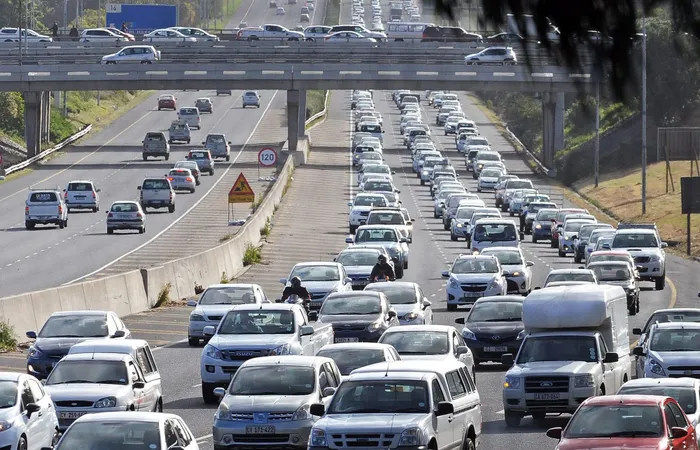
In February 2026, South Africa's automotive industry celebrated a decade-high in domestic vehicle sales, but a decline in exports.
Image: Independent Newspapers Archives
South Africa’s automotive industry delivered a split performance in February 2026, with domestic sales accelerating to their strongest February level in more than a decade while exports contracted sharply.
Aggregate domestic new vehicle sales reached 53,455 units, an increase of 11.4% compared to the 47,994 vehicles sold in February 2025, according to naamsa - the Automotive Business Council. It marked the best February performance since 2013.
In contrast, export sales fell to 24,221 units, representing a 28.1% year-on-year decline from the 33,684 vehicles exported in February last year.
“South African new vehicle sales extended its domestic growth trajectory in February 2026, reflecting not merely cyclical uplift, but increasingly entrenched domestic economic stabilisation,” naamsa said.
However, it cautioned that “the industry’s export performance remains subject to heightened protectionism across several of South Africa’s key export markets, while increasingly stringent decarbonisation requirements in destination markets continue to weigh on the competitiveness of South African vehicle exports.”
Passenger cars continued to anchor the recovery, with sales rising 11.3% year-on-year to 37,576 units. Light commercial vehicles (bakkies and mini-buses) climbed 11.9% to 13,218 units.
naamsa noted that light commercial vehicle demand “continues to align with conditions in the goods-producing sectors, which are gradually stabilising as energy supply improves and logistics reforms gain traction.”
Medium commercial vehicle sales were unchanged at 720 units, while heavy trucks and buses increased 13.6% to 1,941 units.
Out of the total February sales, 85% were dealer transactions, 9.6% were to the rental industry, 3.0% to government and 2.4% to corporate fleets, a composition the industry body described as “indicative of both retail resilience and stabilising fleet demand.”
The macroeconomic backdrop has also improved.
“Private sector credit extension accelerated to 8.7% year-on-year in December, driven predominantly by robust corporate borrowing, while household credit growth improved gradually as cumulative interest rate reductions since late 2024 filtered into asset finance markets,” naamsa said.
“Vehicle asset finance activity has strengthened as cumulative interest rate cuts since late 2024 improve affordability and support buyer sentiment.”
Despite the firm domestic showing, naamsa flagged potential headwinds. The 2026 Budget confirmed increases in the general fuel levy, the carbon fuel levy and the Road Accident Fund levy effective 2 April 2026.
“Collectively, these measures will incrementally raise the cost of fuel at the pump, feeding into higher operating costs for both households and businesses, thereby affecting calculations of total cost of vehicle ownership,” it said.
Brent crude has moved above US$80 per barrel amid geopolitical tensions in the Middle East, while the rand has softened to around R16.16 to the US dollar.
“A softer rand against the dollar increases the rand cost of crude oil imports and imported automotive inputs, counterbalancing some of the earlier budget-driven currency strength and exerting further pass-through into local fuel prices,” naamsa added.
Against this mixed backdrop, the market’s leading players consolidated their positions. The top five manufacturers by total sales in February 2026 were:
For more stories from The Mercury, click the link THE MERCURY